September 30, 2026
Chinese restaurant menu design guide to help you organize dishes, refine visuals, present prices clearly, and plan bilingual, print, and QR menus with ease.
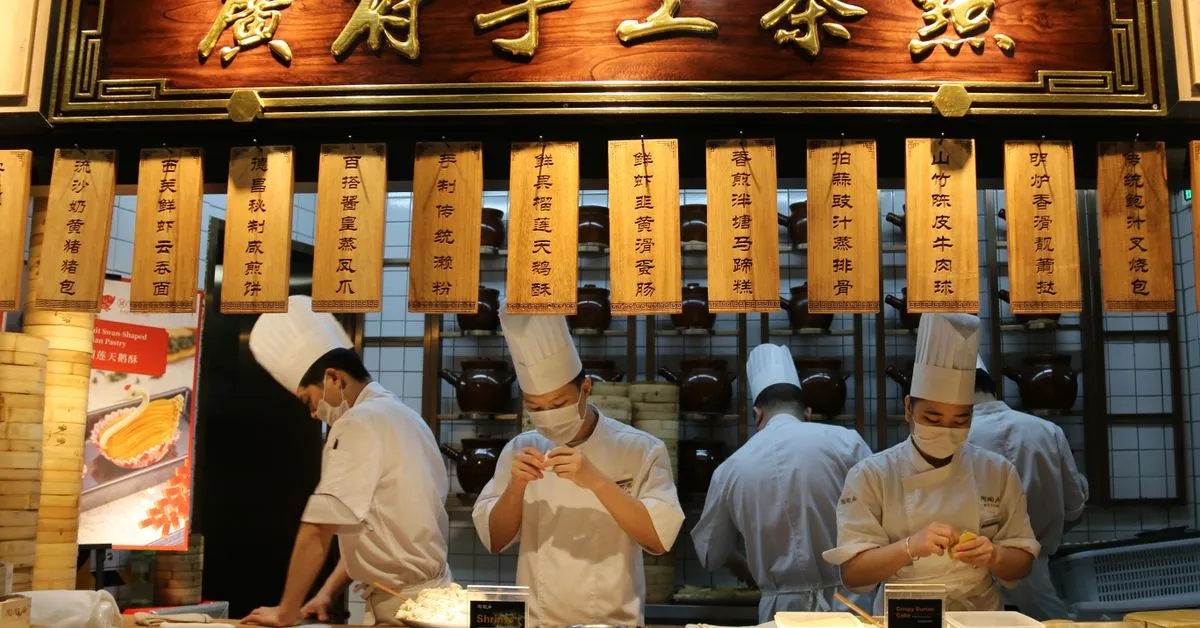
A crowded or outdated menu can make it harder for guests to find dishes, compare options, and order with confidence. Strong Chinese restaurant menu design gives each item a clear place, keeps information easy to scan, and creates a presentation that fits your restaurant’s identity.
From layout and pricing to bilingual content, food photography, and digital formats, each choice shapes how customers find information and place orders. This guide covers practical ways to create or improve a menu that feels organized, polished, and easier to manage across print and digital channels.
Effective Chinese restaurant menu design starts with three elements: clear structure, visual hierarchy, and brand consistency. Together, they shape how information is organized, presented, and connected to your restaurant’s identity.
Group dishes into familiar categories such as appetizers, soups, noodles, rice dishes, seafood, meat dishes, vegetables, and desserts. Keep similar items together and use clear section headings so guests can locate what they want at a glance.
Use font size, weight, spacing, and placement to separate category headings, dish names, descriptions, and prices. Give the most important information greater visual emphasis, then keep supporting details easy to read. A clear hierarchy shows customers what to read first and which details support each dish.
Choose fonts, colors, imagery, and graphic elements that reflect your restaurant’s identity. Apply the same visual direction across menus, signage, packaging, your website, and other customer-facing materials. A cohesive approach creates a recognizable brand presence across every touchpoint.
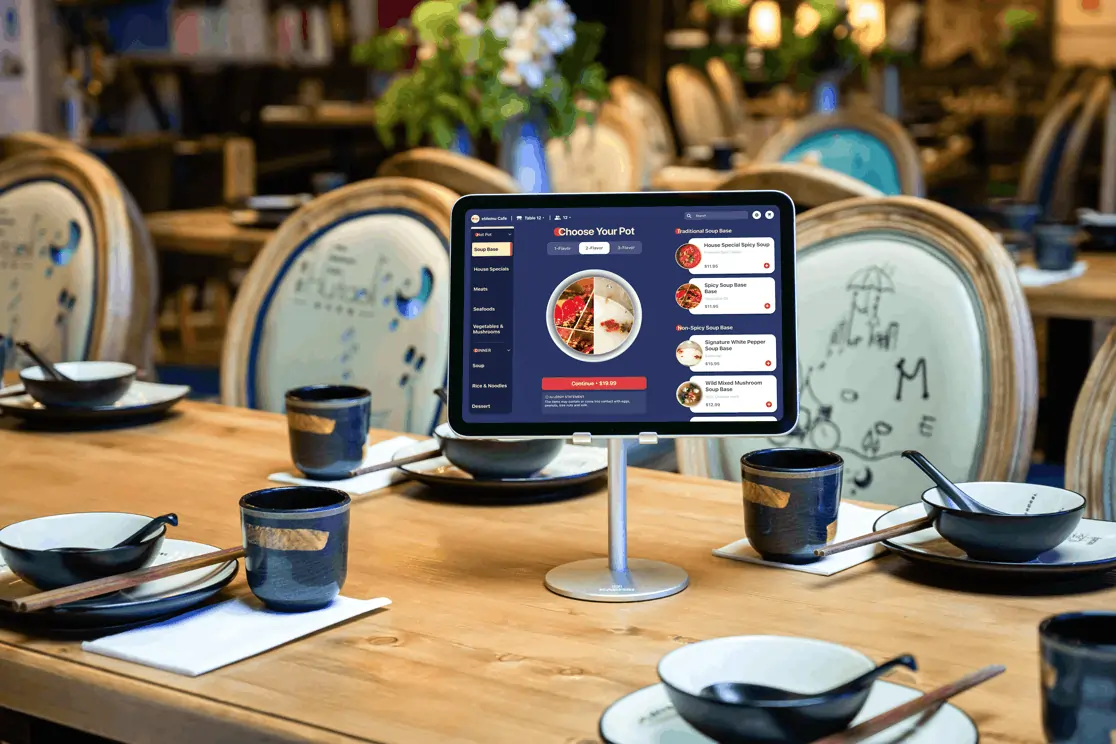
Good planning gives your Chinese restaurant menu card design a clear structure before visual styling begins. Start by defining how the menu will be used, how much content it needs to hold, and which information customers need to place an order.
Select a format that fits your menu size and how guests order. A compact selection may work well on a single sheet or folded card, while a larger menu may need a booklet, table menu, takeaway format, or digital layout.
When comparing formats, focus on a few practical factors:
The format should give each section enough room to remain readable. Avoid forcing too much content into too few pages just to keep the menu compact.
The menu format and presentation should support the dining experience you want to create. Traditional restaurants may use more structured layouts and classic visual details, while modern concepts may favor cleaner pages and lighter typography.
Upscale restaurants can use more space around each item and shorter descriptions to create a refined presentation. Casual, takeaway, and delivery-focused restaurants usually benefit from faster scanning, prominent pricing, and clear options for sizes, combos, or add-ons.
If you use several ordering channels, decide early which menu information should stay consistent across each version.
Decide which information each menu item needs before building the final layout. This keeps the design consistent and prevents some dishes from carrying far more detail than others.
Depending on your menu, each item may include:
Use the same information pattern across similar dishes so customers know where to find each detail.
Once you have chosen the menu format and decided what information each dish needs, focus on how customers move through the selection. Chinese restaurant menus can include many categories, proteins, cooking styles, and specialties, which makes a clear organizational system especially useful.
Arrange menu sections in an order that feels natural from the first course to the final add-ons. You might begin with appetizers and soups, followed by dim sum, noodles, rice dishes, seafood, poultry, pork, beef, vegetables, house specialties, desserts, and beverages.
Keep dishes that customers are likely to compare near each other. For example, place similar noodle dishes in the same area rather than separating them across several pages. Use clear spacing and page breaks between major categories so customers can see where one section ends and another begins.
A broad category can become difficult to scan when it contains dozens of items. Break larger sections into smaller groups based on ingredients, cooking methods, regional styles, or dish types.
For example, you could divide seafood into fish, shrimp, crab, and shellfish. A noodle section could separate soup noodles, stir-fried noodles, and rice noodles. Descriptive subsection names help customers move directly to the type of dish they want instead of reading every item in the category.
Keep the number of subsections manageable. Too many divisions can make the menu feel fragmented, so group dishes only when the distinction helps customers browse more efficiently.
Give house specialties, chef recommendations, regional favorites, and other featured dishes extra visibility. A small label, icon, border, or dedicated specialty section can help these items stand out from the surrounding choices.
Be selective with emphasis. If you highlight too many dishes, customers may have difficulty identifying the items you want to feature most. Choose a limited number of dishes that represent your restaurant well, then apply the same highlighting style throughout the menu.
Once you have the menu structure in place, the visual direction should reflect the type of dining experience you offer. A traditional banquet restaurant will usually need a different look from a modern noodle shop or an upscale Chinese dining concept.
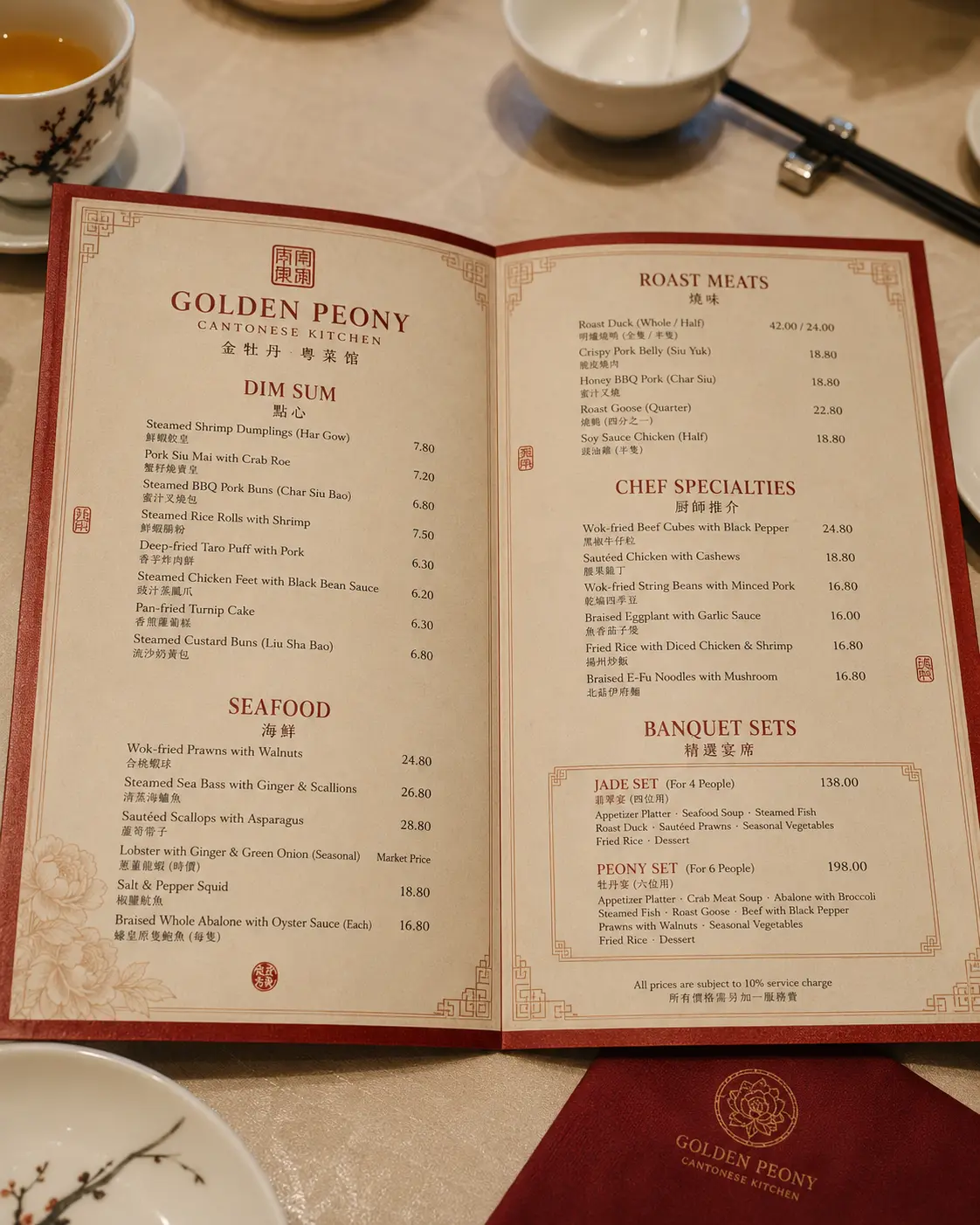
A traditional Chinese restaurant menu can use cultural references that support the restaurant’s identity. Consider calligraphy, seal-inspired graphics, subtle lattice patterns, or classic color combinations as accents.
Keep these details controlled so the menu stays polished and easy to read.
Example: A Cantonese banquet restaurant could use deep red accents, serif typography, subtle lattice patterns, and clearly separated sections for seafood, dim sum, chef specialties, and banquet selections.
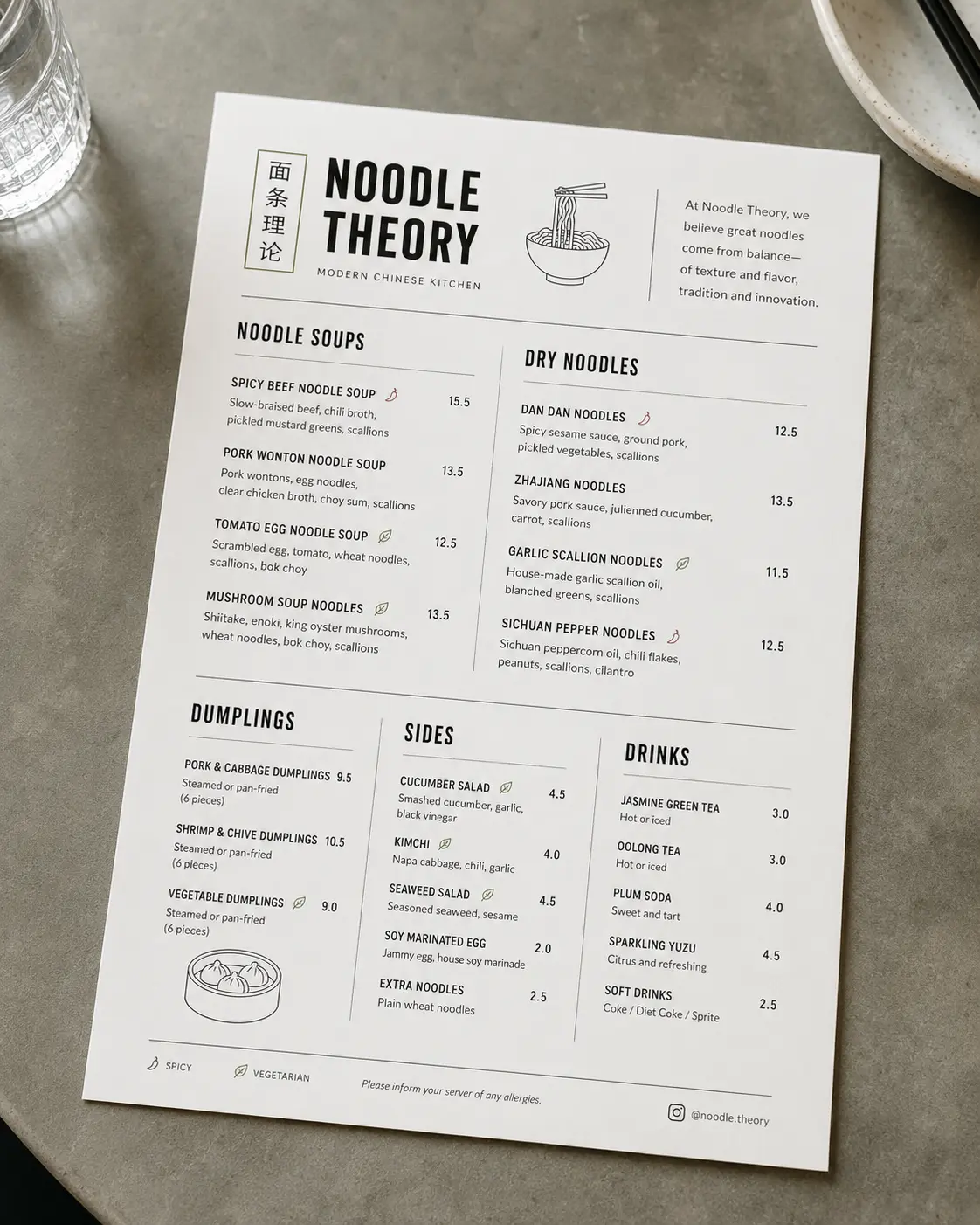
Modern Chinese restaurants often work well with a cleaner visual style. Contemporary typography, simple graphics, generous spacing, and a limited color palette can create a fresh and organized presentation.
Let typography and layout carry most of the visual weight instead of filling the menu with decorative elements. This approach can suit noodle bars, dumpling concepts, contemporary regional restaurants, and other modern formats.
Example: A modern noodle bar could use bold sans-serif headings, neutral tones, simple category icons, and open spacing between noodle soups, dry noodles, sides, and drinks.
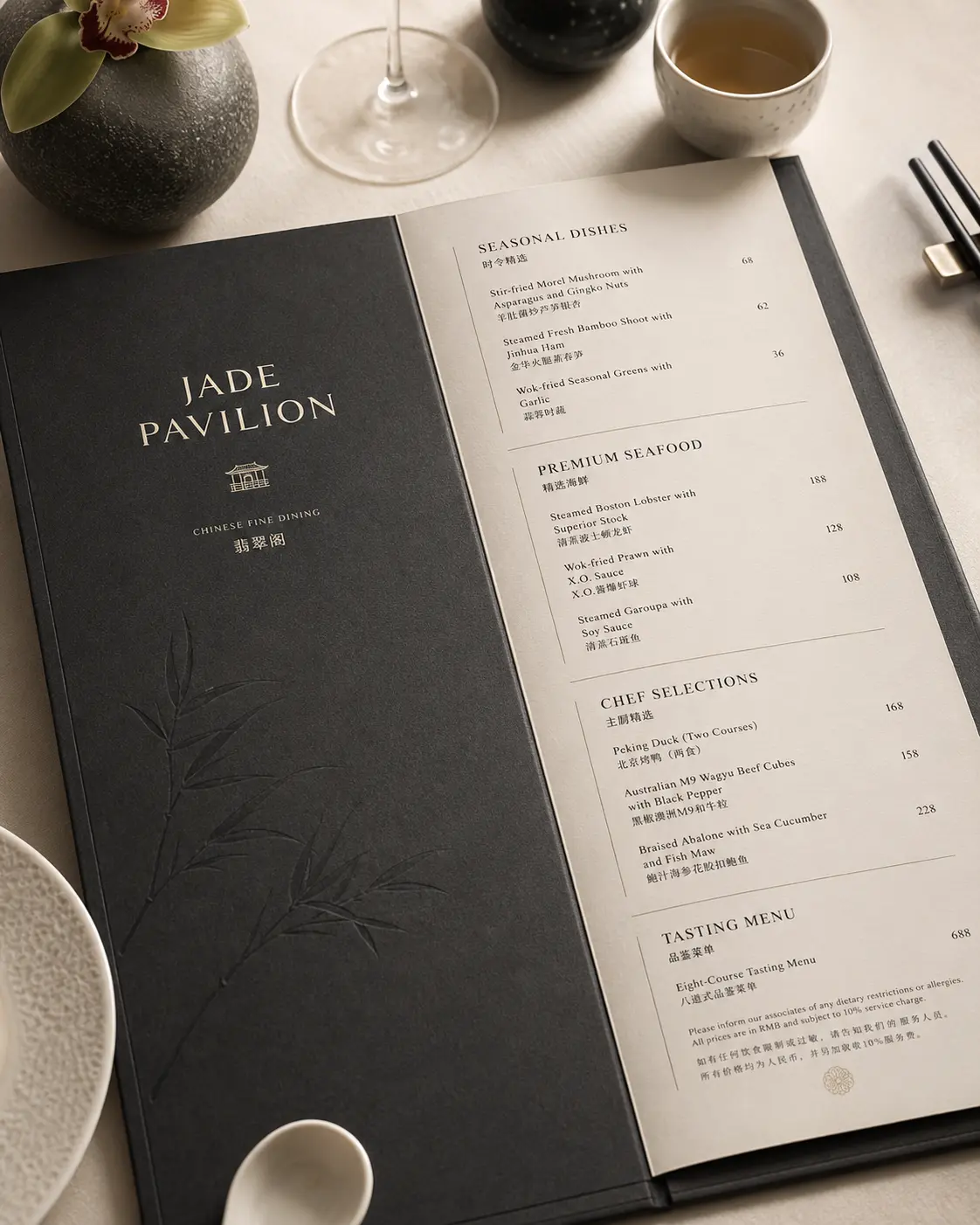
Upscale menus usually benefit from restrained styling and careful presentation. Refined typography, generous spacing, premium materials, and concise dish descriptions can support a more sophisticated dining experience.
Give chef specialties, seasonal selections, tasting menus, or premium dishes clear placement. Use visual emphasis sparingly so featured items feel intentional.
Example: An upscale Chinese restaurant could use a minimalist booklet with textured paper, elegant typography, short descriptions, and a dedicated section for chef specialties or seasonal tasting menus.
Casual and takeaway menus should help customers find dishes and prices quickly. Use clear category labels, concise descriptions, visible pricing, and an organized layout that supports quick scanning.
For pickup and delivery, make sizes, combos, add-ons, and customization options easy to identify.
Example: A quick-service Chinese restaurant could use large category headings, clear combo pricing, visible add-ons, and a compact layout that also adapts well to a mobile menu.
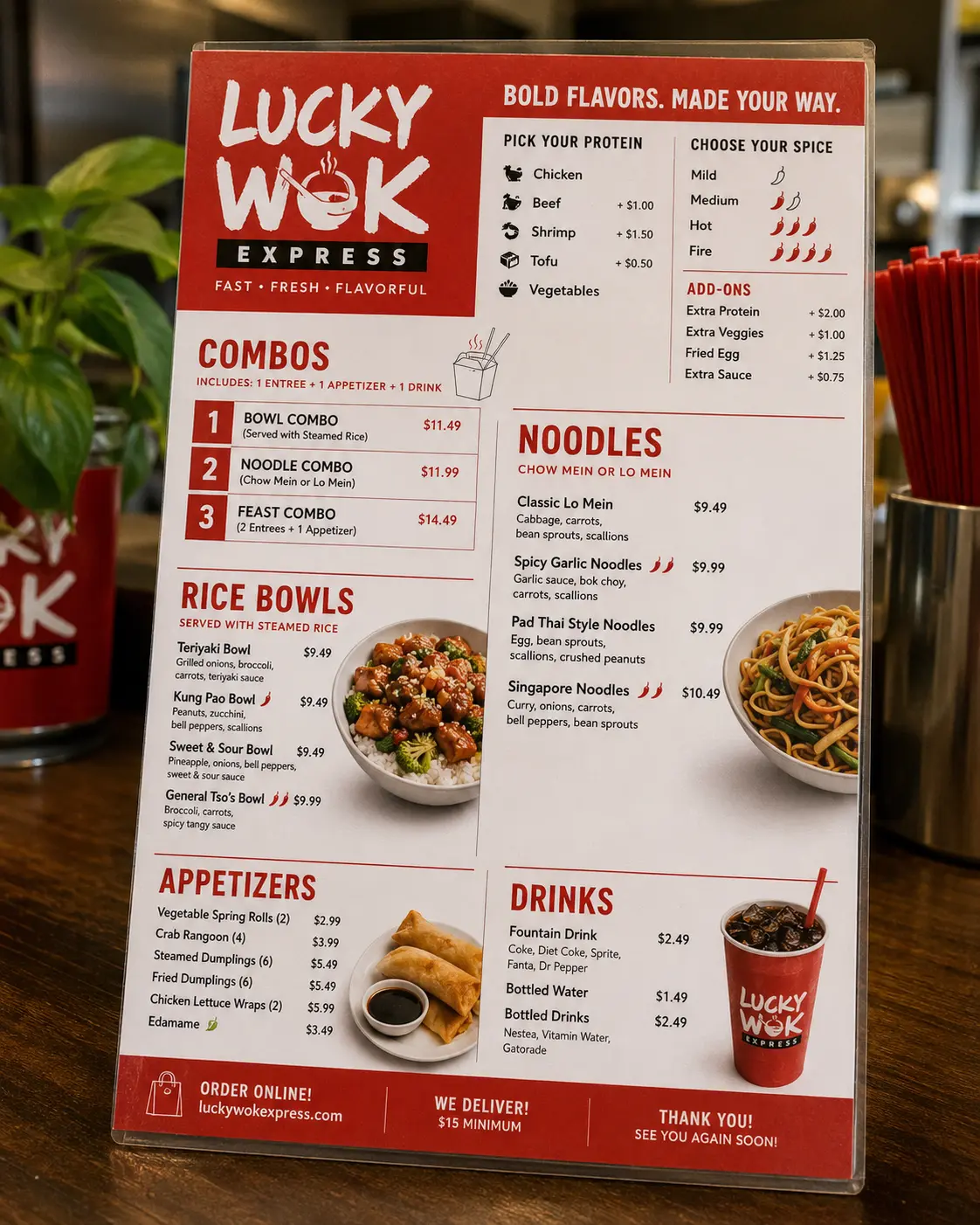
Once you have settled on the overall menu style, typography, color, and visual details should reinforce that direction.
Choose typefaces that stay clear at the final printed size and on digital screens. Use one font family or a restrained pairing, then create hierarchy through size, weight, and spacing rather than adding several different styles.
Decorative type can work well for section titles or accents, but body text should stay highly legible, especially when the menu includes long descriptions or bilingual content.
Build the palette around your restaurant’s brand instead of relying on a generic Chinese restaurant color scheme. Red, gold, black, jade, and neutral tones can suit certain concepts, but the strongest choice is the one that fits your positioning and existing visual identity.
Use strong contrast between text and background so customers can read the menu easily under restaurant lighting and on screens. Reserve accent colors for selected elements such as category headings, icons, or featured dishes so they retain visual impact.
Patterns, calligraphy, seals, illustrations, and architectural motifs can add cultural character when they support the restaurant concept. Choose a small number of elements and apply them consistently instead of filling every page with decorative details.
Keep these visuals secondary to the menu content. Dish names, descriptions, prices, and section labels should remain the first things customers notice, with decorative elements providing context and personality around them.
Food photography can help customers identify unfamiliar dishes and draw attention to specialties you want to feature. Use it selectively so the images support the menu rather than compete with names, descriptions, and prices.
Keep lighting, camera angles, backgrounds, plating, and image quality consistent from one photo to the next. A unified visual style gives the menu a more polished appearance and keeps individual images from feeling disconnected.
Prioritize signature dishes, chef specialties, and visually distinctive items instead of adding a photo beside every listing. A smaller set of strong images usually creates more impact than filling each page with photos.
Give each image enough space while protecting room for the information customers need to order. Dish names, descriptions, prices, and dietary labels should remain easy to scan.
If a page starts to feel crowded, reduce the number or size of the images rather than shrinking the text. You can also reserve larger photos for section openers, featured dishes, or dedicated promotional areas.
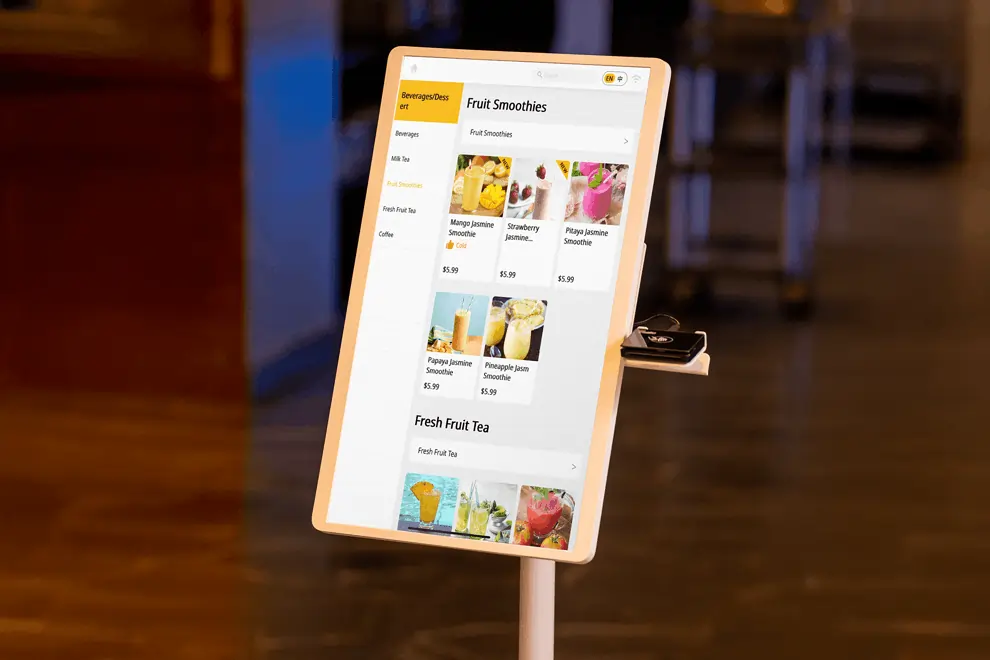
Once the visual layout is in place, focus on the information customers use to compare dishes. Clear descriptions, consistent pricing, and easy-to-read dietary details help customers move through the menu more efficiently.
Keep each description short and useful. Focus on details that help customers distinguish one dish from another, such as the main ingredients, cooking method, sauce, texture, or flavor profile.
For example, a description like “Wok-fried beef with scallions in a savory soy-based sauce” gives customers more useful information than a long list of ingredients.
Add a little more context when a dish name may be unfamiliar to some customers. You can explain a regional specialty, preparation style, or key ingredient in one concise sentence. Avoid repeating information that the dish name already communicates.
Keep the tone and level of detail consistent across the menu. If most dishes have one-line descriptions, a few unusually long entries can disrupt the layout and make those sections harder to scan.
Choose one pricing format and apply it across every category. Keep currency symbols, decimal places, portion pricing, and add-on charges consistent so customers can compare items quickly.
Position prices in a predictable place. You might place them beside dish names or align them along the same edge of the page. Avoid making prices much larger or bolder than the dish names, since the food should remain the primary focus.
If you offer multiple sizes, protein choices, or upgrades, show the price differences clearly. Use the same structure each time so customers know where to look.
Labels and icons can make useful menu details easier to scan, especially when you serve dishes with different spice levels or dietary attributes. Keep the system simple and use each symbol consistently.
Useful indicators may include:
Add a short legend when the symbols may not be immediately clear. Keep these indicators close to the related dish so customers do not need to search elsewhere on the menu.
Before publishing or printing, verify that every dietary and allergen label matches the recipe and current preparation method. Accurate labeling helps keep your menu clear and reliable as you move into bilingual formatting.
A bilingual menu should help guests move between Chinese and English easily while keeping the layout clear and consistent. Plan the language structure early so both versions fit naturally into the design instead of adding translations after the layout is already set.
Choose a consistent order for both languages and apply it throughout the menu. You might place Chinese first with English directly below, or reverse the order based on your restaurant’s primary customer base.
Use font size, weight, and spacing to distinguish the two languages clearly. Apply the same hierarchy to category names, dish names, descriptions, and modifiers so guests know where to look as they move through each section.
Bilingual content requires more room than a single-language menu, so account for both languages from the beginning. Avoid squeezing translations into narrow spaces or reducing the text size simply to fit more items on a page.
Pay attention to:
If a section becomes crowded, adjust the layout or reduce the number of items per page rather than sacrificing readability.
Translate dish names and descriptions based on meaning rather than relying on direct word-for-word translation. Some Chinese dish names reference regional traditions, ingredients, or preparation methods that may need a short explanation in English.
Keep translations concise while giving guests enough information to understand the dish. Review names, ingredients, cooking methods, and modifiers before publishing. When possible, have someone fluent in both languages and familiar with Chinese cuisine review the final copy.
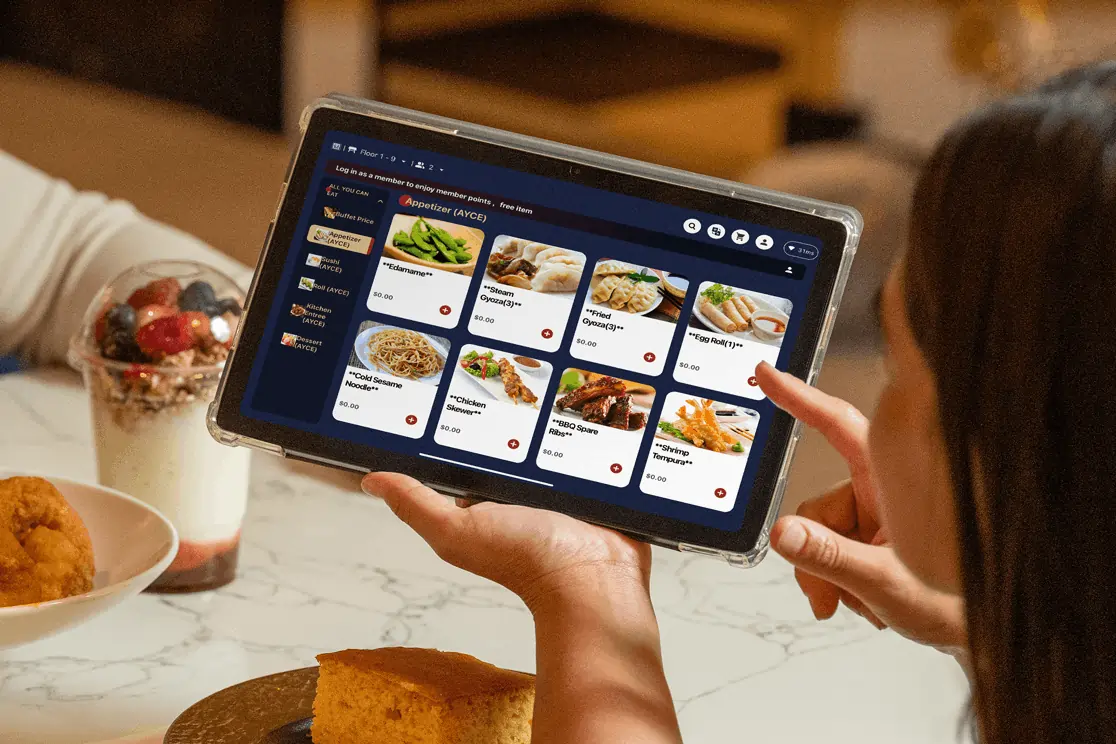
A strong menu should work well wherever customers see it, from the dining table to a phone screen. Each format has different space, usability, and maintenance requirements, so build each version around how customers will read and order from it.
Choose the physical format based on menu length, table space, handling frequency, and how often you update dishes or prices. A short menu may work well as a single sheet or folded card, while a larger selection may need a booklet or menu cover with replaceable inserts.
Material choice also affects presentation and upkeep. Common options include:
Before printing, check trim size, margins, bleed, image resolution, and font size. Review a physical proof when possible, since colors, spacing, and text size can look different on paper than they do on a screen.
Design QR menus around mobile reading instead of shrinking a printed menu into a phone-sized PDF. Use clear categories, readable text, short descriptions, and simple navigation so customers can move between sections with minimal effort.
Keep the most useful details easy to spot, including dish names, prices, spice levels, dietary labels, and modifiers. Avoid long pages packed with too many items, and test the menu on several screen sizes before publishing it.
Customers may view a printed menu, scan a QR code, or order through a digital platform during the same visit. Keep dish names, prices, descriptions, modifiers, and dietary labels consistent across each version so customers and staff see the same information.
Create a clear update process whenever you change an item. Updating print, QR, and digital menus together helps prevent outdated prices, unavailable dishes, or conflicting descriptions from reaching customers.
Before you approve the final menu, review it as both a customer and an operator. Small errors in pricing, descriptions, translations, or layout can create confusion once the menu reaches the table or screen.
Start with the content. Confirm that dish names, descriptions, prices, portion details, and category placements match your current offering. Check Chinese and English text carefully, along with spice levels, dietary labels, and allergen information.
Then review the design at its final size. A layout that looks clear on a large monitor may feel cramped once printed or viewed on a phone. Check:
Have restaurant staff review the final version before approval. They work with the menu every day and can often spot missing modifiers, unclear dish names, outdated prices, or ordering details that need correction.
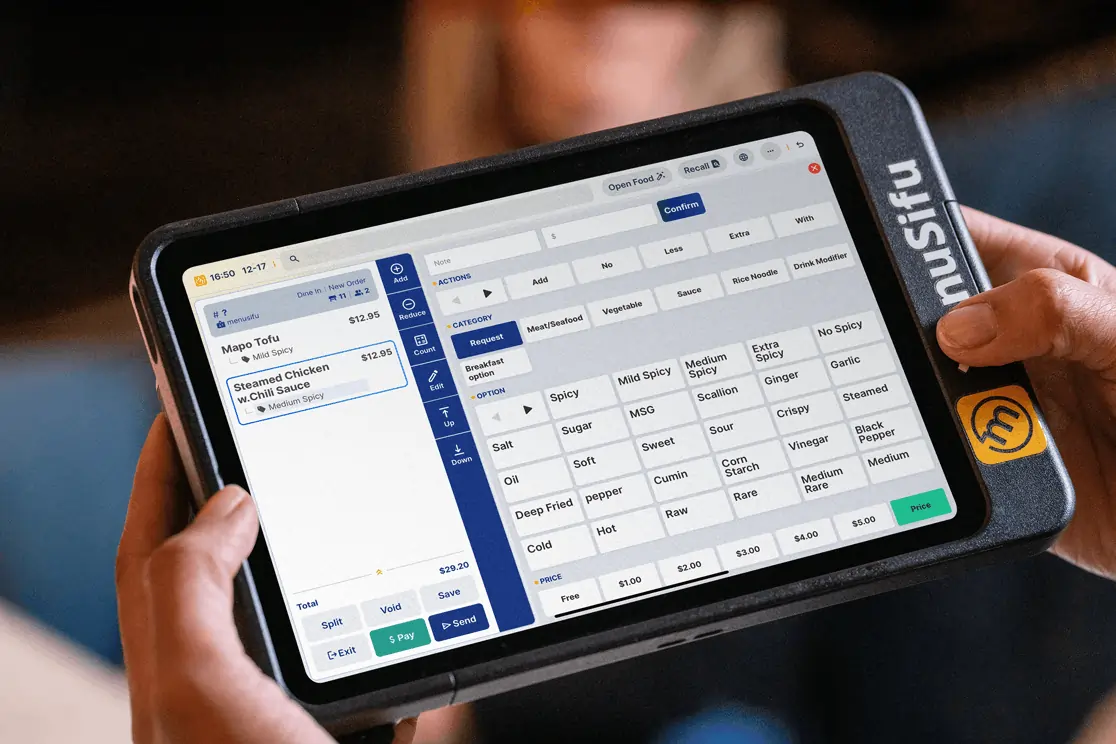
Your menu should reflect what customers see and order today. If you have changed dishes, pricing, branding, portion options, or service formats, update the design so the menu stays accurate and easy to use.
A refresh may also be needed when pages feel crowded, categories have expanded, or key dishes are harder to find. Pay special attention when you add QR ordering, takeaway menus, or digital ordering, since each format may require a cleaner structure and different spacing.
Consider a refresh when:
A full redesign is not always necessary. If the structure still works, focused updates to typography, spacing, category placement, or featured items may be enough to bring the menu up to date.
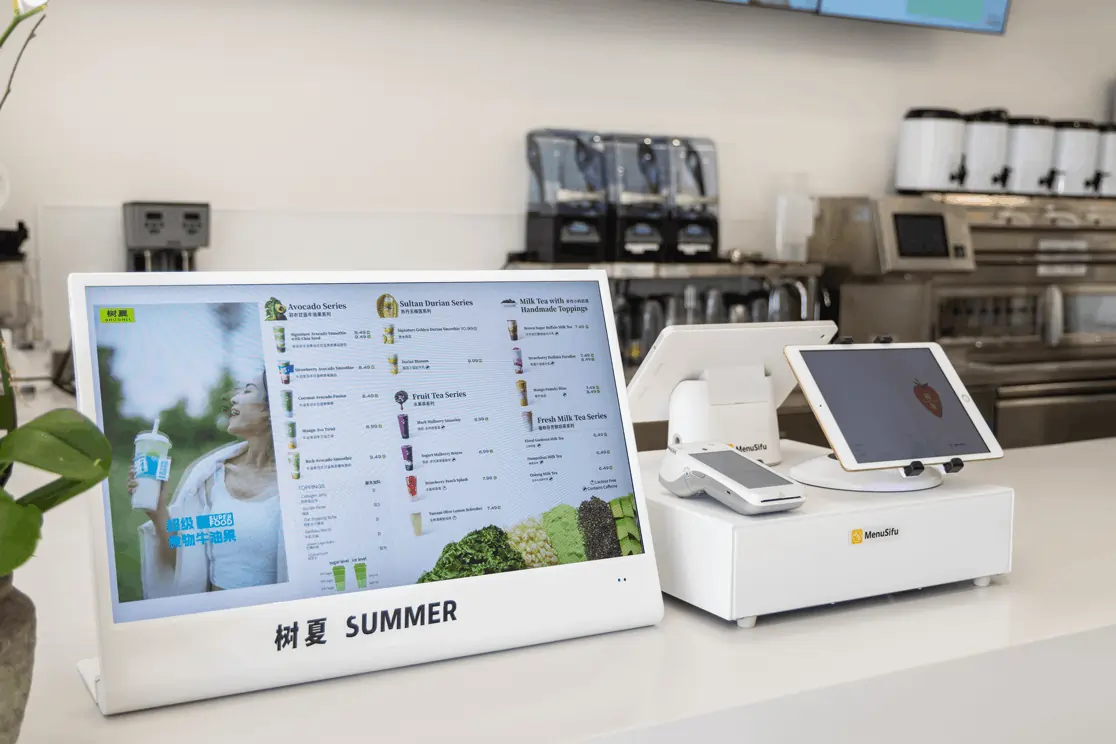
A well-designed menu gives guests a clearer path from browsing to ordering. Once you have organized the structure, visuals, descriptions, pricing, and bilingual content, your restaurant technology should help keep that information accurate across ordering channels.
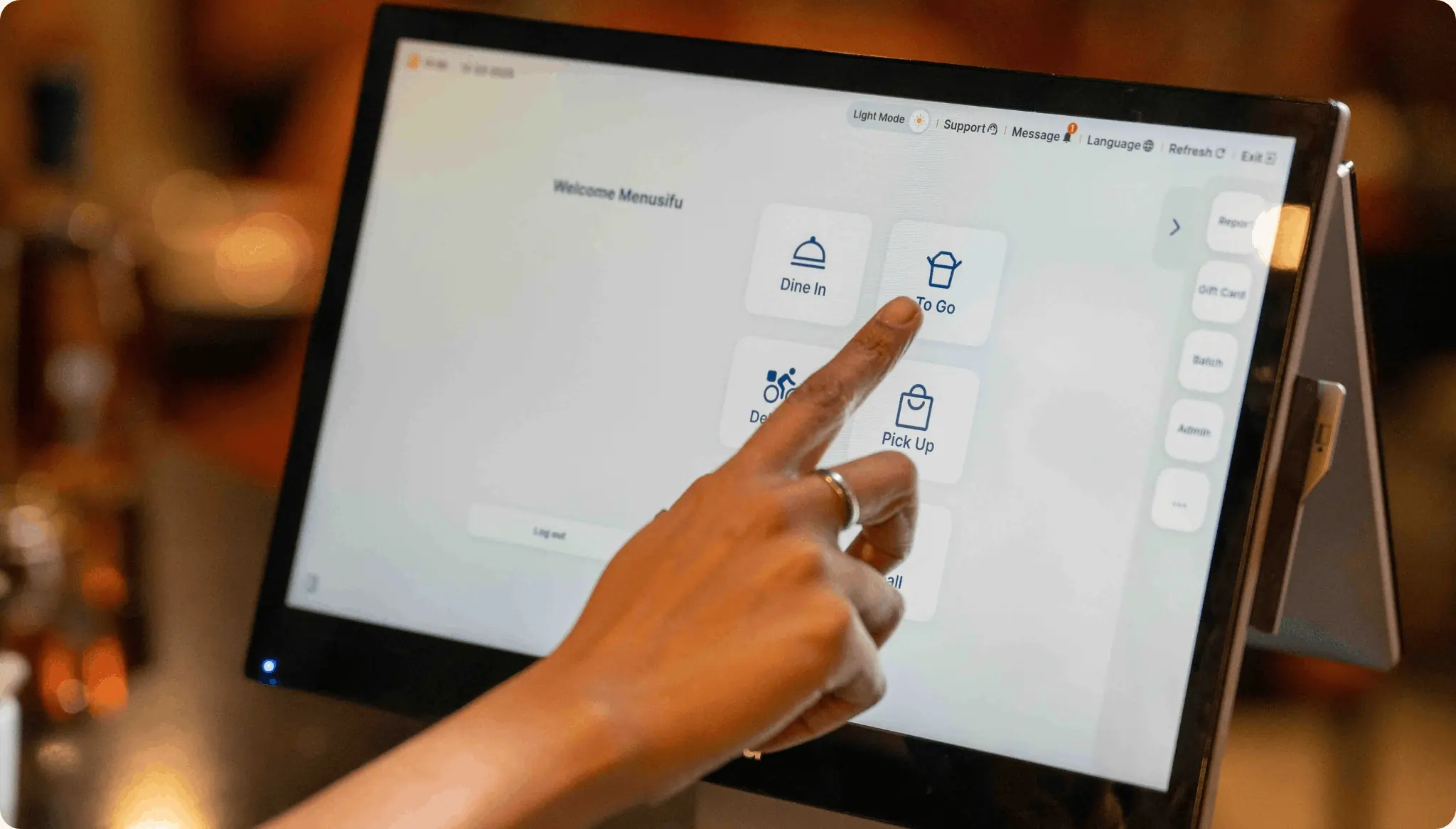
MenuSifu provides a POS system for Chinese restaurants that brings menu management and digital ordering into one platform. You can manage online and in-store menus from one dashboard, update sold-out items, support Chinese and English menus, and organize modifiers, portions, dietary labels, and combo options. MenuSifu’s E-Menu can also showcase dishes with photos or videos, while our design team crafts custom layouts and visuals that bring your brand to life.
If you are redesigning your menu and reviewing how customers order from it, Book a Free Demo with MenuSifu today to explore how its menu and POS solutions can help keep the ordering experience clear and consistent.
Still refining your menu? These quick answers cover a few practical points about menu content, format, bilingual layout, and redesign timing.
A Chinese restaurant menu should include clear dish categories, dish names, concise descriptions, prices, portion sizes when relevant, and dietary or allergen information. It should also use consistent formatting and make signature dishes easy to identify.
The best format depends on the menu size, service style, and how customers place orders. Single-sheet or folded menu cards work well for smaller selections, while booklet-style menus suit restaurants with more dishes and categories. Digital or QR menus can support frequent updates and mobile ordering. Choose a format that keeps dishes organized, prices easy to find, and the overall layout simple to scan.
Place Chinese and English dish names together, with the Chinese name first and the English translation directly beside or below it. Use consistent typography, spacing, and naming across the menu so diners can scan dishes easily and connect each translation to the correct item.
A Chinese restaurant should review its menu periodically and whenever dishes, prices, branding, or ordering formats change. A refresh may also help if the menu feels dated, crowded, or difficult to scan.
For more restaurant technology, menu management, and operations insights, visit the MenuSifu blog for practical guides and updates.
Related Articles: