July 8, 2026
Need faster orders and fewer mistakes? Learn how a quick service POS works, which features to look for, and how to choose the right system for your restaurant.

Long lines, order mistakes, slow checkout, and inventory issues can quickly affect your service flow. A quick service POS helps you take orders faster, send them to the kitchen accurately, accept payments with ease, and track the details that keep your restaurant moving. So, how can the right system help you serve more customers with less stress?
This guide covers what a quick service POS is, how it works, the benefits it offers, the features to look for, and how to choose the right POS for quick service restaurant operations.
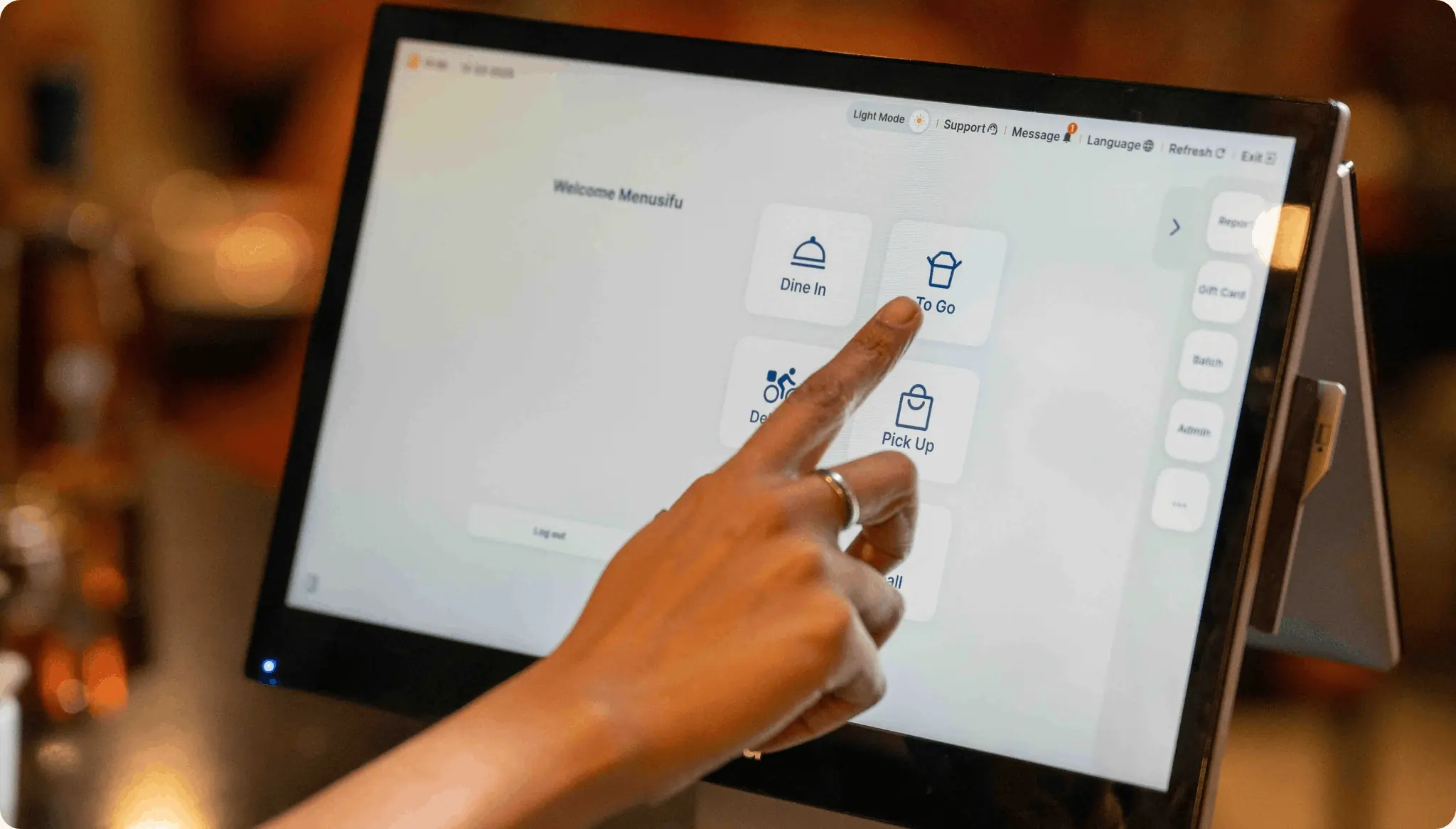
A quick service POS is a point-of-sale system designed for restaurants that need fast order-taking, accurate kitchen tickets, simple payment processing, and clear sales tracking.
It helps your team take orders from the counter, kiosk, phone, website, or delivery app, then send those orders to the kitchen with the right items, modifiers, notes, and prices. It also records sales, tracks inventory, manages staff activity, and gives you reports you can use to make better decisions.
For your restaurant, that means fewer missed details, faster checkout, better stock control, and a smoother order flow during busy hours.
A strong quick service restaurant POS usually helps you manage:
Instead of using separate tools for orders, payments, inventory, and reports, a QSR POS keeps those tasks connected in one system.
A quick service restaurant POS follows the order from the moment a customer places it until your team completes it.
Here is the basic workflow:
The order may come from the counter, kiosk, website, phone, or delivery app.
Staff can select menu items, add modifiers, apply discounts, and confirm the total. Online, kiosk, and delivery orders can flow directly into the POS.
The system routes the order to a kitchen printer or kitchen display screen with item details, notes, and prep instructions.
Kitchen staff view the order, prepare the items, and mark the order as complete when ready.
The POS processes cash, cards, mobile wallets, gift cards, or online payments.
Sales, inventory, payment details, staff activity, and order data update automatically.
This process helps your team move orders faster, reduce mistakes, and keep your front counter, kitchen, and pickup area aligned.
A quick service restaurant POS system is ideal for restaurants that handle a high volume of orders and need to serve customers quickly. If your team takes orders at the counter, manages takeout, accepts online orders, or works through rush periods every day, the right POS can help keep everything organized.
This type of system works well for:
For these businesses, speed and accuracy directly affect the customer experience. A delayed order, a missed modifier, a wrong item, or a slow checkout can lead to longer lines and lost sales. A POS for quick service restaurant operations helps your team take orders faster, send clear details to the kitchen, process payments quickly, and track inventory as items sell.
If your current setup makes it hard to manage orders, staff, payments, and stock in one place, upgrading to a quick service restaurant POS system can give your restaurant a more efficient way to run daily operations.

A quick service POS gives your restaurant more control over service, sales, and operations. It helps your team move quickly while keeping important details organized.
Speed affects customer satisfaction and sales volume. A QSR POS lets your team enter orders quickly, apply modifiers, process payments, and complete transactions in fewer steps.
Touchscreen menus, preset buttons, combo options, and saved order settings help staff serve customers faster during peak hours.
Order errors can lead to wasted food, refunds, delays, and unhappy customers. A quick service restaurant POS sends clear order details to the kitchen, including modifiers, special requests, and item notes.
Kitchen display systems and order status updates also help your kitchen team prepare each order correctly.
A well-designed quick service POS helps employees work with confidence. Staff can take orders, manage payments, apply discounts, issue refunds, and view order statuses from one place.
Training also becomes easier when your POS has a clear layout and simple workflows.
A POS system for quick service restaurant operations can track item sales and ingredient usage. This helps you monitor stock levels, identify popular items, reduce waste, and plan purchases more accurately.
Real-time menu availability also helps prevent customers from ordering items that are out of stock.
A QSR POS system gives you access to sales reports, order trends, best-selling items, payment data, employee performance, and peak-hour activity.
These insights help you adjust staffing, refine your menu, plan promotions, and manage costs.
When orders move smoothly from the counter to the kitchen and pickup area, customers spend less time waiting. Faster checkout, accurate kitchen routing, and clear order status updates all support a better service experience.
A strong quick service restaurant POS should help your team take orders faster, keep the kitchen organized, accept payments easily, and track the numbers that guide better decisions. Focus on features that support your daily rush, your menu setup, and the way customers order from you.
Your POS should let staff enter orders in a few taps. Clear menu buttons, item categories, saved modifiers, and quick checkout options help your team move the line faster.
The system should also make it easy to customize orders, apply discounts, edit items, and complete payments with minimal steps. This helps your staff stay accurate during lunch rushes, dinner peaks, and weekend crowds.
Since your menu changes often, your POS should keep updates simple. You should be able to manage categories, item sizes, combo meals, add-ons, toppings, substitutions, and pricing from one place.
For example, a pizza shop may need topping rules, a bubble tea shop may need sugar and ice levels, and a bakery may need daily availability of items. A good QSR POS helps you update these details quickly, so your team always works with the right menu.
A kitchen display system helps your kitchen team see orders clearly and prepare them in the right order. Instead of relying only on paper tickets, staff can view order details, modifiers, timing, and status on a screen.
This helps reduce missed items, ticket mix-ups, and delays. Your team can also mark orders as started, ready, or complete, which keeps the counter and pickup area better organized.
Customers want payment to feel quick and easy. Your POS should accept credit cards, debit cards, mobile wallets, contactless payments, gift cards, and online payments.
The more payment options you support, the easier it is to complete each sale. Fast payment processing also helps keep the line moving during peak hours.
Your QSR POS should connect online orders, delivery app orders, takeout requests, and in-store purchases in one system. This helps your team avoid entering the same order by hand.
When all orders flow into your POS, your kitchen gets clearer instructions and your staff can track order status more easily. This is especially useful if you handle dine-in, pickup, delivery, and app-based orders throughout the day.
Inventory tracking helps you know what you have, what is running low, and which items sell fastest. Your POS should track ingredient usage, update stock levels, and send low-stock alerts.
This helps you plan purchases, reduce waste, and avoid selling items you cannot prepare. It also helps you spot slow-moving items and adjust your menu or promotions.
Your POS should help you manage staff activity from clock-in to close. Look for time tracking, role permissions, shift reports, and staff performance insights.
Role permissions help control who can issue refunds, apply discounts, edit prices, or access reports. This keeps daily operations more organized and gives you a clearer view of how each shift performs.
Loyalty tools help you bring customers back. Your POS should support customer profiles, points, rewards, coupons, and targeted promotions.
For example, you can offer a discount after a set number of visits, send a coupon for a new menu item, or reward regular customers with special offers. These tools help increase repeat visits and build stronger customer relationships.
Your POS should give you current data on sales, popular items, payment activity, labor, and order volume. These reports help you see what sells well, when your restaurant gets busiest, and where you may need to adjust staffing or inventory.
If you operate more than one location, multi-location reporting helps you compare performance across stores and manage growth more easily.
Cloud-based access lets you check sales, update menus, review reports, and monitor operations from any connected device. You do not need to be inside the restaurant to see how the day is going.
This is helpful when you manage multiple shifts, oversee several locations, or need to make quick menu updates from outside the store. A cloud-based POS gives you better control over daily decisions while keeping your team connected.

A QSR POS system keeps your restaurant workflow organized from the moment an order is placed to the time you review sales reports. It connects your counter, kitchen, payment tools, pickup process, inventory, and reporting, so your team can work faster and reduce errors.
Lunch rushes, weekend crowds, and promo days can put pressure on your staff. A QSR POS system helps your team move through orders faster with quick item buttons, saved modifiers, combo options, and simple payment steps.
It also sends orders directly to the kitchen display system or printer, so your kitchen team can start preparing items right away. Staff can see order status, mark items complete, and keep the pickup area organized.
A strong POS helps you:
Takeout, pickup, online, and delivery orders can get messy when they're handled in different systems. A QSR POS system brings these orders into one place, so your team can view, prepare, and track them more easily.
For example, an order from your website, kiosk, delivery app, or counter can appear in the POS and be routed to the correct kitchen station. This helps your staff avoid duplicate entry, missed tickets, and order mix-ups.
With everything in one system, your team can:
A QSR POS system also helps you see what sells, what slows down, and what needs attention. Each sale gives you useful data about menu performance, ingredient usage, and customer buying habits.
If your burger combo sells out every Friday night, you can plan stock levels better. If one topping rarely sells, you can review its place on the menu. If a drink or pastry moves quickly during certain hours, you can adjust prep and staffing around that demand.
Your POS reports can help you:
This gives you a clearer view of daily operations and helps you make better decisions for your restaurant.
Implementing a QSR POS works best when you start with your daily operations, then build the system around how your team takes orders, prepares food, accepts payments, and tracks inventory. Use the steps below to make the switch smoother.
Start by looking at how orders move through your restaurant from the moment a customer orders to the time the order is completed.
Check for issues such as:
This review helps you see where your current setup causes delays and where a QSR POS system can help.
Next, choose features based on how your restaurant operates. A coffee shop may need quick drink modifiers, while a pizza shop may need topping options, delivery tools, and kitchen routing.
Focus on details such as:
A clear feature list helps you choose a POS for quick service restaurant operations that fits your workflow.
After listing your needs, choose the tools your team will use each day. Your setup may include:
Match your hardware to your order flow. For example, a bubble tea shop may benefit from kitchen display screens and automated order status updates, while a bakery may need barcode scanning and quick checkout tools.
Once your hardware and software are ready, build your menu inside the POS. Add your items, categories, prices, taxes, discounts, combos, and modifiers.
Include details such as:
This step helps your staff enter orders accurately and helps your kitchen prepare them correctly. It also gives you better control over inventory and item availability.
Give your team hands-on practice before launch. Walk them through the tasks they will use most often, such as:
Keep training practical. Let staff practice with common orders, combo meals, custom items, and busy-hour workflows so they can use the system comfortably.
Before using the POS with customers, run a full test. Check every key function from order entry to reporting.
Test areas such as:
Testing helps you catch setup issues early and avoid problems during busy hours.
After launch, review how the system performs during daily operations. Track the details that affect speed, accuracy, and profitability.
Review:
Use these insights to adjust staffing, menu setup, inventory planning, and promotions. A quick service restaurant POS system becomes more valuable when you keep improving how your team uses it.

The right POS for quick service restaurant operations should help your team take orders faster, reduce mistakes, manage inventory, and keep lines moving. Before choosing a system, look at how it fits your menu, staff workflow, order channels, and growth plans.
Your POS should be easy for staff to learn and quick enough for high-volume hours. If your team needs too many steps to enter an order, apply modifiers, or process payments, the line can build up quickly.
Look for a system with:
A good QSR POS system helps new staff get comfortable quickly and helps experienced staff move even faster.
A generic POS may process payments, but your restaurant needs tools built for food orders. Choose a POS system for quick service restaurant operations that can handle menu changes, custom orders, and kitchen workflows.
Key features to check include:
These features help your team manage orders accurately from the counter, kiosk, website, delivery apps, and kitchen.
Your POS should fit your restaurant today and still support you as you grow. You may add more terminals, hire more staff, launch online ordering, open another location, or expand your menu.
Choose a system that can grow with your business, including:
A scalable quick service restaurant POS system helps you avoid replacing your setup too soon.
Your POS should connect with the tools you use to run your restaurant. Strong integrations reduce manual entry and keep your data more organized.
Look for connections with:
The right integrations help your quick service POS bring orders, payments, promotions, and reports into a single, connected workflow.
Even a strong POS needs reliable help behind it. Before choosing a provider, check how they handle setup, staff training, updates, and issue resolution.
Ask about:
Your team should know where to get help when they need it, especially during busy hours.
Do not choose a POS based only on the monthly fee. The lowest price may cost more later if the system lacks key features or charges extra for tools you need.
Review the full cost, including:
The right POS for quick service restaurant operations should give you strong value, reliable performance, and the features your team needs every day.
The wrong POS can create extra work for your team, slow down the line, and make daily operations harder to manage. Before you choose a system, watch out for these common mistakes:
A retail POS may work for basic sales, but it may fall short in a restaurant setting. Your team needs tools for menu modifiers, combo meals, kitchen tickets, order types, pickup updates, and restaurant reporting.
If the system cannot handle these needs, your staff may rely on manual notes or workarounds. That can lead to order errors, delays, and confusion during busy hours. Choose a POS built for restaurant workflows so your counter, kitchen, and pickup area stay connected.
Poor inventory control can hurt your margins. If your POS does not track stock levels, ingredient usage, and item availability, you may run out of popular items or over-order ingredients that go to waste.
Inventory tools help you monitor what sells, what moves slowly, and when to restock. They also help you track food costs more accurately, so you can protect profits and plan purchases better.
Even the right POS can cause problems if your team does not know how to use it. Staff should know how to enter orders, apply modifiers, process payments, manage refunds, update order status, and handle basic issues.
Plan training before launch, then review key steps after the first few shifts. A well-trained team can move faster, make fewer mistakes, and use more of the system’s features.
The cheapest POS may end up costing more over time if it lacks the features your restaurant needs. Missing integrations, weak reporting, poor support, or limited inventory tools can lead to extra labor, errors, and lost sales.
Compare the full value, not just the monthly fee. Look at hardware costs, payment fees, support, training, integrations, offline mode, and long-term scalability. The best choice should support your team during busy hours and help your restaurant grow.
A quick service restaurant POS system may be the right fit if your current setup slows your team down or leaves too many tasks disconnected. If orders pile up during rush periods, staff keep re-entering the same details, or inventory updates take too much manual work, your POS may be holding your restaurant back.
Here are signs you may need a better POS system for quick service restaurant operations:
A POS system for a quick service restaurant is a practical investment when it helps your team work faster, reduce errors, and keep orders organized.
The right quick service POS helps your team take orders faster, send accurate tickets to the kitchen, process payments smoothly, and track inventory with less manual work. For restaurants that manage counter orders, kiosks, online orders, delivery apps, phone orders, and busy pickup areas, a connected system can make daily operations easier to control.
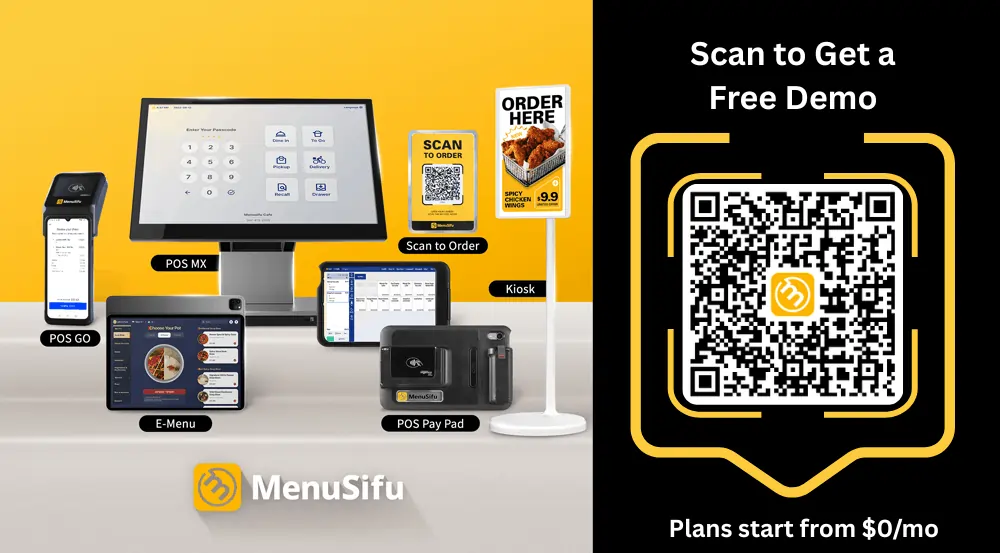
MenuSifu’s quick service restaurant POS system is built to support high-volume restaurants with tools that help your team move faster and stay organized. You can bring kiosk, online, and delivery orders into your POS, use AI voice ordering for phone orders, update menu availability in real time, and manage inventory from one place.
MenuSifu also supports kitchen display systems, pickup screen updates, automated bubble tea workflows, offline mode, promotion templates, SMS marketing, and customer targeting tools. These features help your restaurant improve order flow, serve more customers, and encourage repeat visits.
Book a Free Demo with MenuSifu today to see how a modern QSR POS system can support your restaurant’s daily operations.
Use these answers to clarify key points before choosing a quick service POS for your restaurant. Each one highlights what to look for in a system that supports faster orders, accurate tickets, and smoother daily operations.
A POS system for quick service restaurants is software and hardware that helps fast food, counter-service, and takeout restaurants process orders, accept payments, manage menus, route tickets to the kitchen, track sales, and monitor inventory. It connects front counter, drive-thru, online ordering, and kitchen workflows so teams can serve customers faster and reduce errors.
A quick service POS needs fast order entry, easy menu and modifier management, secure payment processing, kitchen display integration, online ordering, delivery app syncing, inventory tracking, staff tools, loyalty features, and clear sales reports. These features help your team take orders faster, reduce errors, track stock, and keep customer wait times short.
The best POS for quick service restaurants helps your team take orders fast, process payments quickly, send accurate tickets to the kitchen, track inventory, and manage online, kiosk, and delivery orders in one system. Look for a QSR POS with easy menu controls, kitchen display integration, real-time reports, staff tools, reliable offline mode, and support that fits your daily operations.
QSR means quick-service restaurant, which focuses on speed, counter ordering, short wait times, and high order volume. FCR means fast-casual restaurant, which often offers higher-quality menu items, more customization, and a slightly more elevated dining experience while still keeping ordering quick.
A QSR POS usually prioritizes speed, kiosks, takeout, delivery, and kitchen efficiency, while an FCR POS may also support more detailed modifiers, loyalty tools, and dine-in workflows.
For more insights and updates, check out our blog section for helpful guides on restaurant POS systems, QSR technology, online ordering, inventory tools, and restaurant growth strategies.
Related Articles: