September 18, 2026
Review QSR franchise opportunities in the USA, from concept types and startup costs to operations and technology. Learn what a QSR franchise is before investing.
Opening a QSR franchise can give you a clearer path into restaurant ownership, but the early research can feel like a lot to sort through. You need to compare startup costs, brand requirements, location potential, daily operations, and the systems that keep orders moving.
The right choice starts with knowing how the franchise model works, what costs to expect, and which factors to review before you invest. So how do you know which opportunity fits your goals and budget?
This guide breaks down what a QSR franchise is, how the model works, what to review before investing, and how the right technology can support your restaurant from day one.
A QSR franchise is a quick-service restaurant business that you operate under an established brand’s name, systems, menu, and operating standards. The franchisor owns the brand and business model, while you manage the restaurant location and follow the brand’s requirements.
QSR stands for quick-service restaurant. These restaurants focus on speed, convenience, consistency, and high order volume. Customers usually expect quick ordering, short wait times, familiar menu options, and reliable service across locations.
Common examples include fast food restaurants, fast-casual concepts, coffee shops, sandwich chains, pizza brands, bubble tea shops, and grab-and-go food businesses.
Most QSR franchises share these characteristics:
This model can make restaurant ownership more structured. Instead of creating a concept from the ground up, you follow a brand system that already defines the menu, service style, and operating process.

A QSR franchise works through a business relationship between the franchisor and the franchisee. The franchisor is the company that owns the brand, business model, menu standards, training process, and operating guidelines. The franchisee is the person or business that invests in the restaurant and operates one or more locations under that brand.
As the franchisee, you open the location, hire the team, manage daily operations, and follow the franchisor’s requirements.
The franchise agreement gives you the right to use the brand name, recipes, signage, systems, supplier network, and support. In return, you pay certain fees and keep your location aligned with the brand’s standards for food quality, service, pricing, design, and operations.
Before opening, you should review the full cost of ownership. Common expenses may include:
Once your location opens, your focus shifts to daily execution. You manage orders, staff schedules, inventory, customer service, sales performance, and brand compliance. The franchisor provides the system, but you drive the results through consistent operations and smart business decisions.
Many entrepreneurs choose QSR franchises because they offer a structured way to enter the restaurant industry. Instead of creating a brand, menu, supplier network, and operating process from the ground up, you can work within an established system built for quick service and repeatable execution.
A QSR franchise can give you:
These benefits can make QSR franchises appealing, but success still depends on your location, costs, team, market demand, and ability to manage daily operations well.
The U.S. QSR market gives you several paths to restaurant ownership. Instead of comparing brands by name alone, start with the type of concept, menu, service model, startup cost, and local demand. This helps you choose an opportunity that fits your budget, goals, and daily operations.
Popular QSR franchise categories include:
1. Burger and chicken franchises
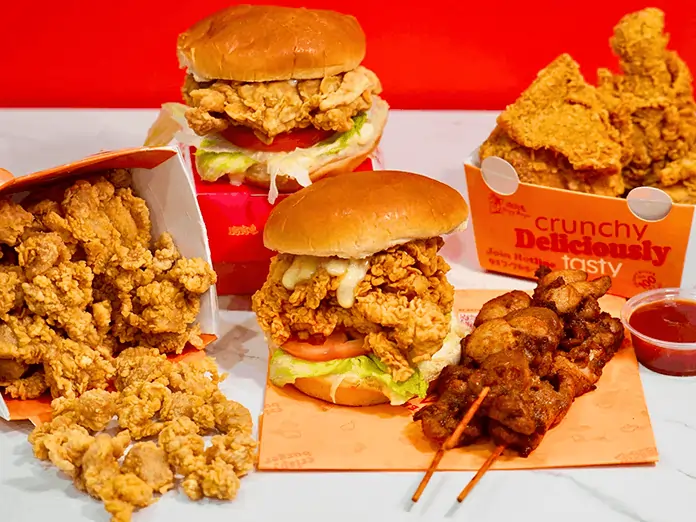
These concepts often attract steady demand because they serve quick, familiar meals with broad appeal. Many use counter service, drive-thru lanes, online ordering, and delivery to handle high order volume.
2. Pizza franchises
Pizza brands work well for takeout, delivery, catering, and group orders. They often rely on efficient kitchen workflows, strong local marketing, and repeat customers.
3. Coffee and beverage franchises
Coffee, tea, smoothie, and beverage brands can generate frequent visits throughout the week. Many focus on speed, loyalty programs, mobile ordering, and convenient pickup.
4. Sandwich and deli franchises
Sandwich concepts often fit business districts, campuses, shopping centers, and residential areas. They usually offer simple preparation, customizable orders, and strong potential for lunch traffic.
5. Tacos, burritos, and Mexican-inspired concepts
These brands appeal to customers looking for quick, customizable meals. Many support dine-in, pickup, delivery, and catering, which can help increase order channels.
6. Asian quick-service concepts
Asian QSR brands may include rice bowls, noodles, sushi, ramen, dumplings, or bubble tea. These concepts can stand out with bold flavors, compact menus, and efficient prep systems.
7. Dessert and snack franchises
Dessert, bakery, ice cream, pretzel, and snack concepts can work well in malls, entertainment areas, tourist spots, and high-traffic neighborhoods. Many benefit from impulse purchases and seasonal promotions.
8. Healthy fast-casual concepts
Salad, grain bowl, smoothie, and fresh food brands appeal to customers who want quick meals with lighter options. These concepts often depend on fresh inventory, accurate menu updates, and strong order customization.
9. Drive-thru and grab-and-go brands
These models focus on convenience. They can serve commuters, families, office workers, and delivery customers by keeping ordering, payment, prep, and pickup as efficient as possible.
As you compare QSR franchise opportunities, look at how each category operates day to day. A brand may look appealing on paper, but the best fit depends on your investment level, location, labor plan, menu format, technology requirements, and long-term growth goals.
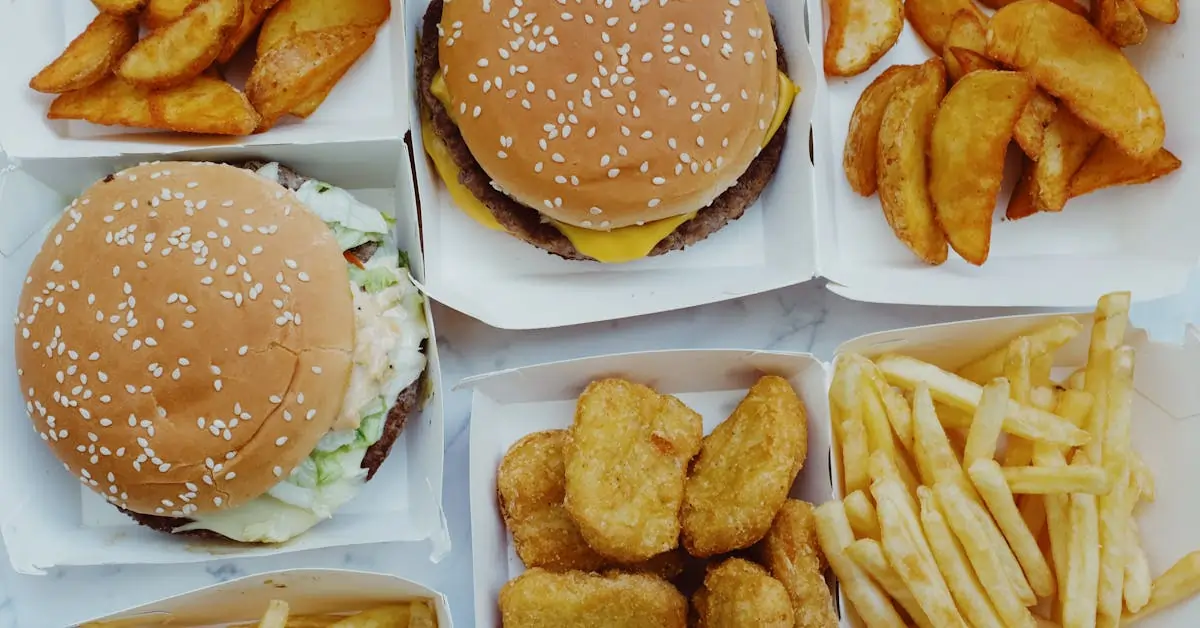
Choosing a QSR franchise requires careful review beyond brand popularity. A well-known name can help attract customers, but the business still needs to fit your budget, target market, location, and management goals.
Start with the financial requirements. Review the total estimated investment, including the franchise fee, buildout, equipment, signage, permits, opening inventory, payroll, insurance, and working capital. Then review ongoing costs, including royalty fees, marketing fees, software subscriptions, delivery commissions, and maintenance expenses.
Next, study the market. Look at local demand, nearby competitors, customer traffic, parking access, delivery potential, and the brand’s growth in your target area. A strong franchise in one city may perform differently in another location.
You should also evaluate the franchisor’s support. Check the training program, opening assistance, supplier access, marketing resources, field support, and post-opening guidance. Strong support can help you launch with clearer processes and fewer operational gaps.
Before signing, clarify these points:
A careful review helps you choose a franchise that fits your capital, goals, and ability to manage daily restaurant operations.

A QSR franchise gives you brand standards, training, and operating guidelines, but daily execution still depends on how well you manage the location. Customers expect quick service, accurate orders, and a consistent experience every time they visit.
Here are the main challenges to plan for:
These challenges are easier to manage when you set up strong systems early. That leads naturally into the next part of building a successful QSR operation: choosing the right technology.

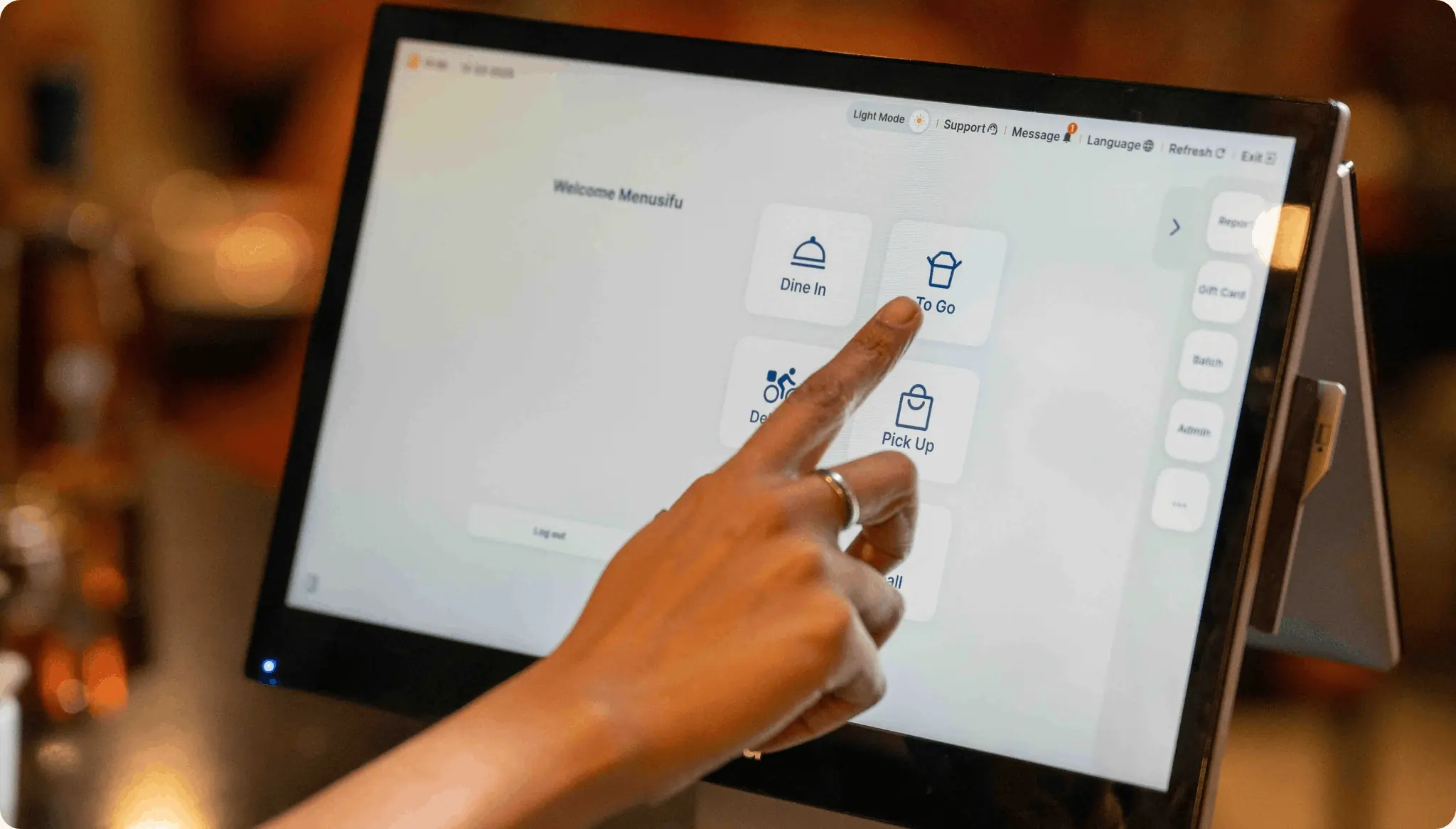
Restaurant technology gives your QSR franchise the structure to manage high order volume, serve customers quickly, and track daily performance. Before opening, evaluate the systems you need to manage orders, payments, inventory, employees, reporting, and customer engagement from one connected setup.
A reliable restaurant POS system should support:
1. Fast order entry
Your team needs to take counter, kiosk, pickup, and drive-thru orders quickly and accurately.
2. Integrated payment processing
Built-in payment tools help you accept cards, mobile wallets, gift cards, and other payment types with fewer disconnected steps.
3. Kitchen display system integration
A kitchen display system sends orders directly to the kitchen, helps staff prioritize tickets, and keeps prep organized.
4. Inventory tracking
Inventory tools help you monitor stock levels, track ingredient usage, and reduce shortages during busy periods.
Centralized menu controls let you update prices, item availability, modifiers, and combos across ordering channels.
6. Employee permissions and time tracking
Staff controls help you manage roles, clock-ins, access levels, and labor data in one place.
7. Online ordering and delivery integrations
Integrated ordering channels help you manage dine-in, takeout, delivery, and app-based orders through the POS.
8. Loyalty and customer management tools
Customer profiles, rewards, and targeted promotions help encourage repeat visits.
9. Real-time sales reporting
Live reports help you review revenue, order trends, top-selling items, labor performance, and location activity.
10. Multi-location management
If you plan to expand, multi-location tools help you manage menus, reporting, staff, and store performance across locations.
With the right technology in place, your QSR franchise can operate with better speed, accuracy, and visibility from day one.
A QSR franchise can give your restaurant ownership plan a clearer structure, but the right fit depends on more than brand recognition. Review the full investment, local demand, franchisor support, daily operating needs, and the technology each brand requires.
Before you commit, check if the franchise lets you choose a POS system that fits your workflow and growth plans. Your POS should help you manage orders, payments, inventory, kitchen activity, reporting, and customer engagement from one connected platform.
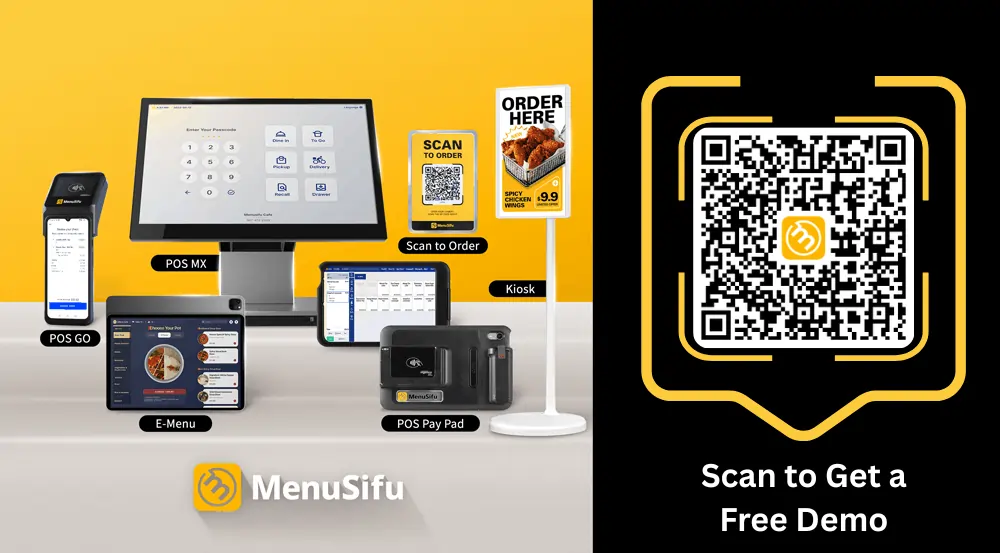
MenuSifu’s quick service restaurant POS system helps QSR operators handle high order volume across kiosks, online ordering, delivery apps, and phone orders with AI voice support. It also connects menu updates, inventory availability, kitchen display workflows, pickup screens, offline mode, promotions, and SMS marketing tools, so your team can serve customers with speed and consistency.
Planning your next QSR franchise move? Book a Free Demo with MenuSifu today to see how the right QSR POS system can support your launch and long-term growth.
Here are quick answers to common topics you may review as you compare QSR franchise options, startup costs, and ownership requirements.
A QSR franchise is a quick service restaurant franchise. The franchisor licenses its brand, menu, systems, and operating standards to a franchisee, who runs a quick-service restaurant under that brand. Examples include burger, pizza, sandwich, coffee, and chicken chains.
In the U.S., QSR franchisees usually spend about $100,000 to over $4 million to open a location. Smaller formats can start near the low end, while major drive-thru brands often require $1 million or more.
The total usually covers the franchise fee, buildout, equipment, signs, permits, inventory, training, and working capital. Subway lists about $199,135 to $536,745, Domino’s lists about $107,450 to $743,500, and Burger King lists $2,064,200 to $4,730,500.
Franchising works for QSR because the model relies on speed, consistency, and repeatable systems. A strong brand gives owners proven menus, training, supplier access, marketing support, and operating standards, so each location can serve guests quickly and maintain quality. Franchisees add local ownership and daily accountability, while the franchisor supports growth across many markets.
With $10,000, your QSR franchise options in the US are limited. Chick-fil-A lists a $10,000 initial franchise fee, but its operator model requires non-gifted, non-borrowed funds and full-time, hands-on restaurant operation.
Many restaurant franchises require higher total startup capital once you include buildout, equipment, inventory, staffing, permits, and technology. Review each brand’s Franchise Disclosure Document before you apply so you can compare the full investment, fees, and ownership requirements.
Chester’s Chicken is one lower-cost QSR franchise option in the U.S., with an FDD-listed initial investment of about $28,000 to $302,000. Its lower entry cost comes from smaller, often nontraditional locations inside host sites like convenience stores and travel centers. Some food-service franchise formats list lower minimums, so review the latest FDD before you choose a brand.
For more insights and updates on restaurant technology, operations, and franchise growth, explore MenuSifu's blog.
Related Articles:
DISCLAIMER: Franchise costs, fees, and requirements vary by brand, location, format, and market conditions. The figures mentioned in this article are for general informational purposes only and may change over time. Always review the latest Franchise Disclosure Document and consult qualified financial or legal advisors before making an investment decision.