September 19, 2026
Compare MenuSifu, Toast, Square, and Clover to find the best POS for Asian and Chinese restaurants in the US, from menu logic to multilingual tools and support.

Asian food holds a strong place in U.S. dining. Pew Research Center found that 12% of restaurants in the U.S. serve Asian food, and about seven in ten Asian restaurants serve Chinese, Japanese, Korean, or Thai cuisine.
Chinese restaurants lead that group, making up 39% of Asian restaurants nationwide. That strong presence also means many restaurants in this category need systems built for detailed menus, multilingual teams, and multiple order channels, rather than a one-size-fits-all POS.
If your restaurant handles detailed menu edits, multilingual workflows, dine-in, takeout, and delivery all at once, the right POS can shape how smoothly your team works each day. Which platform fits your operation best? In this blog, we compare MenuSifu, Toast, Square, and Clover so you can see which system aligns best with your menu, staff, and growth plans.
Before you compare POS brands, set a clear checklist. That helps you focus on the features that support your menu, your team, and your daily operations.
Asian and Chinese menus often need more than basic item entry. Your POS should handle combo meals, spice levels, protein swaps, add-ons, lunch specials, family-style dishes, hot pot choices, BBQ selections, AYCE rules, and tea customizations with ease. It should also keep tickets clear, so the kitchen can read each order quickly and get it right.
If your team uses more than one language, your POS should support that across the system. Look for multilingual menus and screens that help staff learn faster, enter orders clearly, and stay aligned during busy shifts. This can also improve the guest experience on kiosks, tablets, and QR ordering.
Many restaurants juggle dine-in, pickup, phone orders, direct online orders, and third-party delivery at the same time. Your POS should keep those channels connected in one place. That way, menu updates, sold-out items, and order flow stay consistent across the business.
When orders pile up, your POS should help your team move faster. Look for smooth tableside ordering, direct kitchen routing, quick split checks, and fast payment processing. A stable system can keep orders moving from the dining room to the kitchen to checkout with fewer delays.
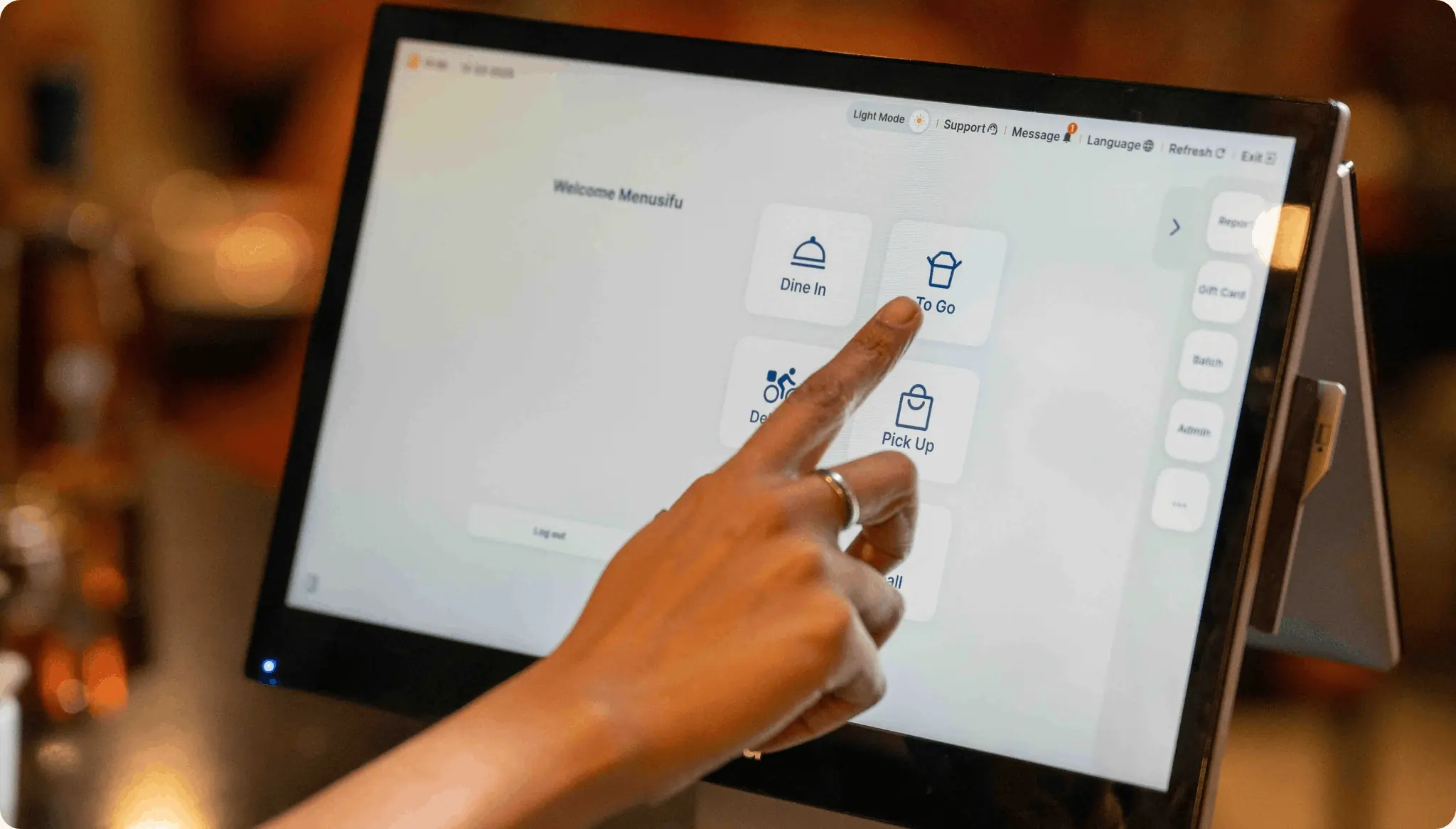
The right hardware depends on how your restaurant operates. Some shops need a countertop terminal at the register. Others need handhelds for table ordering, kiosks for self-ordering, kitchen display screens for back-of-house coordination, or customer-facing displays at checkout. A strong POS should give you options that fit your setup.
A good POS should not take weeks to figure out. Look for a provider that offers clear setup, hands-on training, and dependable support after installation. This area can shape your experience as much as the software itself, especially if you want bilingual help and direct access to trained technicians.
Your POS should support the next stage of your business, not just your current needs. Reporting, loyalty, payments, multi-location tools, and tighter operational control can help you grow with less disruption. If you plan to expand, open another location, or add more digital ordering channels, choose a system that can grow with you.
Need a quick scan before the deeper breakdown? Use this side-by-side view to compare each platform by fit, strengths, tradeoffs, and restaurant type.
Before you compare features side by side, it helps to see how each platform presents its value.
MenuSifu positions itself as a restaurant technology partner with strong support for Asian and Chinese restaurant operations. It highlights multilingual tools, restaurant-focused POS features, restaurant-grade hardware, and specialized solutions for formats such as hot pot, AYCE, bubble tea, full-service, and takeout. It also extends beyond POS into payments, marketing, financing, and consulting, giving you a more connected restaurant ecosystem.
Toast presents itself as a broad restaurant platform built around POS, payments, online ordering, reporting, and back-office tools. It appeals to restaurants that want a well-known brand with a wide feature set across many restaurant types.
Square emphasizes ease of setup, intuitive tools, and an accessible starting point for POS and payments. Its restaurant products focus on helping operators get up and running quickly, then add tools such as handhelds, online ordering, kiosks, and kitchen display as needed.
Clover positions itself around flexibility, with multiple hardware options, restaurant POS solutions, and app-based customization through its App Market. It can fit restaurants that want more control over how they build their setup, though the overall experience can depend on the hardware, apps, and sales partner involved.
A side-by-side feature list only goes so far. The better way to compare these systems is to look at the daily jobs your POS needs to handle well. Here is how MenuSifu, Toast, Square, and Clover stack up across the areas that tend to shape the best fit for Asian and Chinese restaurants.
If your menu includes broth choices, spice levels, combo builds, add-ons, tea toppings, lunch specials, family-style dishes, open-food items, and special notes like "less oil" or "no scallions," your POS needs to keep up.
MenuSifu leads in this area. It was built with Asian restaurant workflows in mind, so it handles detailed modifiers, timed menus, combo logic, AYCE rules, hot pot ordering, tea shop customizations, split tickets, and custom notes with less effort from your team. It also supports menu scheduling, sold-out updates, and multilingual menus across channels.
Toast does well for broad restaurant menu needs. It can support modifiers, combos, and many common workflows, but it does not speak as directly to Chinese food operations or specialty formats like hot pot, AYCE, and boba.
Square works best for lighter menu structures. It can do the basics well, but once your menu starts layering on more rules and more edits, it may feel less natural for that style of operation.
Clover can support a range of menu setups, too, though the final experience often depends on how the system is configured.
Best fit for menu-heavy operations: MenuSifu
For many restaurants, language support affects training, speed, and order accuracy every day. That includes front counter ordering, kitchen communication, self-ordering, and menu browsing.
MenuSifu stands out here because multilingual support runs across the system, not just in one spot. Menus and interfaces can support English, Chinese, Spanish, and other languages across the POS, KDS, kiosks, and digital ordering tools. That helps your team work faster and helps guests order with less back-and-forth.
Toast, Square, and Clover can work for many teams, but they do not center bilingual restaurant workflows in the same way. If your operation depends on clear communication across multiple languages, MenuSifu has the strongest edge.
Best fit for bilingual operations: MenuSifu
Many restaurants now juggle dine-in, pickup, phone orders, online ordering, and third-party delivery simultaneously. A strong POS should pull those channels together so orders move cleanly from the front to the kitchen.
MenuSifu does this well. It combines dine-in, takeout, phone, online, and delivery orders into a single workflow. It also supports branded online ordering, direct order channels, and integrations with major delivery apps. Menu updates, sold-out items, and order changes sync across channels, which cuts down on manual re-entry.
Toast also performs well here and gives restaurants a broad set of tools for in-house and off-premise orders. Square works for operators with a simpler setup. Clover can support multichannel orders, too, though the flow may depend more on the apps and reseller setup.
If you want one system that keeps every order source connected, MenuSifu and Toast sit at the top, with MenuSifu holding the stronger position for Asian restaurant workflows.
Best fit for mixed order channels: MenuSifu or Toast, with MenuSifu stronger for Chinese and Asian restaurants
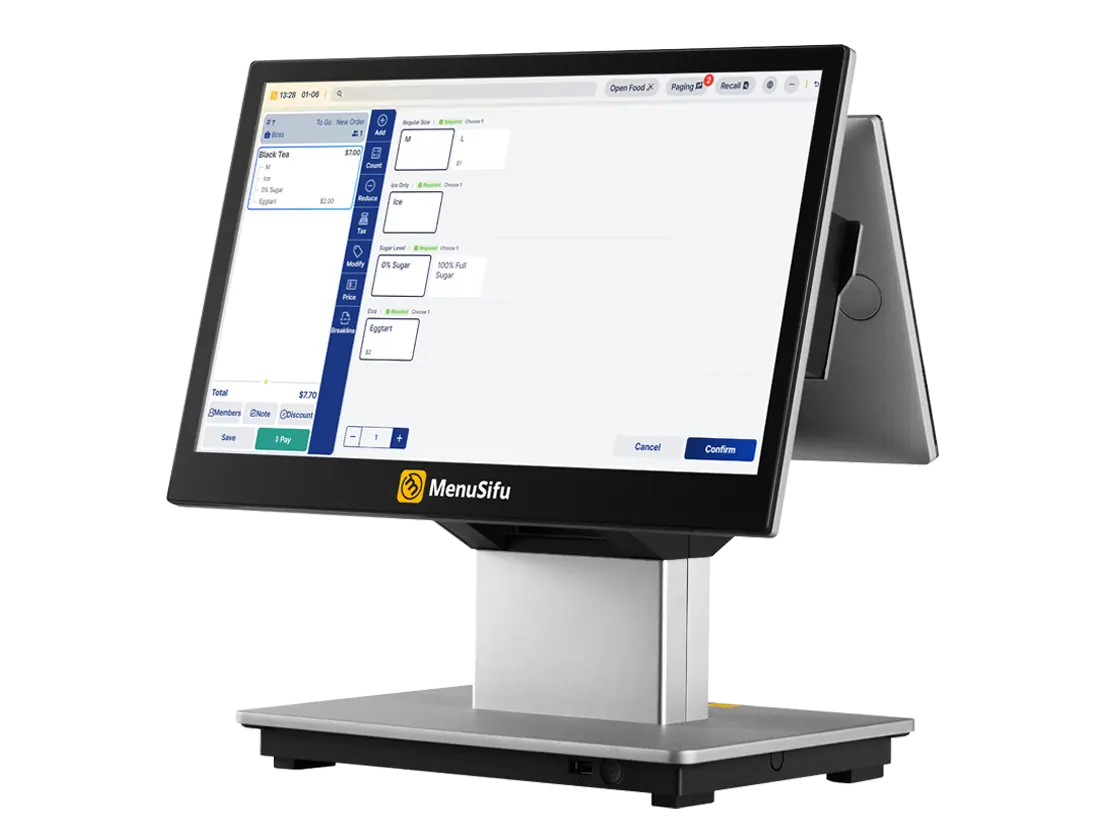
The right hardware depends on how you run the floor. A full-service restaurant may need handhelds and table tools. A quick-service shop may care more about kiosks, order status screens, and customer-facing displays.
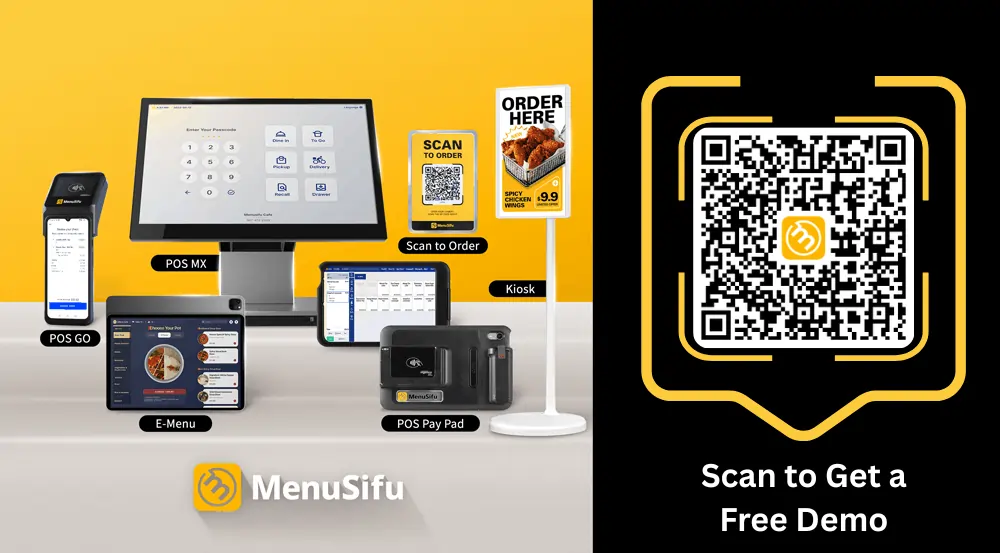
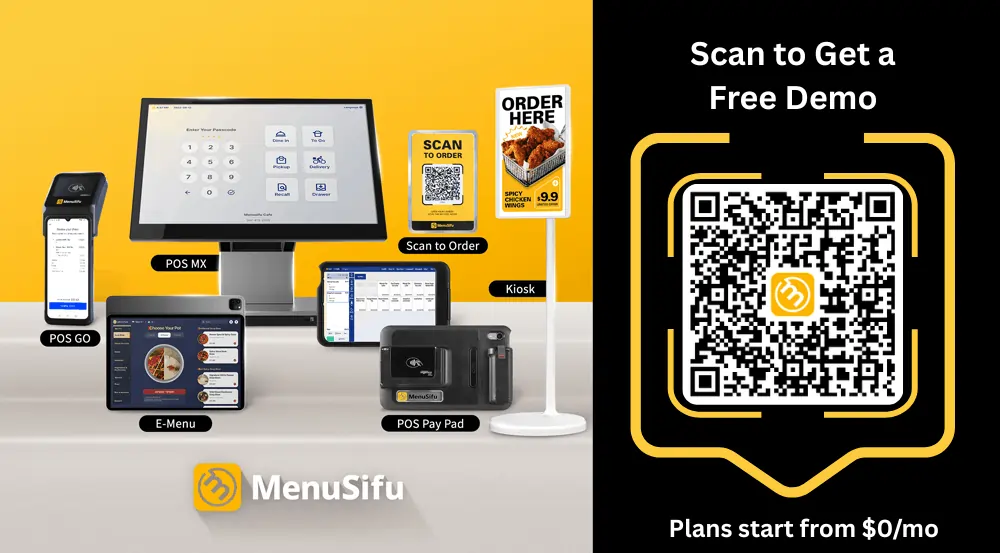
MenuSifu offers one of the broadest hardware sets in this comparison. That includes countertop terminals, handheld POS devices, kiosks, KDS, customer-facing displays, QR ordering, order status screens, waitlist tools, and reservation tools. It also supports specialty setups for hot pot, AYCE, and boba shops.
Toast also offers strong restaurant hardware, especially for table-side ordering and general restaurant use. Square gives smaller restaurants accessible hardware that is easy to launch. Clover offers flexibility through its device lineup and app-based setup.
If your concept needs more than a front counter terminal, MenuSifu gives you the widest operational range.
Best fit for hardware breadth: MenuSifu
Best fit for simpler hardware needs: Square
Best fit for broad mainstream restaurant hardware: Toast
A POS can look good in a demo and still fall short once setup starts. Installation, training, post-sale help, and day-to-day support shape the full experience.
MenuSifu puts a lot of focus here. It offers on-site installation, hands-on training, fast onboarding, and a 24/7 bilingual technical hotline. That combination can help your team get up to speed faster and get help quickly when issues come up. It also feels more specialized because its pitch, tools, and support model all center on restaurant operations, especially Asian dining formats.
Toast, Square, and Clover all provide support, but their approach can feel broader and less focused on Chinese or Asian restaurant needs. Clover can vary more depending on the reseller. Square may suit operators who want a simpler path. Toast offers a large restaurant platform, but MenuSifu brings a more focused support story for this niche.
Best fit for onboarding and bilingual support: MenuSifu
The lowest entry price does not always lead to the best long-term result. A better lens is total fit: software, hardware, add-ons, support, training, and the number of extra tools you may need later.
Square can work well if you want a lighter setup and want to get started quickly. Toast offers a broad platform for restaurants that want a mainstream option with many built-in tools. Clover can work if you want to shape your own setup and are comfortable sorting through hardware and app choices.
MenuSifu takes a wider approach. It combines POS, payments, loyalty, online ordering, marketing, financing, consulting, and restaurant hardware into a single connected ecosystem. That can reduce the need for extra vendors and cut down on patchwork systems. If your restaurant wants one partner across more parts of the business, MenuSifu offers strong long-term value.
Best fit for total operational value: MenuSifu
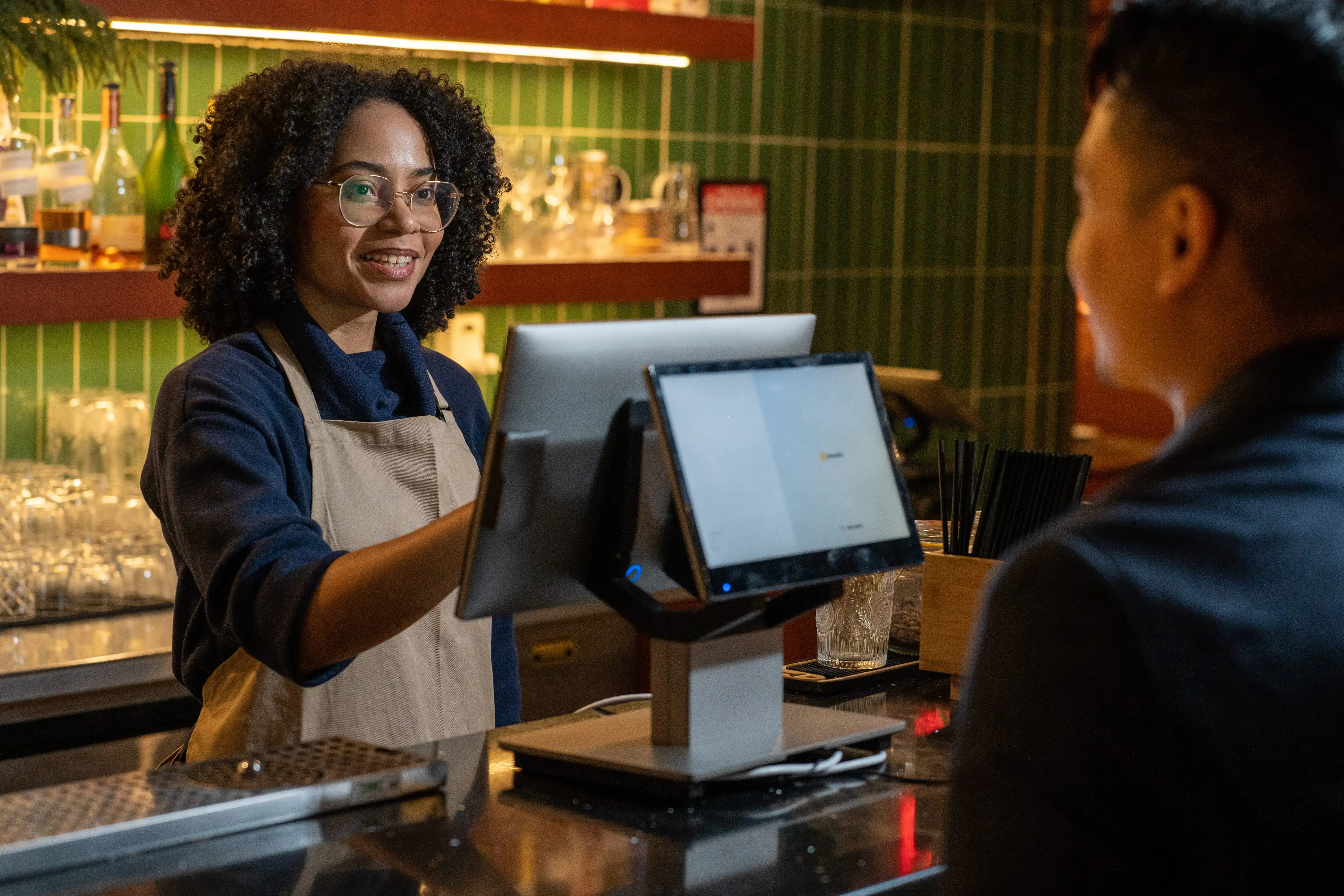
Not every restaurant needs the same POS. The right fit depends on your menu, order flow, staffing, and growth plans. Here’s a quick way to match each platform to the kind of operation you run.
MenuSifu is the strongest fit for many Chinese full-service restaurants. If your team handles large parties, split checks, detailed food notes, bilingual communication, and a mix of dine-in, takeout, and delivery, MenuSifu gives you the tools to keep everything organized. Handheld ordering, kitchen display support, waitlist tools, and menu control all line up well with the way many Chinese restaurants operate.
MenuSifu leads in this category, too. Hot pot, Korean BBQ, and AYCE restaurants often need broth choices, item limits, time limits, package pricing, topping rules, and repeat ordering built into the flow. MenuSifu supports these menu structures well, which helps your staff stay efficient and keeps orders clear from table to kitchen.
Square is a good option for smaller quick-service restaurants that want a lighter setup. If your menu is shorter and your workflow is less layered, Square can cover the basics well. It is often a good fit for shops that want an easier start and do not need deeper restaurant-specific tools right away.
Toast is a strong choice if you want a widely known restaurant POS with a broad set of features. It fits restaurants that prefer a large platform with tools for many common restaurant needs in one system. For owners comparing well-known brands, Toast often feels like the most established mainstream option.
Clover works best for restaurants that want to shape their setup through different hardware and app options. It can fit a wide range of operations, especially if you want more control over how the system is built. Just keep in mind that the experience can vary based on your reseller, hardware package, and software add-ons.
MenuSifu is a strong fit if your restaurant needs more than a basic POS.
It stands out when your operation depends on detailed menu rules, bilingual workflows, and multiple order channels working together in one system. It also fits restaurants that want one connected partner for POS, payments, online ordering, loyalty, marketing, and long-term growth tools.
MenuSifu may be the better choice if you want:
MenuSifu offers the strongest fit for many Asian and Chinese restaurants, but it is not the only option.
Choose Toast if you want a broad restaurant platform with a wide feature set and strong brand recognition.
Choose Square if your restaurant has a simpler workflow and you want an easier setup path.
Choose Clover if you want more flexibility through different hardware and app combinations.
The right choice depends on how your restaurant runs today and how much specialization you want from your POS partner.

For many Asian and Chinese restaurants in the US, MenuSifu is the strongest overall fit.
Toast, Square, and Clover each have a place in the market. Toast is a solid mainstream restaurant platform. Square is a practical option for smaller operations. Clover offers flexibility for restaurants that want to shape their own setup.
Still, MenuSifu stands out for one key reason. It goes deep into restaurant operations and wide across the full business ecosystem. Its POS covers the detailed workflows that show up often in Chinese and Asian restaurants, and its broader platform extends to payments, financing, consulting, marketing, online ordering, specialty equipment, and multilingual support. If you want a POS partner that understands your day-to-day operation and can support your next stage of growth, MenuSifu makes the strongest case.
Choosing a POS is easier when you can see how it handles your menu, order flow, and daily operations in practice. If you want to explore a system built for Asian and Chinese restaurants, book a free demo with MenuSifu today.
Still weighing your options? These FAQs break down the key differences between MenuSifu, Toast, Square, and Clover so you can see which system fits your restaurant best.
MenuSifu is the best fit for many Chinese restaurants with highly customizable menus. It handles detailed modifiers, combo rules, portion choices, special notes, timed menus, and bilingual ordering more smoothly than most general POS platforms. Toast, Square, and Clover can support many restaurant needs, but MenuSifu offers a stronger fit for restaurants that rely on layered menu options and more specialized ordering flows.
MenuSifu offers the strongest bilingual support among the four, especially for restaurants that need Chinese and English across staff workflows and guest-facing ordering. It supports multilingual menus and tools across POS, kiosks, kitchen displays, and self-ordering channels, which can help teams work more smoothly and help guests order more easily. Toast, Square, and Clover can support multiple languages in some areas, but MenuSifu puts bilingual restaurant operations at the center of its platform.
MenuSifu works especially well for restaurants that handle dine-in and high takeout volume at the same time. It brings dine-in, pickup, phone, online, and delivery orders into one system, which helps your team stay organized and keep orders moving. Toast can also support multi-channel operations well, while Square often fits smaller restaurants with a simpler order flow.
Yes. MenuSifu, Toast, Square, and Clover all support third-party delivery and direct online ordering in different ways. MenuSifu stands out if you want both channels connected in one workflow, with menu updates, order syncing, and POS management handled from one system.
Look beyond the monthly fee and compare how well the POS fits your daily operation. Check menu flexibility, multilingual support, dine-in and takeout order flow, delivery integration, hardware options, onboarding, support quality, reporting, and tools for loyalty and online ordering. A lower price can cost more over time if your staff has to work around gaps in the system.
No. MenuSifu serves many restaurant types across the U.S., including Chinese, Japanese, Korean, Thai, Vietnamese, Mexican, quick-service, and full-service concepts. It stands out for its strong support for Chinese and Asian restaurant operations, but its tools also fit boba shops, hot pot restaurants, AYCE concepts, and takeout-focused businesses.
For more restaurant technology tips, POS insights, and growth ideas, check out our blog section for more updates.