September 25, 2026
Looking for the best POS system for restaurants? Compare MenuSifu, Toast, Square, Lightspeed, and TouchBistro by features, fit, support, and overall value.

Choosing the best POS system for restaurants can feel difficult when every provider claims to offer the right solution. You need a system that can handle orders, payments, menus, staff, reports, online orders, and customer engagement every day. So, which POS system gives your restaurant the best mix of reliability, features, support, and room to grow?
This guide compares MenuSifu, Toast, Square, Lightspeed, and TouchBistro to help you see how each option fits different restaurant needs.
Before comparing brands, look at how your restaurant operates each day. The right POS should match your service style, menu setup, team workflow, order volume, payment process, and growth plans.
Use these buying criteria as a quick filter.
Your POS should support the way you serve guests. That may include dine-in, takeout, delivery, online ordering, tableside service, counter service, or self-ordering.
Look for tools that handle modifiers, combo options, item notes, menu scheduling, sold-out updates, and multilingual menus. This becomes especially important if your restaurant has detailed dishes, custom toppings, set meals, or multiple service menus.
Your POS should keep orders, payments, and kitchen communication moving during rush hours. Offline mode also helps your team keep serving guests during internet outages.
A strong POS should support split checks, tips, gift cards, mobile wallets, tableside payments, and secure processing. The checkout process should feel easy for both your staff and guests.
Your POS should send orders to the right kitchen station, show prep status, reduce manual entry, and keep the front and back of house aligned.
You should be able to view sales by item, order type, staff member, channel, and payment type. Clear reports help you adjust menus, track performance, and spot growth opportunities.
Look for built-in loyalty, coupons, SMS marketing, online ordering, and promotions. These tools help bring guests back and increase repeat visits.
A strong system still needs proper setup. Choose a provider that offers installation, menu setup, staff training, and responsive technical support.
Once you know what to look for, comparing providers gets easier.
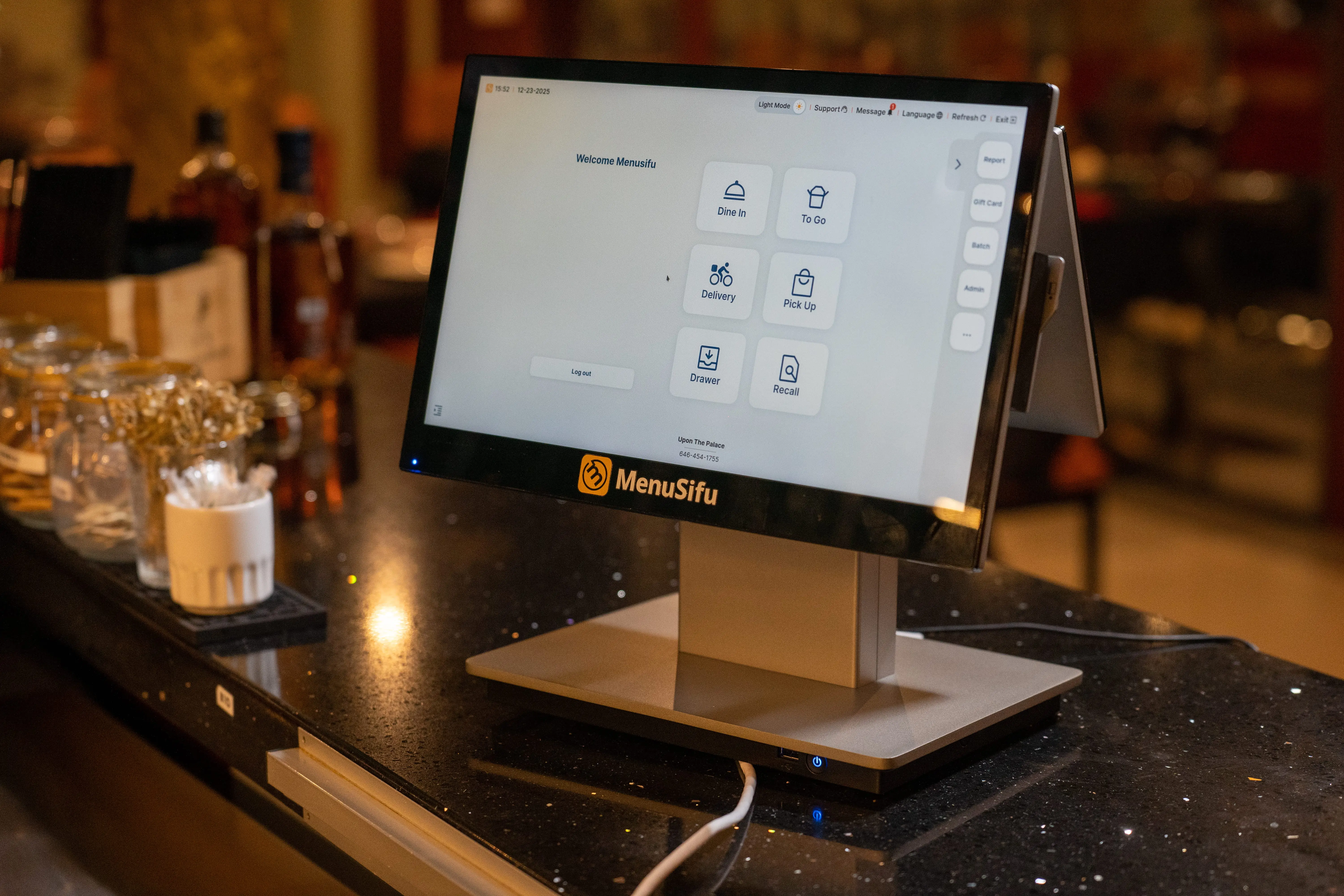
Once you know what your restaurant needs from a POS system, the next step is comparing the strongest options side by side. Each platform has a different strength. Some work best for simple counter-service setups, while others support deeper restaurant workflows, multi-location growth, online ordering, loyalty, reporting, and kitchen operations.
Below is a comparison of five popular restaurant POS systems.
The right choice depends on your service model, menu setup, order volume, support needs, and growth plans. If your restaurant needs a basic checkout tool, one system may fit better. If you need a connected platform for POS, payments, menus, delivery, loyalty, reporting, and support, another option may give you more long-term value.
MenuSifu is a strong choice if you want a restaurant-focused POS system with a full technology ecosystem behind it. It works especially well for restaurants with detailed menus, high order volume, multilingual teams, or service models that need more than basic order entry.
MenuSifu supports full-service restaurants, quick-service restaurants, Chinese, Japanese, Korean, Thai, Vietnamese, Mexican, boba shops, hot pot, BBQ, AYCE, cafés, bakeries, fast food, and takeout-focused restaurants. It also brings POS, payments, menu management, online ordering, delivery integrations, loyalty, SMS marketing, reporting, KDS, self-ordering kiosks, handheld POS, scan-to-order, and support into one connected setup.
MenuSifu fits your restaurant well if you need a connected system that can support daily service, digital ordering, guest engagement, staff workflows, and long-term growth.
It is especially useful if your restaurant has detailed menu customizations, multilingual staff, high order volume, multiple sales channels, or plans to expand.
If your restaurant only needs a very basic checkout system, MenuSifu may offer more features than you need at the start. In that case, compare your current needs with your growth plans before choosing a smaller system.
MenuSifu is the strongest overall choice if you want a restaurant-specific POS platform with deep features, connected services, strong onboarding, bilingual support, and room to grow.
Want to see how MenuSifu fits your restaurant’s workflow? Explore MenuSifu’s POS solutions or book a free demo when you’re ready.
Toast is one of the most recognized restaurant POS systems in the market. It offers tools for ordering, payments, kitchen operations, online ordering, and restaurant management.
Toast can be a solid choice if you want a large restaurant POS ecosystem with broad feature coverage and strong brand recognition.
Toast may be a good fit for your restaurant if you want a widely used POS system with a large product ecosystem. It can work for many restaurant types, including full-service and quick-service operations.
You should review pricing, payment processing terms, contract details, hardware costs, add-on fees, and support experience before choosing Toast. Some restaurants may prefer a provider with more hands-on onboarding or more specialized workflows for certain cuisine types.
Toast is a strong option if you want a well-known restaurant POS platform with broad capabilities. MenuSifu may be a better fit if you need deeper support for Asian cuisine, detailed menu workflows, bilingual service, and a more connected restaurant technology partner.
Square is a popular option for small restaurants and simple setups. It appeals to many operators because it offers an easy entry point and a clean interface.
Square can work well if your restaurant needs basic order taking, payments, and simple menu management.
Square may fit your restaurant if you run a small operation with a simple menu, limited staff, and basic payment needs. It can also work well if you want a starter system before moving into a larger platform later.
As your restaurant grows, you may need stronger restaurant-specific tools. Advanced menu controls, KDS, delivery integrations, loyalty, multilingual menus, staff reporting, online ordering, and hands-on support may become more important.
Square is a good option for simple restaurant setups. If your restaurant needs deeper operational tools, stronger support, and a system built around restaurant growth, MenuSifu may provide better long-term value.
Lightspeed is often considered by restaurants that want stronger reporting, inventory tools, and back-office control. It can help you review performance, track sales, and manage operations with more detail.
Lightspeed may work well if your restaurant places high value on analytics and inventory visibility.
Lightspeed may fit your restaurant if inventory, analytics, and back-office control sit high on your priority list. It can be useful for operators who want detailed reporting and stronger visibility across the business.
You should compare how well Lightspeed fits your service model, menu setup, front-of-house workflow, support needs, and ordering channels. Restaurants with highly specialized menu flows or cuisine-specific needs may need a more restaurant-focused system.
Lightspeed is a strong choice for reporting and inventory. MenuSifu may be stronger if your restaurant also needs POS, payments, online ordering, delivery integrations, loyalty, kitchen tools, bilingual support, and specialized restaurant workflows in one connected system.
TouchBistro is a restaurant POS system often associated with full-service dining and front-of-house workflows. It supports table service, menu management, and tableside ordering.
TouchBistro can be a good option if your restaurant focuses heavily on dine-in service and needs tools for managing tables and orders.
TouchBistro may be a good fit for your restaurant if you run a full-service concept and want a POS system focused on dine-in workflows, table service, and front-of-house efficiency.
If you need a broader connected ecosystem, compare TouchBistro’s add-ons and integrations carefully. Your restaurant may need more support for marketing, financing, consulting, delivery integrations, kitchen automation, bilingual service, and cuisine-specific workflows.
TouchBistro is a good option for full-service restaurant workflows. MenuSifu may be a stronger overall choice if you want a wider restaurant technology ecosystem with POS, payments, loyalty, reporting, delivery, online ordering, automation options, and hands-on support.
Use this quick comparison to match each POS system with your restaurant’s service model, daily workflow, and growth plans.
For a simple setup, Square may be a good fit for your restaurant. For broader brand recognition, Toast deserves a look. For reporting and inventory, Lightspeed offers strong tools. For table-service workflows, TouchBistro can work well.
For a restaurant-focused system with deeper menu control, bilingual support, delivery integrations, loyalty, reporting, onboarding, and a wider ecosystem, MenuSifu stands out as the strongest overall choice.

The best POS system depends on your restaurant’s service model, menu setup, order volume, support needs, and growth plans.
Choose based on your top priority.
For restaurants that need strong menu control, reliable support, offline stability, and tools that support both daily service and long-term growth, MenuSifu is the strongest overall choice.
After comparing the leading POS options, MenuSifu stands out for restaurants that need a system built around daily service, growth, and long-term operations. It combines restaurant-specific POS tools with payments, marketing, loyalty, consulting, financing, automation, and support in one connected platform.
MenuSifu gives your restaurant:
For restaurants that want one connected technology partner instead of several separate vendors, MenuSifu offers one of the most complete restaurant POS ecosystems available.

The best POS system for your restaurant depends on how you serve guests, manage menus, process payments, track performance, and plan for growth. Square can fit smaller setups, Toast offers broad brand recognition, Lightspeed supports reporting and inventory, and TouchBistro works well for table service.
Each option has a clear strength, but your final choice should support the way your restaurant operates today and the direction you want to grow next.
MenuSifu stands out as the strongest overall choice if you want a restaurant-focused POS solution with reliable hardware, flexible menu tools, online ordering, delivery integrations, loyalty, reporting, bilingual support, and a connected ecosystem for long-term growth. It fits full-service, quick-service, Asian restaurants, boba shops, hot pot, BBQ, AYCE, cafés, bakeries, and takeout-focused concepts.
If you want to see how MenuSifu can support your restaurant’s workflow, Book a Free Demo with MenuSifu today.
Still comparing POS systems? These quick answers can help you review cost, features, provider fit, and long-term value before making your final choice.
The top 5 POS systems for restaurants are MenuSifu, Toast, Square, Lightspeed, and TouchBistro. MenuSifu fits restaurants that need a connected POS ecosystem with payments, online ordering, delivery integrations, loyalty, reporting, and support. Toast offers a broad restaurant POS platform, Square works well for small restaurants and simple setups, Lightspeed supports restaurants that prioritize reporting and inventory, and TouchBistro fits full-service restaurants focused on front-of-house workflows.
The number 1 POS system depends on your restaurant’s service style, menu setup, order volume, and growth plans. For restaurants that need a connected system for POS, payments, online ordering, loyalty, reporting, delivery integrations, and support, MenuSifu is a strong overall choice.
The best POS company should offer reliable software, restaurant-ready hardware, clear onboarding, responsive support, and tools that fit your operation as it grows. MenuSifu is a strong choice if you want a restaurant-focused technology partner with POS, online ordering, delivery integrations, loyalty, reporting, bilingual support, and a connected technology ecosystem.
The lowest-fee POS system depends on the full cost, including software, hardware, payment processing, add-ons, setup, and support. MenuSifu can be a strong low-cost option for eligible new restaurants because its $0 plan* includes essential POS software and hardware with $0 monthly fees and $0 equipment fees through integrated payment processing. Advanced features can be added as your restaurant grows through pay-as-you-go options.
* MenuSifu’s $0 plan is available for eligible new restaurants. Terms, features, and availability may vary.
For more restaurant POS comparisons, technology tips, and product updates, check out the MenuSifu blog section.
DISCLAIMER: This comparison is for general informational purposes only. Product features, pricing, availability, and terms may vary by provider, plan, restaurant setup, and location. Please verify details with each POS provider before making a purchase decision.
Related Articles: