February 24, 2026
Planning a new setup or a switch? Get a clear cafe POS buyer guide: features, workflows, fees, and demo checks to select the best POS system for cafe needs.

The morning rush hits, the line starts to curl toward the door, and orders get specific fast: oat milk, half-sweet, extra shot, add a pastry, split the payment, apply points. A cafe POS has to keep up with all of it while keeping totals clean and tickets readable.
If your current setup slows the register, hides key reports, or makes online pickup harder to manage, it may be time to tighten the system behind your counter.
This blog breaks down what a café-ready POS should handle, the features to prioritize, and what to test in a demo so your cafe can serve faster, sell smarter, and stay organized as volume and locations grow.
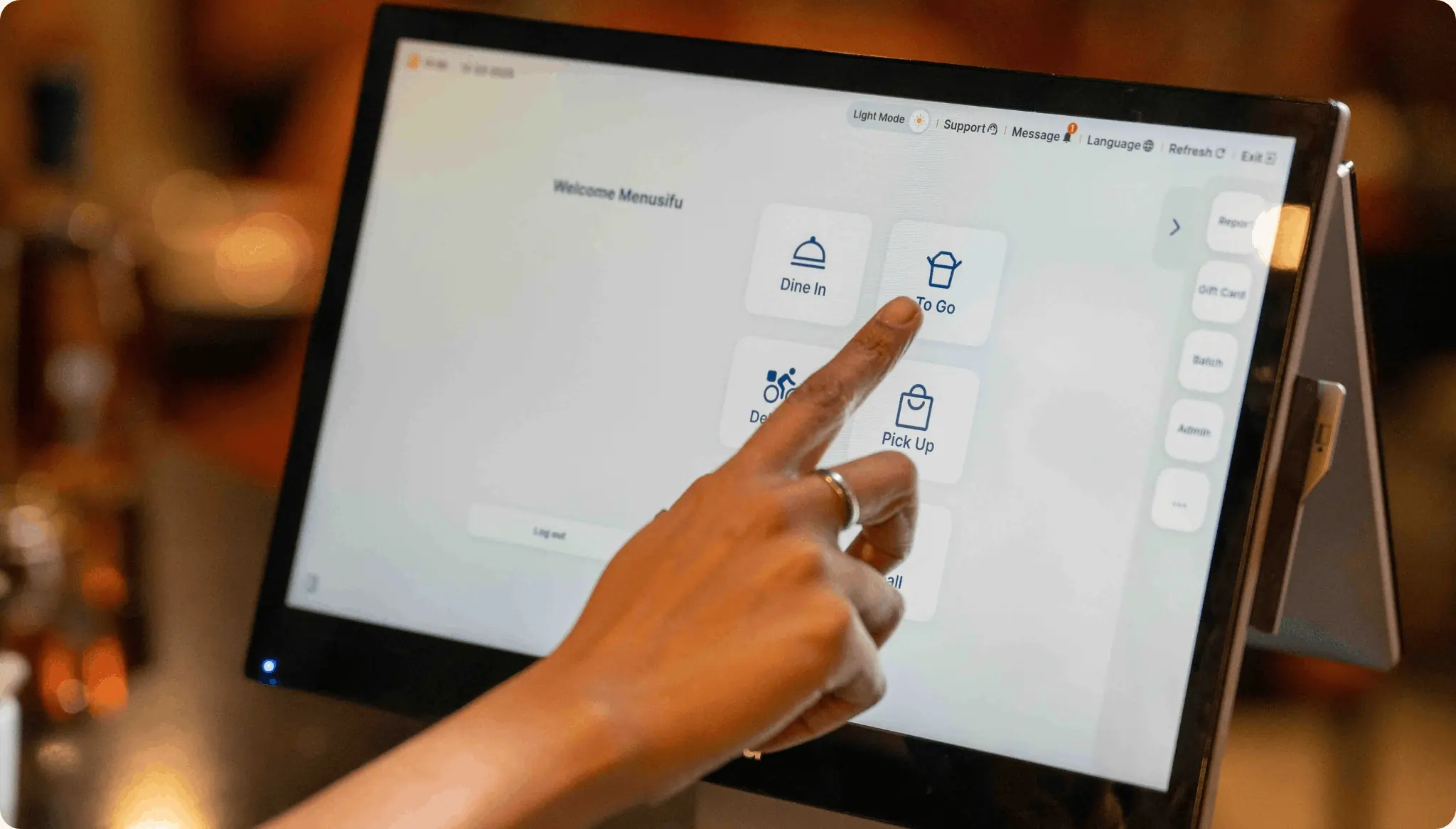
Cafe POS, or cafe point-of-sale system, refers to the tools you use to take orders, accept payments, and record sales in a café setting. It brings your register, card reader, receipts, and reporting into one setup, so every sale flows from order to payment to tracking.
A cafe POS fits counter service and quick turns. It supports drink builds with modifiers like size, milk, temperature, syrups, and add-ons, then sends clear tickets to the bar or kitchen. It also handles tips, discounts, refunds, and gift cards while keeping totals accurate.
Many cafés also use a cafe POS to manage loyalty and online ordering. You can track repeat visits, run simple rewards, and organize pickup orders so staff can keep service moving during peak hours. If you operate more than one location, a cafe point-of-sale system can also standardize menus, pricing, and reports across stores, so you can compare performance and control updates from one place.
A strong cafe POS system keeps your counter moving, keeps orders accurate, and gives you the controls you need after the rush. Here are the features to prioritize.
The register screen should feel like muscle memory. Look for:
Small speed gains add up when the line hits.
Café menus live on customization. Your POS should capture it cleanly.
Clear modifier flow cuts remakes and keeps tickets readable.
Payments should move fast and close out cleanly at the end of the day.
You want simple checkout for guests and clean totals for your books.
Cafés win on frequency. Keep loyalty easy for staff and guests.
Enrollment should take seconds at the register.
Menus change. Prices shift. Items sell out. Your system should keep up.
Tight menu control helps protect margins and keeps service consistent.
Reports should help you make decisions quickly, not create extra work.
For multiple stores, you also want store comparisons and roll-up views.
Pickup can boost volume, but it needs structure.
This keeps in-store service steady even when digital orders spike.
Once you manage more than one shop, consistency becomes the priority.
These tools help you scale standards across 2 to 20 locations while keeping day-to-day control.

You can run a café on either a modern café POS (usually cloud-based) or a traditional POS (often locally installed). The real difference shows up when the line gets long, the menu changes, or you add pickup/delivery, kiosks, and loyalty.
Best if you want speed at the counter and flexibility as you grow.
Often a fit for simpler, stable operations that rarely change pricing or items.
Use your real workflow (not a generic demo):
Rule of thumb:
If you run high-volume counter service, customize orders heavily, change menus often, sell via pickup/delivery, or manage multiple locations, modern café POS software usually fits better. If your operation is stable and minimal, a traditional POS can be enough as long as it stays reliable during rushes.
Your cafe's point-of-sale system should match how orders move from the register to the bar, kitchen, and pickup area. Prioritize workflows that keep tickets clear and staff actions consistent during peak periods.
1. Rush-hour line flow
2. Custom drinks with clean modifier logic
3. Food add-ons and bundles
4. Split payments, refunds, and exchanges
5. Multi-channel orders: in-store, pickup, delivery
If these workflows run smoothly in your demo, your cafe point of sale systems will support daily service now and scale cleanly as you add locations.

Start with your menu and rush-hour flow, then use the steps below to compare options side by side and pick the best POS system for cafe service.
Start with how orders move through your shop.
Skip generic feature lists. Build your checklist from your busiest hour.
A demo means nothing if it avoids your real orders. Bring your menu and drive the demo.
Ask the vendor to ring in 10–15 common orders, including:
Watch how many taps it takes and how tickets print. Look for clean modifier formatting that bar and kitchen staff can read at a glance.
Great features won’t help if setup drags or training falls apart.
Pick the system that fits your service flow, proves itself on your menu, and shows strong onboarding. That’s how you land on the best POS system for cafe operations and set your team up for smoother shifts.
Plan your POS budget in five buckets so you can compare quotes cleanly and avoid surprises.
Software subscription (per terminal or per location)
Vendors price software by register, device, or location. Confirm what the base plan includes, how many users you get, and how pricing changes when you add a second register, handheld, or new store.
Payment processing fees (what to ask for in a quote)
Processing drives long-term cost. Ask for the full rate structure, including:
Request an example month based on your average ticket and monthly volume.
Hardware costs (register, printer, cash drawer, KDS)
Hardware pricing varies based on your service flow. Budget for registers or tablets, payment terminals, receipt printers, cash drawers, label printers for cups or bags, and a KDS screen or kitchen printer if you route tickets to multiple stations. Add a reliable router and backup power for network stability.
Add-ons (online ordering, loyalty, payroll, inventory)
Some systems bundle these tools, others charge per module. Confirm pricing for online ordering, loyalty, gift cards, delivery integrations, payroll or time tracking, and inventory. Ask if fees apply per location, per device, or per order.
Hidden costs checklist (implementation, contracts, cancellation)
Before you sign, confirm:
A clear cost breakdown helps you forecast accurately and scale your setup as sales and locations grow.

Integrations cut manual work, speed up closeouts, and keep numbers consistent across channels. Focus on tools that support daily ops and growth.
A clean setup before go-live saves time during service, so focus on menu structure, permissions, closeout settings, and a short practice run before your first peak shift.
Choosing based on price alone
Compare total cost, not the lowest monthly fee. Factor in payment processing, add-ons (online ordering, loyalty), hardware, implementation, and support. A cheap plan can cost more through slow service, missing features, or weak reporting.
Ignoring modifier complexity during demos
Test your real drink builds and topping-heavy items in the demo. Ring in size, milk, temperature, sweetness levels, syrups, extra shots, and upcharges. If the flow takes too many taps or prints unclear tickets, errors will show up during rush hours.
No plan for outages and offline sales
Confirm what the system supports during internet issues: taking payments, storing orders, printing receipts, and syncing later. Also check your backup plan for hotspots, spare terminals, and basic troubleshooting steps.
Underestimating training and menu build time
Build the menu with speed in mind, then train staff on the exact screens they will use. Set up roles and permissions early, and run short practice sessions with your top 10 to 15 orders. Schedule a soft launch so the team can practice before peak traffic.
Inconsistent pricing and menus across locations
Standardize item names, modifiers, bundles, and pricing rules across stores. Use central controls to push menu updates, lock key settings, and track changes. Consistency protects margins and keeps guest expectations stable across locations.
A café-focused POS supports fast counter service, accurate customizations, tipping, loyalty, and clean reporting. Start by testing your top orders in a live demo, then confirm your payment terms, support coverage, and rollout plan.
If you want a platform designed for cafés and bakery concepts, MenuSifu offers a Bakery & Cafe POS System built to keep service steady during peak periods and to support both in-store and online ordering. You can set up coffee and pastry bundles for faster tickets, give guests an order-ahead option to skip the line, and keep pickup organized with clear status displays.
MenuSifu also supports smarter bakery operations with inventory syncing, batch tracking, quick item pausing or restocking, and time-based discounts for late-day items. Loyalty tools let guests earn and redeem points, support birthday rewards, and include gift cards with bonus point promotions.
Explore Now if you want a quick overview, or Book a Demo for a guided walk-through based on your menu. Book a Free Demo with us today!
Below are quick answers to the most common cafe POS questions, so you can compare options and move to the next step faster.
A cafe POS system is a point-of-sale setup built for café service. It lets you take orders fast, handle modifiers like size and milk options, accept payments and tips, manage loyalty, route tickets to the bar or kitchen, and track sales and inventory in one place.
The best POS system for a cafe fits your service style and handles café essentials: fast order entry, strong modifiers, tipping, loyalty, online ordering, and clear reporting. MenuSifu checks those boxes with café-ready features like preset drink and pastry combos, order-ahead for pickup, pickup status displays, inventory tools for batch tracking and item pausing, and flexible loyalty with points, rewards, and gift cards. Book a free demo to see how it runs your real menu and rush-hour orders.
Small café owners' income varies widely by location, rent, labor costs, and sales volume. In the U.S., many coffee shop owners earn around $60,000 to $160,000 per year, while some industry surveys report an average closer to about $48,000. In Canada, salary estimates often center around about $76,000 CAD, with a wide range reported.
For more insights and updates, check out our blog section for new guides on POS features, café operations, and menu strategies.
Related Articles: