September 18, 2026
Explore fast food name ideas for a new restaurant, from burger shops to healthy concepts and chains, plus practical steps to choose a distinctive brand name.

Naming a new fast-food concept can hold up the branding process when every option starts to sound too generic, too limiting, or too similar to existing restaurants. You need a name that feels distinct, reflects the concept, and works across signage, delivery apps, social media, and future locations. These fast food name ideas offer practical inspiration, followed by a clear process for narrowing your options and choosing a name you can build into a recognizable brand.
A strong fast-food name should give customers an immediate sense of the brand while staying easy to identify and search. Strong restaurant names often draw from something concrete, such as the food you serve, the service style, local character, or the personality behind the business.
Use these lists of fast food name ideas as inspiration, then adapt the strongest options to your menu and brand identity. Treat each example as naming inspiration rather than an available business name. Check business registrations, trademarks, domains, and social media availability before using any name commercially.
For a new concept, originality works best when the name still gives people something tangible to connect with. A name tied to a recognizable food cue, place, ritual, or restaurant personality is usually stronger than a string of generic food words.
Name Ideas
A more expressive concept gives you room to use humor, wordplay, unexpected references, or a name that suggests a larger brand story. Keep the idea distinctive while making sure it still works as a practical restaurant name.
Name Ideas
Burger names work best when they draw from the food itself, the grill, the counter-service experience, or the culture around a great burger shop. If you may add chicken, shakes, fries, or other categories later, avoid locking the brand too tightly to one menu item.
Name Ideas
Health-focused concepts benefit from names rooted in real menu cues such as greens, grains, protein, produce, or everyday eating. Specificity usually creates a stronger identity than broad wellness language.
Name Ideas
For a takeaway counter, kiosk, or compact shop, short names often work well because customers need to read and recognize them quickly. A shop name can sound local and practical while still leaving enough room for a strong visual identity.
Name Ideas
A name built for multiple locations should feel natural beyond a single neighborhood or menu category. These ideas take a broader brand approach that can translate across different markets and restaurant formats.
Name Ideas
A strong restaurant name starts with the business you are actually building. Before collecting catchy words, define the menu, customer, service model, and brand direction so each name has a clear reason to stay on your list.
Start with the details customers will experience first: what you serve, what they spend, how they order, and why they would choose your restaurant. A late-night smash burger counter serving loaded fries needs a different naming approach from a lunch-focused bowl concept built around fresh ingredients.
Pin down a few essentials before brainstorming:
These details give your naming process boundaries and help you reject ideas that sound appealing but have little connection to the restaurant.
Decide how the restaurant should come across when customers first see its name on a storefront or delivery app. A burger brand built around loud graphics and late-night orders might support an energetic or playful name, while a premium chicken concept may call for cleaner, more restrained language.
Choose two or three qualities that describe the brand, such as bold, modern, nostalgic, local, healthy, or premium. Use those qualities as a filter when comparing name ideas so the final choice supports the identity you plan to build across menus, packaging, signage, and marketing.
Give the brainstorming process a clear direction instead of combining unrelated words at random. You might draw from the food itself, the dining experience, a local reference, the founder's story, or an invented word created around the brand.
For example, a smash burger concept could explore names tied to grilling, stacking, patties, heat, or late-night eating. Keeping the initial ideas within one or two directions usually produces a more cohesive shortlist.
Aim for a name customers can process quickly. Shorter wording, familiar language, and simple phrasing can make a restaurant name easier to recall after a single interaction.
Say each option aloud and consider how natural it sounds in conversation. If the name requires explanation or contains wording that customers may struggle to repeat, consider simplifying it.
Review restaurants that sell similar food in the markets you plan to serve. If five nearby burger concepts rely on combinations of "Burger," "Grill," and "House," another variation of the same formula may struggle to establish a distinct identity.
Look beyond exact matches and compare sound, spelling, phrasing, and visual similarity. A name should stand apart enough that customers can associate searches, reviews, social posts, and delivery listings with your restaurant instead of confusing it with another brand.
Avoid tying the restaurant too closely to one product or location unless that specificity is intentional. A name such as "Downtown Chicken Wraps" may describe the opening concept accurately, but it could become restrictive if the menu expands or the business opens elsewhere.
At this stage, simply ask whether the name can still represent the restaurant if its menu or geographic reach changes. A separate evaluation of multi-location potential can come later in the naming process.
Once you have a solid list of fast food name ideas, start narrowing it down before investing in a logo, signage, packaging, or other brand assets. The strongest choice should reflect your restaurant concept and have the potential to develop into a distinctive, usable restaurant brand.
Cut your initial list down to five or fewer names. At this stage, compare each candidate based on how well it represents the restaurant you plan to build.
Use a few practical criteria:
Remove names that feel disconnected from the concept or require too much explanation. Your shortlist should contain options you could realistically develop into the final restaurant brand.
Test your strongest options with people similar to the customers you want to attract. Instead of asking which name they like best, ask what each one suggests about the restaurant.
Find out what type of food, price point, atmosphere, or experience they associate with each name. Pay attention to unexpected interpretations, especially when a name communicates something different from the concept you intend to create.
Next, see how each shortlisted name works online. Search for a usable website domain and matching or closely aligned handles on the social platforms you expect to use.
Exact matches may be unavailable, but keep any variation short and recognizable. Consistent naming across your website, social profiles, Google Business Profile, and delivery platforms can make the restaurant easier to identify online.
Before committing money to branding, confirm that the name is available for commercial use. Search the appropriate business registries and trademark databases in the regions where you plan to operate.
Look beyond exact matches and review similar restaurant or foodservice names that could create confusion. If you plan to open several locations or protect the brand across a larger market, consider consulting a trademark professional before finalizing the name.
If you plan to open additional locations, evaluate how well the name can represent the restaurant beyond its first store. Focus on geographic reach, menu flexibility, and the different formats the business may use as it expands.
Avoid overly specific location references. A neighborhood or street name may work well for the first restaurant but feel out of place when the brand enters another city or region. Consider how the name would read in markets beyond the original location.
Allow room for menu expansion. A name centered on one product can shape how customers perceive the restaurant later. If you expect to introduce additional categories, choose wording that can still represent the broader menu.
Consider different store formats. The restaurant may eventually operate traditional storefronts, drive-thrus, food hall counters, smaller-format locations, or delivery-focused concepts. Check that the name still makes sense if the operating format changes.
Consider its appeal across markets. Local references, slang, or humor may connect strongly in one area but lose meaning elsewhere. A name intended for expansion should retain its identity when introduced in a new market.
Before making a final choice, picture the name above a second, fifth, or tenth location. If it still represents the concept naturally, it has stronger potential to support a multi-location restaurant brand.
Once you have selected a name, the next step is turning it into a consistent restaurant brand. Handle the legal, digital, and visual pieces early so the name appears consistently from opening day.
Start by registering the business name with the appropriate state or local authority, if required. Complete any trademark checks before investing heavily in signage, packaging, uniforms, or other branded materials.
Next, secure your digital presence. Register a suitable domain and claim your preferred usernames across the social platforms you plan to use. Keeping the restaurant name consistent online helps customers recognize the brand across search results, social media, delivery apps, and your website.
Then develop a visual identity around the name. Focus on a few core elements:
Choose elements that support the restaurant concept and work across both physical and digital formats. A logo may look strong on a website but still needs to remain clear on storefront signage, food packaging, receipts, and smaller mobile screens.
Finally, apply the brand consistently across customer touchpoints. Use the same naming, visual style, and voice on menus, packaging, signage, your website, social channels, online ordering pages, and delivery listings. Consistency helps customers connect each interaction with the same restaurant brand.
At this stage, the restaurant name moves from an idea into a working brand identity. With the foundation in place, you can focus on preparing the systems, menu, service experience, and marketing that will support the launch or next location.
A strong restaurant name gives your concept a clear identity, but bringing that brand to life also depends on the experience customers have when they order, pay, and return. Once your name, visual identity, and menu are taking shape, the right restaurant technology can help support consistent service across each location.
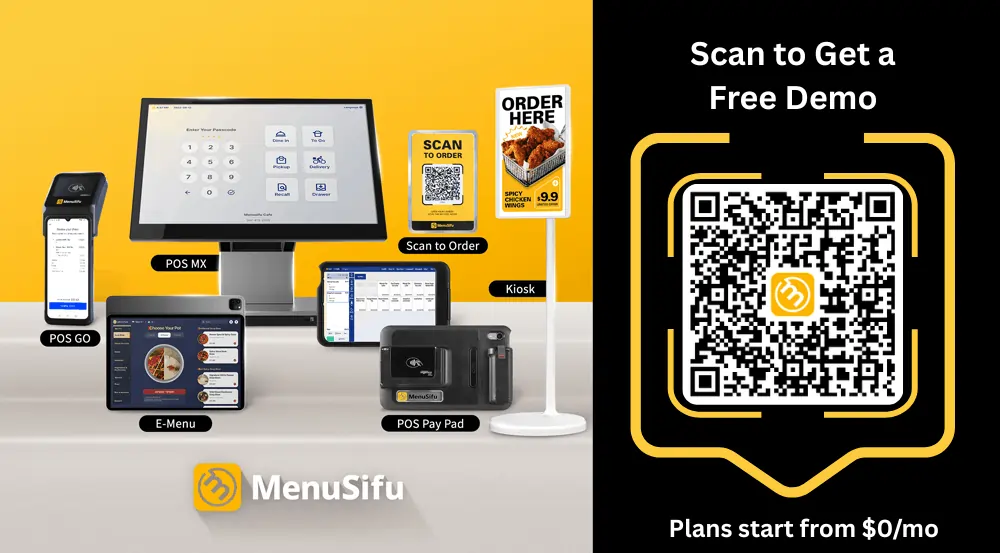
MenuSifu offers a POS system for fast food restaurants that supports ordering, payments, menu management, and daily operations in one connected solution. As you prepare to launch a new concept, refresh an existing brand, or open another location, the technology behind the counter can help turn your brand plans into a consistent customer experience.
Book a Free Demo with MenuSifu today to see how our POS solutions can support your next stage.
Choosing a restaurant name often leads to a few additional considerations around branding, availability, and future expansion. The following FAQs cover key points to review before you finalize a name.
A good fast-food restaurant name is memorable, easy to pronounce, easy to spell, and distinct from competitors. It should reflect the restaurant concept or brand personality while remaining flexible enough to support menu changes or additional locations. Before choosing a name, check trademark, business name, domain, and social media availability.
Start with your cuisine, menu focus, target customers, and brand personality. Brainstorm words related to your food, dining experience, location, or brand story, then combine or adapt them into distinctive names. Keep each option easy to pronounce, spell, and recall, and compare it with competitor names before creating a shortlist.
Not necessarily. A menu-focused name can quickly tell customers what you serve, but a broader brand name can give you more flexibility as you add new menu items or locations. Choose a name that reflects your restaurant concept while leaving enough room for the brand to expand.
Search the restaurant name online, check social media platforms, and review your state or local business registry. You should also search the USPTO trademark database for exact or similar names within the foodservice industry. Check domain name availability as well before making a final decision. If you plan to open multiple locations, consider consulting a trademark attorney before investing in branding, signage, or packaging.
Ideally, yes. A matching domain makes your restaurant easier to find online and keeps your branding consistent. If the exact domain is unavailable, choose a short variation that keeps the restaurant name clear and easy to recognize.
Looking for more restaurant branding, operations, marketing, and technology insights? Visit the MenuSifu blog for more guides, practical ideas, and industry updates.
Related Articles: