September 19, 2026
Looking for the right POS system for Chinese restaurants? Compare MenuSifu, Chowbus, ZBS, and BeyondMenu across pricing, support, features, and daily workflows.

If your current system struggles with detailed menu edits, hot pot or AYCE rules, boba customization, takeout orders, or multi-store reporting, choosing the right POS for Chinese restaurants can affect far more than checkout. It can shape how smoothly your team works, how well your channels stay connected, and how easily your business grows.
IBISWorld reports that the US Chinese restaurant sector has continued to grow since 2020 and is projected to reach $28.4 billion in 2025, despite inflationary pressures in recent years. As more operators compete for sales across dine-in, takeout, delivery, and repeat visits, the platform you choose plays a bigger role in daily operations and long-term growth. So which platform gives your restaurant the strongest fit today and a better path forward?
In this guide, we compare MenuSifu, Chowbus, ZBS, and BeyondMenu across the areas that affect daily operations most, so you can see which one fits your restaurant best.
If you want a quick side-by-side view before the deeper comparison, start here. The table below highlights the core differences across the four platforms.
This table gives you a quick snapshot. Next, let’s look at what your POS needs to handle day to day before comparing each platform in more detail.
A POS should fit the way your restaurant operates day to day. The right system helps your team handle detailed orders, support different formats, and connect the tools you need to grow.
Chinese menus often require far more than simple add-ons. Your POS should let staff enter detailed requests quickly and clearly, so the kitchen gets accurate tickets every time.
Look for features like:
If your system struggles with these edits, order accuracy drops and staff waste time finding workarounds.
One setup does not fit every format. Your POS should support how your restaurant takes orders, issues tickets, and manages guest flow.
Different formats often need different tools:
A platform that supports these formats well can help your team work faster and stay organized.
A POS should do more than process tickets. Your platform should connect the tools that support daily operations and long-term growth.
That includes:
When these tools work together in one system, your team can manage operations more efficiently and make better business decisions.
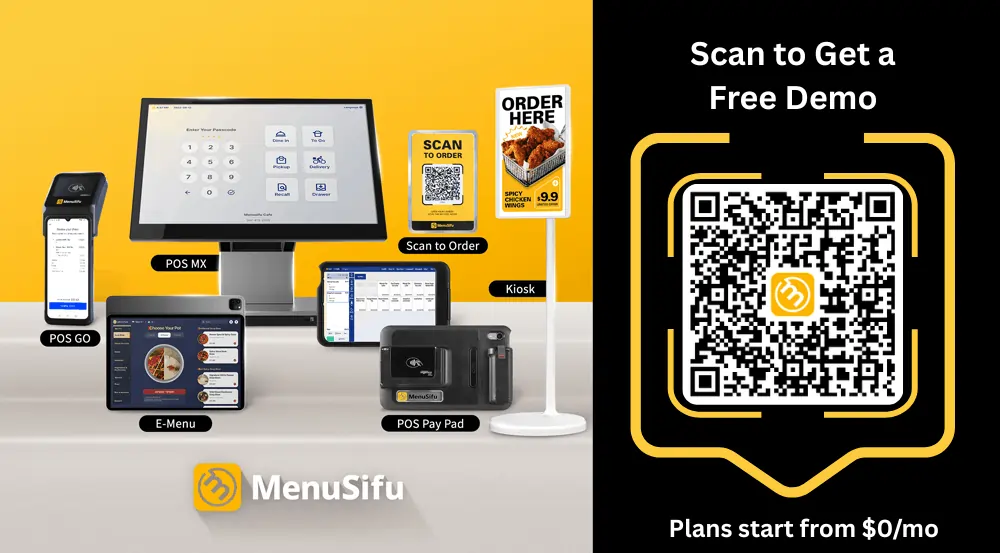
A side-by-side look shows a clear split. Some platforms focus on core POS or online ordering. MenuSifu covers a wider range of needs across operations, payments, marketing, and growth.
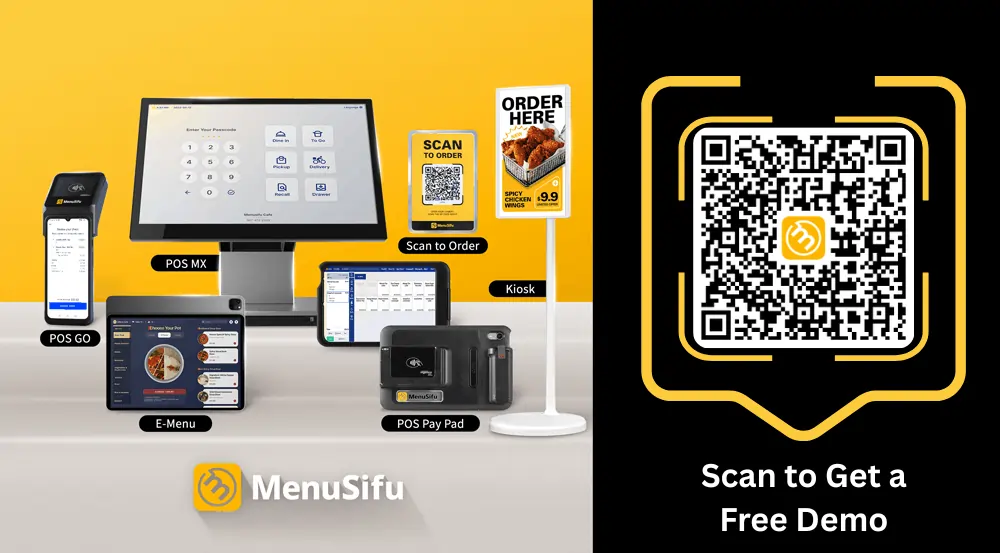
MenuSifu covers far more than POS. It brings together POS, online ordering, payments, marketing, consulting, financing, and automation into a single connected ecosystem. That setup can reduce the need to manage separate vendors for each part of your business.
Chowbus and ZBS sit closer to the all-in-one POS category. They can support core front-of-house and order management needs, but they do not offer the same breadth around business growth and back-end support. BeyondMenu focuses more on online ordering than on a full restaurant operating system.
If you want one long-term technology partner, MenuSifu offers the broadest platform in this group.
Chinese restaurant menus often require more than standard modifiers. Your POS may need to support dim sum workflows, open food items, bilingual menus, detailed notes, and custom order logic across dine-in and takeout.
MenuSifu supports these needs well. It allows staff to handle detailed menu edits, custom combinations, and multilingual workflows more efficiently. That can help your team enter orders more clearly and keep kitchen communication organized.
Chowbus can cover standard customization needs for many restaurants, and ZBS can support some custom menu setups. BeyondMenu focuses more on online ordering and offers less support for full in-store menu management.
For restaurants that rely on detailed edits, custom combinations, and bilingual order flow, MenuSifu aligns more closely with day-to-day menu management.
AYCE and hot pot formats need more control at the table. MenuSifu supports E-menu tablet ordering with tools such as:
These controls help you manage pacing, reduce waste, and keep table flow organized.
Chowbus also has a place in this category and may work well for stores focused on tablet ordering. ZBS does not offer a dedicated AYCE or hot pot solution. BeyondMenu does not fit this model.
MenuSifu stands out because it pairs AYCE features with stronger support across payments, marketing, loyalty, and reporting.
Bubble tea shops need a fast and organized workflow from ordering to pickup. MenuSifu offers an end-to-end boba solution that connects:
This setup helps your shop handle high order volume with better speed and consistency.
Chowbus supports part of that workflow, especially around ordering and tea-making, but it does not cover the full loop as completely. ZBS has no dedicated boba solution. BeyondMenu is not a strong fit here.
For bubble tea shops, MenuSifu offers the most complete option in this comparison.
MenuSifu gives you more choice in how you buy. You can pay for the features you need or choose a tiered monthly plan if you want a fuller setup. That gives smaller stores room to start lean and gives larger groups room to scale.
Chowbus uses a monthly-fee model only. ZBS uses a buyout model only. BeyondMenu plays a narrower role, so it is less useful in a full POS pricing comparison.
If you want more flexibility in both setup and spend, MenuSifu offers the clearest advantage.
MenuSifu strengthens its position through its own payment company, USEZPAY. That creates a more integrated payments setup and reduces reliance on outside middle layers. It can also help simplify onboarding, support, and payment-related troubleshooting.
Chowbus uses third-party processors. ZBS works with third-party processor agents. BeyondMenu is less central in this category.
If you want a tighter link between POS and payments, MenuSifu offers a stronger setup.
When issues arise during a rush, direct support can save time and reduce stress. MenuSifu offers 24/7 bilingual technical support plus a direct support hotline. That gives your team a clear path to help.
Chowbus offers bilingual support, too, but access runs through WeChat groups. Public details for ZBS and BeyondMenu are more limited, making them harder to compare in terms of support depth.
If you value immediate human support, MenuSifu has the clearer edge.
MenuSifu goes beyond core operations with a broader marketing stack that includes:
This gives you more tools to attract new guests, drive repeat visits, and build stronger visibility.
Chowbus and ZBS offer a lighter marketing layer. BeyondMenu includes useful ordering-related marketing features, but it does not offer the same breadth across restaurant growth.
If you want a platform that supports both daily operations and growth, MenuSifu stands in a stronger position.
MenuSifu supports both Windows and iOS, which gives you more flexibility across different store setups. It also offers local and cloud backup, helping protect operations during outages or internet issues.
Chowbus supports iOS only. ZBS supports Windows only. BeyondMenu does not compete at the same level on POS hardware.
If you want more flexibility across hardware and store formats, MenuSifu offers a more scalable foundation.
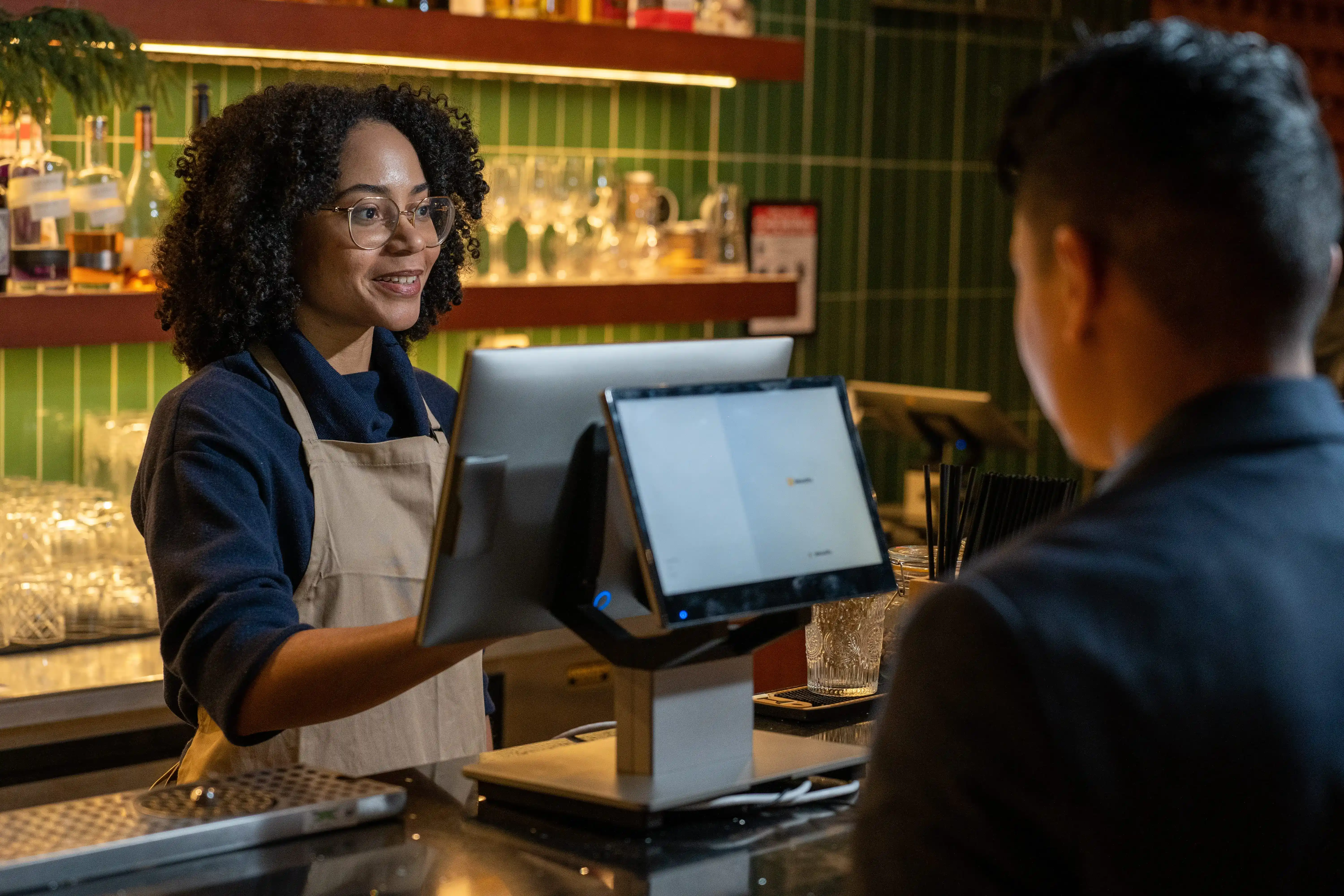
The right platform depends on your menu, order flow, and growth plan. Here is a quick breakdown by restaurant type.
MenuSifu fits full-service Chinese restaurants that need deep menu customization, bilingual tools, and strong dine-in and takeout support. It also adds payments, loyalty, marketing, and reporting in one platform, which helps you manage daily operations and long-term growth from one place.
MenuSifu works well for hot pot and AYCE concepts because it supports tablet ordering with rule controls such as time limits, item limits, and order intervals. It also gives you access to broader tools for payments, marketing, and operations, which gives it an edge over narrower options.
MenuSifu stands out for bubble tea shops because it supports drink customization, tea-making automation, pickup flow, and marketing tools in one system. This setup helps you move orders quickly and keep the guest experience organized during busy hours.
BeyondMenu fits restaurants that want an ordering-first platform. MenuSifu also includes online ordering, but it offers a much broader system for POS, payments, loyalty, marketing, and operations. If you want a narrower online ordering setup, BeyondMenu may be enough. If you want a platform that covers more of your business, MenuSifu is the stronger option.
ZBS may suit restaurants that want a simpler Windows-based POS. It can work for operators with lighter needs, but it offers a smaller overall feature set than MenuSifu.
Each platform has clear strengths and trade-offs. Here is a clean breakdown to help you compare them side by side.
Pros
Cons
Pros
Cons
Pros
Cons
Pros
Cons
MenuSifu leads this comparison because it supports more of your operation in one platform and aligns closely with how Chinese restaurants work day to day.
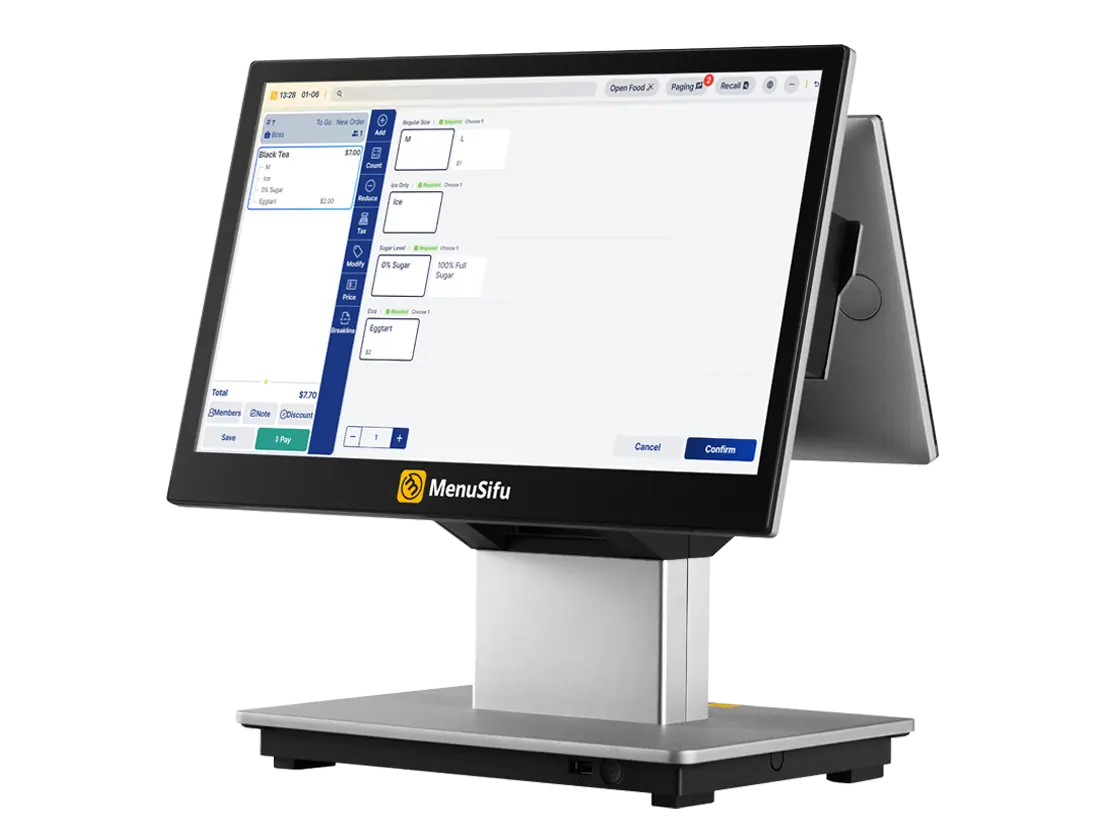
Choosing a POS can shape how your restaurant handles orders, payments, guest retention, and expansion. In this comparison, MenuSifu stands out as the strongest overall option for Chinese restaurant operations in the US because it brings more of your business into one connected system.
If you want a platform built for Chinese menus, hot pot and AYCE rules, boba workflows, takeout, and multi-unit growth, MenuSifu gives you a stronger path forward. It connects POS, ordering, payments, marketing, consulting, financing, and automation so your team can manage more from one place.
To see how it can fit your restaurant, book a free demo with MenuSifu today. You can explore the tools, review the workflow, and see how the platform supports your goals.
Still comparing your options? The FAQs below address the top points restaurants raise when weighing MenuSifu, Chowbus, ZBS, and BeyondMenu.
For most Chinese restaurants, MenuSifu is the best POS because it supports detailed menu customization, bilingual workflows, hot pot and AYCE tools, integrated payments, and growth features in one system. It offers a stronger overall fit than Chowbus, ZBS, and BeyondMenu for restaurants that need both daily operational support and room to grow.
MenuSifu offers a broader platform than Chowbus. It gives you stronger support for Chinese restaurant workflows, more flexible pricing, integrated payments, direct bilingual support, and a wider set of tools for marketing, loyalty, and growth. Chowbus can work well for core POS needs and hot pot or AYCE ordering, but MenuSifu gives your restaurant a more complete long-term solution.
BeyondMenu focuses more on online ordering than on serving as a full POS platform. It can support digital ordering, but it does not offer the same broad in-store POS coverage as MenuSifu, Chowbus, or ZBS. If you need a more complete system for Chinese restaurant operations, BeyondMenu is the weaker fit.
MenuSifu works best for hot pot and AYCE because it supports tablet ordering, time limits, quantity limits, and interval controls in one system. Chowbus can also support hot pot and AYCE operations, but MenuSifu offers a stronger overall setup with broader tools for payments, marketing, reporting, and daily operations.
MenuSifu offers the most flexible pricing in this comparison. You can choose the features your restaurant needs or select a tiered monthly plan for a broader setup. That gives you more control than Chowbus, which uses a monthly-fee model, and ZBS, which uses a buyout model.
If you want to keep learning, visit our blog section for more insights and updates on restaurant technology, operations, and growth.