Xiqiao Yin
November 23, 2026
Wendy's U.S. same-store sales fell 5.7% in Q3 2026. Explore its Dave's Way turnaround strategy, from menu optimization to digital ordering and profitability.

Even established restaurant chains are struggling to maintain momentum in today's competitive U.S. dining market.
Wendy's latest earnings report illustrates the challenge. In the third quarter of 2026, U.S. same-store sales fell 5.7% year over year, while systemwide sales declined 7.6%. The results put additional pressure on the burger chain to reverse declining sales without further squeezing restaurant margins.
On November 5, Wendy's unveiled Dave's Way, a multiyear turnaround strategy focused on strengthening its core menu, rethinking breakfast operations, and improving digital ordering and marketing.
For independent restaurant operators, the plan raises a familiar question: When sales slow, should restaurants respond with deeper discounts and more menu launches, or take a closer look at what's holding the business back?
Wendy's has built an extensive restaurant network across the United States.
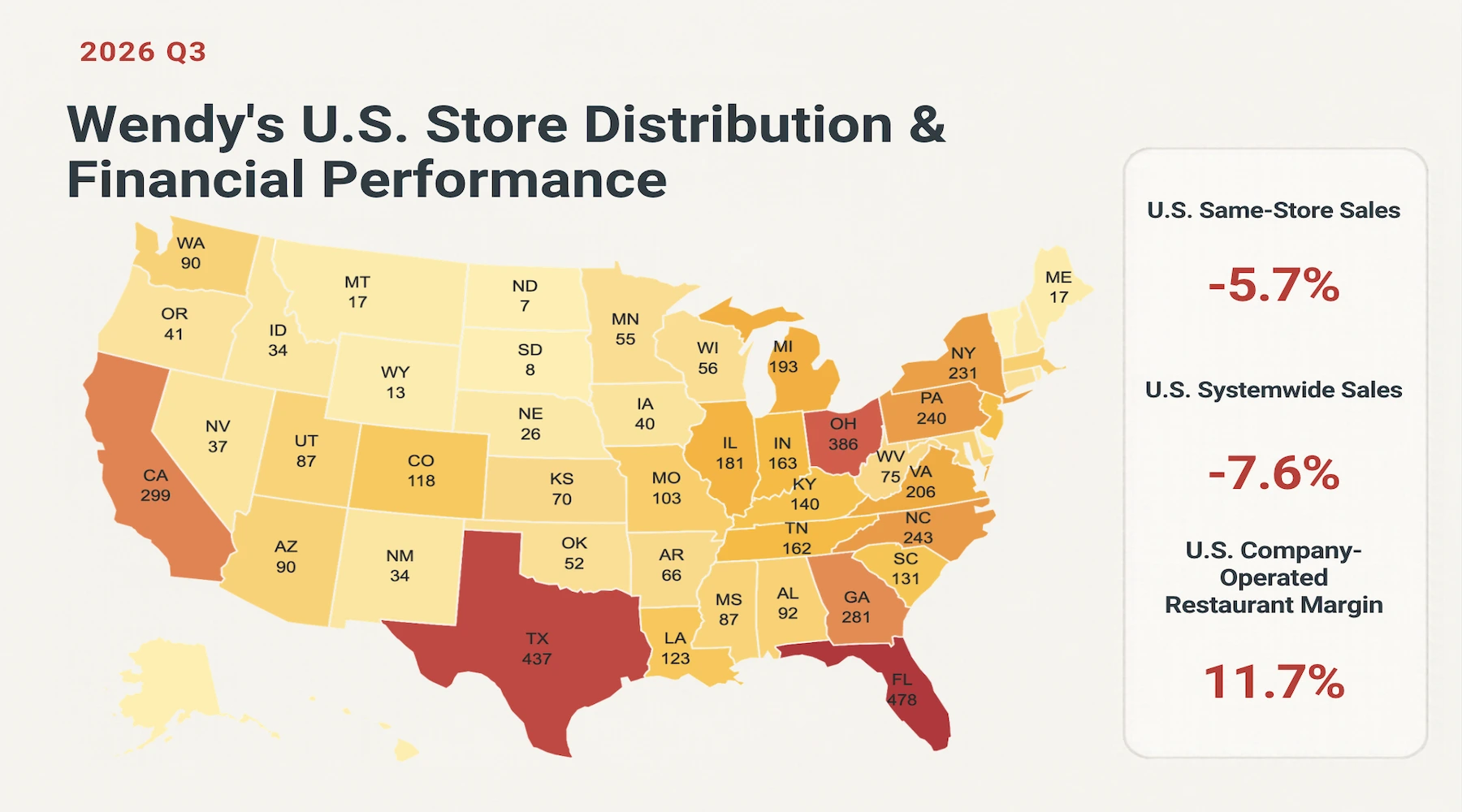
Based on an analysis of MenuSifu’s U.S. restaurant database, which contains approximately 1.06 million restaurant records, 5,683 Wendy’s locations were identified across all 50 U.S. states and Washington, D.C., as of November 2026.
Florida had the largest number of records at 478, followed by Texas (437) and Ohio (386). Together, the five states with the highest counts accounted for 1,881 records, or 33.1% of the total. The top 10 states represented 2,994 records, or 52.7%.
Yet a broad national footprint offers little protection when sales begin to weaken.
In Q3 2026, Wendy's U.S. same-store sales declined 5.7%, while U.S. systemwide sales fell 7.6%. Its U.S. company-operated restaurant margin also narrowed from 13.1% to 11.7%, a decrease of 1.4 percentage points.
For restaurant operators, falling sales create a difficult balancing act. Rent, staffing, and other operating expenses don't necessarily decline with transaction volume, leaving less revenue to cover the same cost base. Discounts may help bring customers back in the short term, but they can also put additional pressure on margins.
That helps explain the thinking behind Dave's Way. Instead of relying solely on price promotions, Wendy's is taking a broader look at its menu, operating model, and digital channels in an effort to rebuild demand and improve restaurant-level profitability.
Launching new products is a familiar response to slowing restaurant sales. A new burger, limited-time offer, or seasonal special can generate attention and give customers a reason to visit.
But every addition to the menu comes with a cost. More ingredients, extra preparation steps, and greater inventory complexity can slow kitchen operations, especially when new items fail to generate enough demand.
Wendy's is shifting some of its attention back to its core products. The company plans to improve key ingredients and signature offerings, including bacon, Frosty desserts, and select burger toppings, while trimming lower-performing items that add unnecessary complexity.
The strategy reflects a straightforward principle: a larger menu isn't necessarily a more profitable one.
For independent restaurants, menu optimization starts with understanding which dishes are actually contributing to the bottom line.
A popular entrée may generate strong sales but relatively little profit once ingredient costs, preparation time, and waste are taken into account. Meanwhile, a less prominent dish with lower food costs and a simpler preparation process may deliver a stronger contribution margin.
POS sales reports, paired with recipe costing and kitchen performance data, can help operators identify which items deserve more promotion, which need pricing or portion adjustments, and which may no longer justify their place on the menu.
The goal isn't simply to offer fewer choices. It's to build a menu that customers want and the restaurant can execute profitably.
Breakfast is another area where Wendy's is changing course.
After years of expanding its breakfast business, the company is giving franchisees more flexibility to decide whether the daypart makes sense for their individual restaurants.
It's a practical shift. Opening earlier may create another opportunity to generate sales, but it also brings additional labor, food preparation, and operating costs. When traffic is light, those expenses can quickly outweigh the incremental revenue.
And Wendy's isn't the only quick-service restaurant brand facing a challenging breakfast market.
According to Revenue Management Solutions, U.S. QSR breakfast traffic fell 8.7% year over year in Q2 2025, compared with a 2.0% decline at lunch. Dinner traffic, by contrast, increased 1.8%.

The figures point to an important distinction: demand can vary significantly by daypart, and a schedule that works for one restaurant may not make financial sense for another.
For independent operators, the first step is to understand how each daypart performs. POS data can reveal when orders peak, how average checks vary throughout the day, and where sales consistently fall short.
Looking at those patterns alongside labor schedules, food costs, and other incremental expenses can help operators make more informed decisions about staffing, menu availability, and opening hours.
Sometimes, shifting resources toward stronger lunch or dinner periods can do more for profitability than extending the operating day.
Wendy's is also putting greater emphasis on the digital customer experience.
The company is working to make ordering more seamless across its app, website, and third-party delivery platforms. More personalized offers and targeted promotions are also part of its effort to encourage customers to return.
For smaller restaurants, the challenge often begins before a customer places an order.
Someone searching Google for a nearby restaurant may compare menus, reviews, operating hours, and ordering options before choosing where to eat. If the restaurant's hours are outdated, the online menu is difficult to find, or checkout takes too many steps, that potential order can disappear.
This is where digital marketing and the ordering experience need to work together.
Keeping Google Business Profile information accurate, maintaining an updated restaurant website, and providing a straightforward online ordering process can help turn customer interest into completed purchases.

But the relationship shouldn't end at checkout.
Direct ordering channels and loyalty programs can give restaurants more opportunities to encourage repeat business. With customer consent, operators can use rewards, relevant offers, and SMS marketing to reconnect with guests after their first purchase.
The key is to measure what happens beyond the initial click. Website visits and ad impressions can indicate interest, but completed orders, conversion rates, repeat purchase frequency, and revenue provide a clearer picture of marketing performance.
For restaurant operators, effective digital marketing is about more than visibility. It's about converting demand into sales and giving customers a reason to come back.
Dave's Way is still in its early stages, and it remains to be seen whether the strategy will deliver a sustained recovery.
Even so, Wendy's approach highlights several areas that independent restaurants can evaluate without undertaking a major overhaul.
A busy restaurant isn't necessarily a profitable one. High-volume dishes may carry thin margins, while slower dayparts can absorb labor and operating expenses without generating enough revenue to justify them.
Regularly reviewing menu performance, food costs, labor schedules, and sales by daypart can help operators identify where the business is performing well and where changes may be needed.
Price promotions can generate traffic, but they aren't a substitute for consistently good food and service. If customers encounter long waits, inconsistent quality, or an ordering experience that feels unnecessarily complicated, a lower price may not be enough to earn another visit.
Improving signature dishes, simplifying kitchen execution, and delivering a reliable customer experience can create value without depending entirely on discounts.
POS systems, online ordering, local search, and loyalty marketing each address different parts of the customer journey.
Together, they can help operators understand what customers buy, make ordering more convenient, attract nearby diners, and encourage repeat purchases.
The opportunity lies in connecting those insights and tools to everyday decisions, rather than treating technology as a collection of separate features.
MenuSifu has been helping Asian restaurants in the United States, particularly Chinese restaurant operators, adopt digital technology since its founding in 2014, making it an early contributor to the industry's digital transformation.
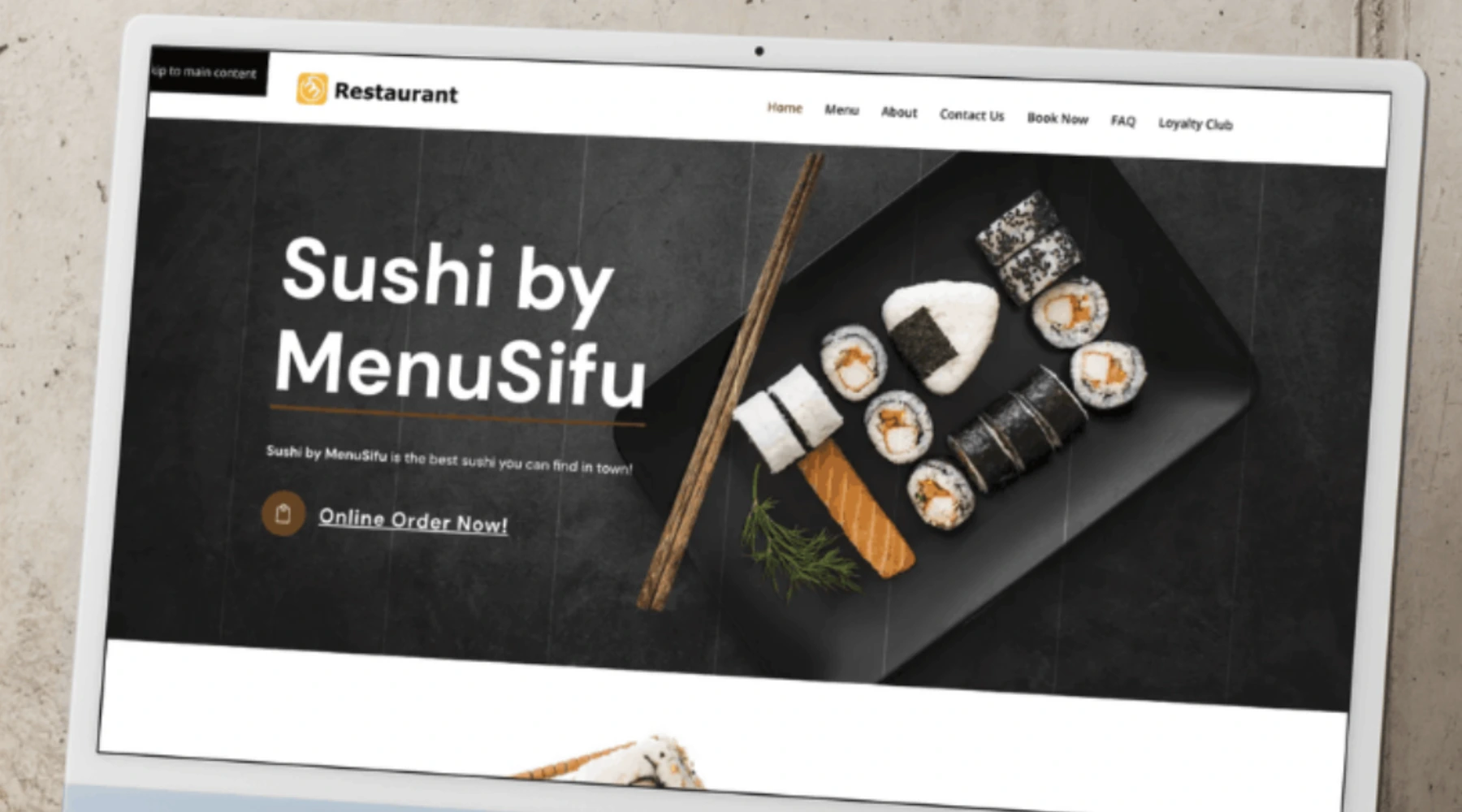
Through MEALKEYWAY restaurant digital marketing services, MenuSifu brings together restaurant website development, direct online ordering, Google Search optimization, and loyalty marketing to help operators improve online visibility, reach potential customers, and create more opportunities for order growth.
When sales come under pressure, the answer isn't always another promotion or a new menu item. Sometimes, the biggest opportunity is to understand what's already happening inside the business and make better decisions about where to invest.