Xiqiao Yin
October 27, 2026
Learn how small restaurants can control food costs, improve inventory accuracy, reduce waste, and protect profits with better restaurant data.


Running a restaurant means keeping a close eye on expenses. But even when business is steady and orders are coming in, the numbers at the end of the month don't always look as good as expected.
Ingredients cost more. Labor isn't getting any cheaper. And there's only so much operators can raise menu prices before customers start pushing back.
For smaller restaurants working with already thin margins, every dollar counts. Yet one of the easiest places to overlook a problem is also one of the most routine: inventory counting.
It's not hard to see how mistakes happen. An ingredient might arrive by the case, get portioned out by the pound, and then be counted as a partially used package at the end of the month. Add inconsistent counting schedules or rough estimates of what's left on the shelf, and the numbers can quickly get messy.
A counting error doesn't necessarily mean the restaurant has lost money. But it can distort food cost figures, making operators think they're spending more than they actually are, or masking problems that need attention.
And with costs rising across the industry, getting those numbers right matters more than ever.
The pressure on restaurant operators has been building for years.
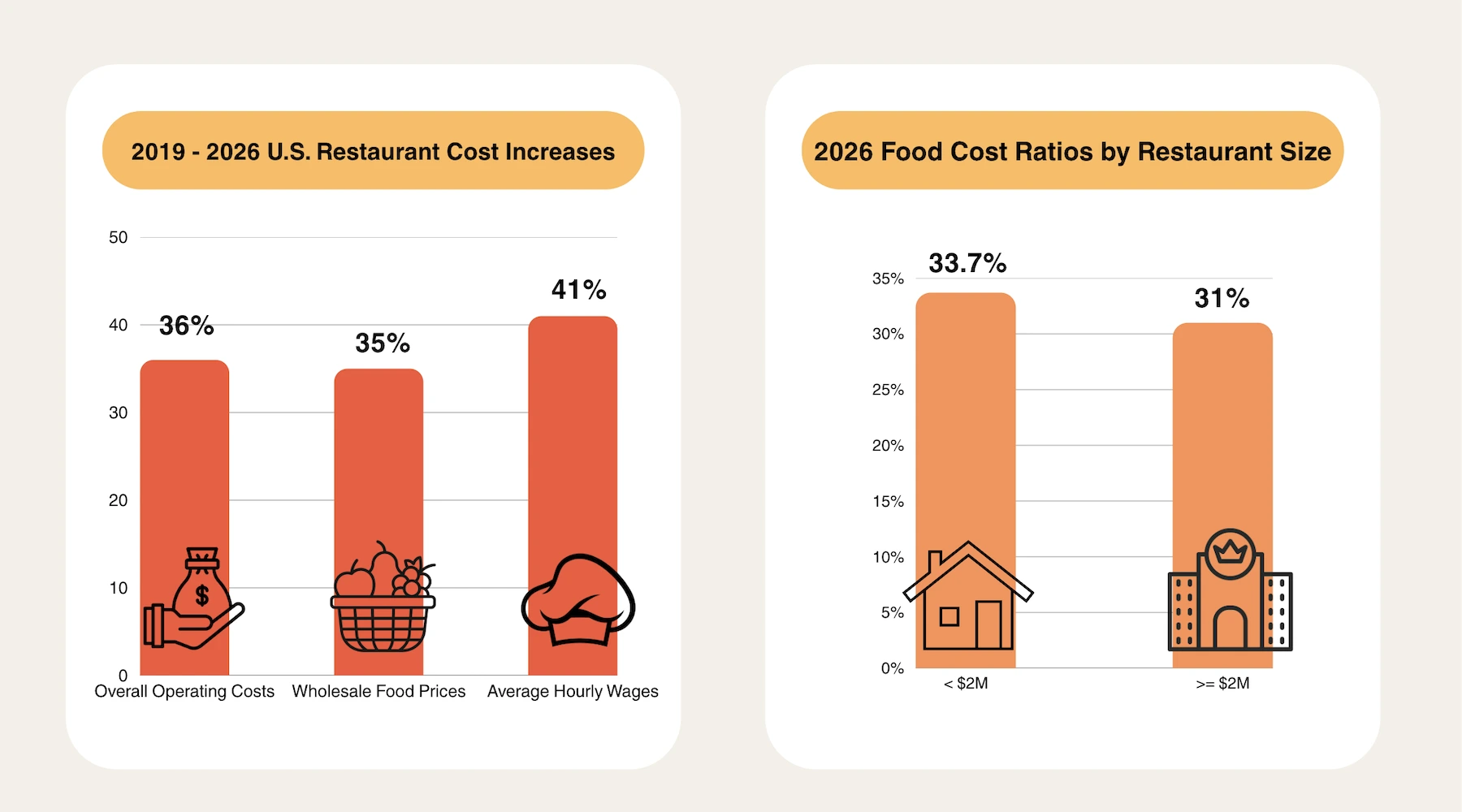
Between 2019 and 2026, overall operating costs for U.S. restaurants climbed roughly 36%, according to industry data. Wholesale food prices rose about 35%, while average hourly wages increased approximately 41%.
Put simply, almost everything it takes to run a restaurant costs more than it used to.
For smaller operators, the margin for error can be especially narrow.
Industry research found that full-service restaurants with less than $2 million in annual sales had a median food and nonalcoholic beverage cost ratio of 33.7%. Their median pretax profit margin was just 1.1%.
Larger full-service restaurants, those generating $2 million or more annually, reported a lower median food cost ratio of 31.0% and a higher median pretax profit margin of 4.3%.
That 1.1% figure puts things into perspective. At that margin, a restaurant keeps just $1.10 in pretax profit for every $100 in sales.
With so little room to work with, even a small error in food cost reporting can send an operator looking for problems in the wrong place.
So how are restaurants dealing with higher food costs?
For many, the first response has been to charge more.
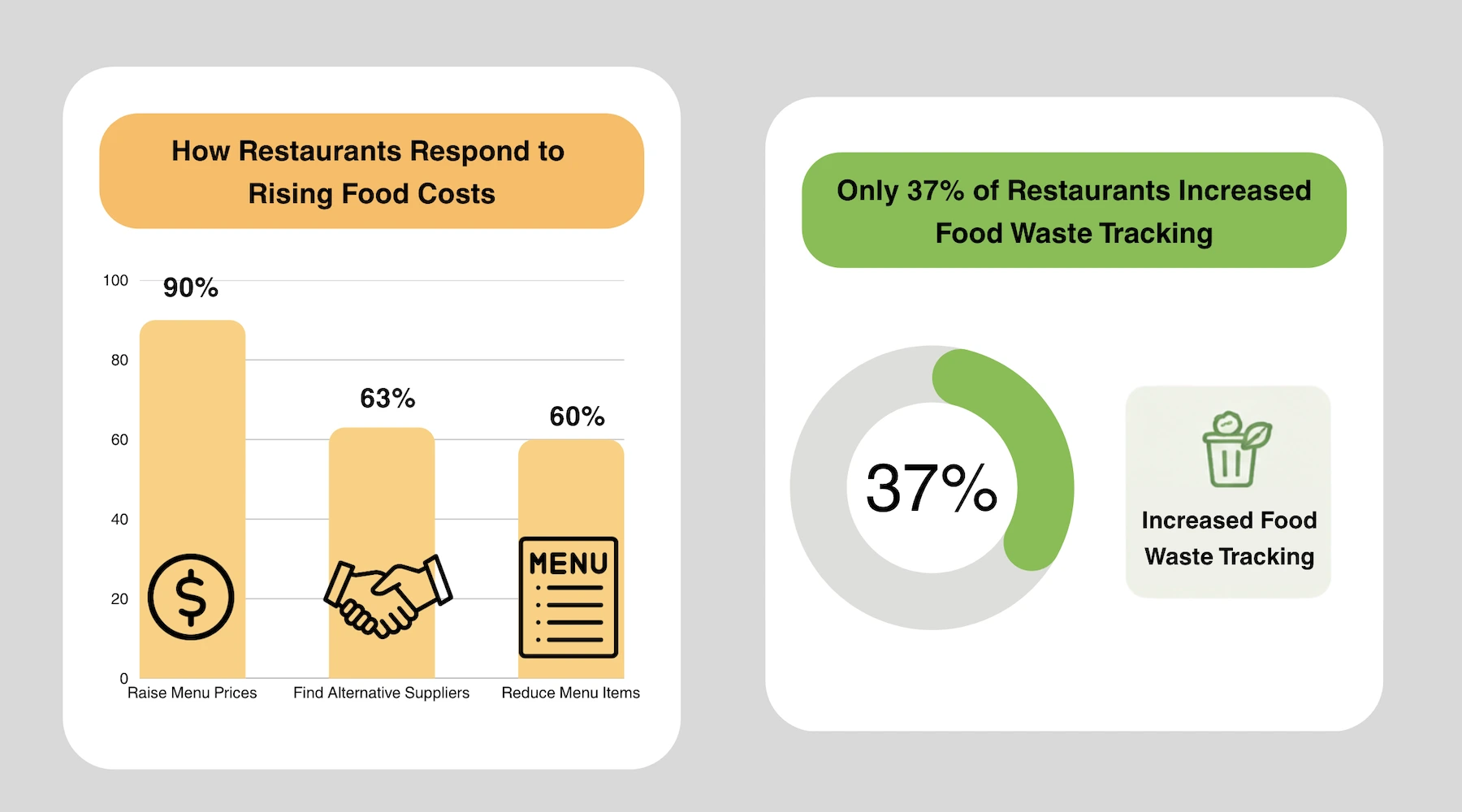
Industry survey data shows that 90% of full-service restaurants and 85% of limited-service restaurants facing higher food costs raised menu prices.
Others looked for savings elsewhere. Among full-service operators, 63% sought alternative suppliers and 60% cut menu items. For limited-service restaurants, those figures were 51% and 43%, respectively.
It's easy to understand why price increases lead the list. They're relatively straightforward to implement and can help offset higher ingredient costs.
But customers have limits, too.
With diners paying closer attention to what they spend, another price hike can mean fewer visits, smaller orders, or customers choosing a cheaper option altogether. Restaurants can't count on raising prices every time their costs go up.
That makes another finding worth a closer look.
In a separate industry survey, just 37% of operators facing higher food costs said they had stepped up efforts to track food waste.
The figure doesn't mean everyone else is ignoring waste. Still, it points to an opportunity that can get lost in conversations about menu prices and supplier contracts: paying closer attention to what happens to food after it arrives.
For a small restaurant, the losses aren't always obvious. A little too much prep, inconsistent portions, ingredients that expire before they're used, or products ordered in larger quantities than needed can all chip away at margins.
Individually, those costs may not seem significant. Over weeks and months, they add up.
And knowing what you paid for ingredients is only half the story. You also need to know how they're being used.
Accurate inventory counts help restaurants understand what they have on hand. But the bigger opportunity comes from connecting that information to what's actually selling.
Take a best-selling dish.
High sales might make it look like a winner, but what happens when its main ingredients become more expensive and the menu price stays the same? It could be bringing in plenty of revenue while contributing less profit than before.
The opposite can be true for slower-moving items. A dish that requires specialty ingredients may look fine on paper, but if those ingredients sit unused or regularly go to waste, the real cost of keeping it on the menu may be higher than expected.
That's why inventory numbers shouldn't be viewed in isolation.
Looking at sales trends, menu performance, and ingredient costs together gives operators a better sense of where money is being made and where it may be slipping away.
Restaurant technology can make that process easier.
With MenuSifu's Reports & Insights, operators can track sales performance, see which menu items are moving, and get a clearer view of how their restaurant is doing. Menu Management adds another piece of the puzzle, making it easier to update menus and adjust offerings based on what the sales data shows.
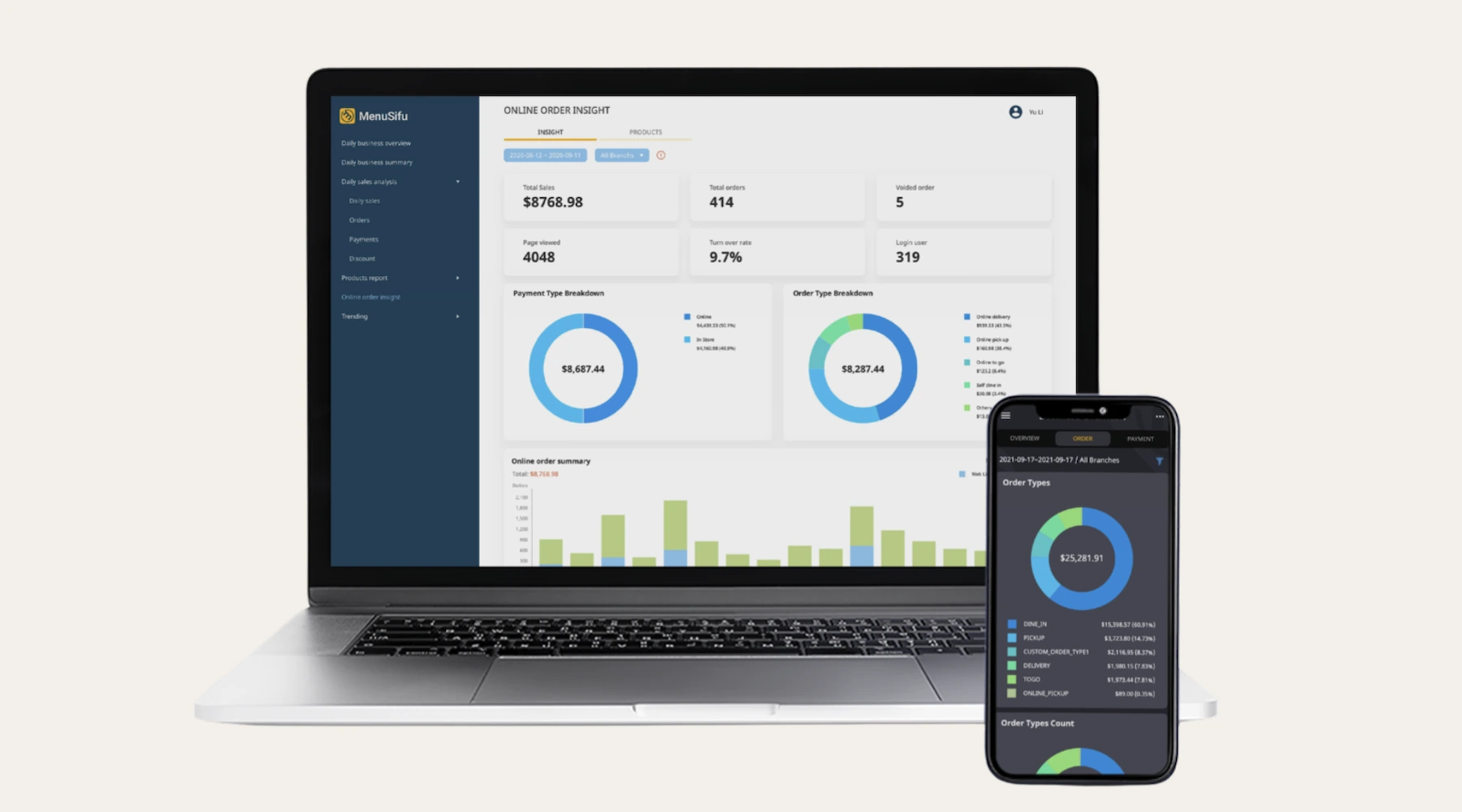
These tools don't replace physical inventory counts or automatically tell operators how much food they've wasted. But paired with accurate inventory and cost records, sales data can help owners make better-informed decisions about what to keep, what to change, and where to take a closer look.
For smaller restaurants, that's what useful technology should do: make the day-to-day numbers easier to understand and act on, without adding more work to an already packed schedule.
Food costs aren't likely to stop being a concern for restaurant operators anytime soon. And while finding a better supplier or adjusting menu prices can help, those aren't the only ways to protect margins.
Sometimes, the answer starts with getting a more accurate inventory count, taking a closer look at a sales report, or reconsidering a menu item that isn't performing as well as expected.
For small restaurants, protecting profits isn't simply about cutting expenses. It's about knowing where the money goes, which parts of the business are actually making money, and where avoidable losses may be hiding.
Because at the end of the day, it's not just about how much a restaurant brings in. It's about how much it gets to keep.