September 15, 2026
Explore China’s Benbang cuisine industry, covering traditional flavors, younger consumers, brand innovation, dining experiences, and regional growth opportunities.
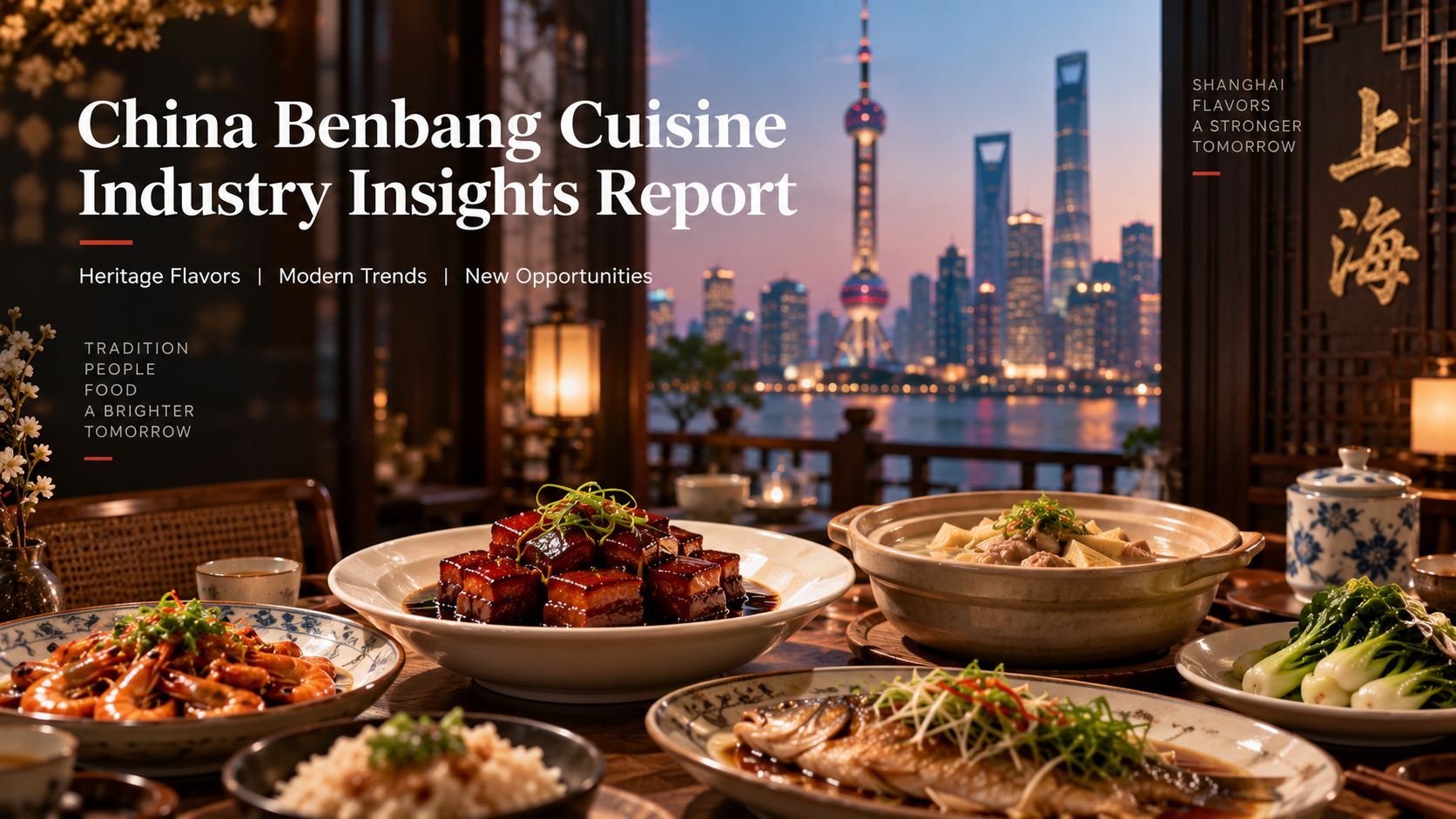
Benbang cuisine is a distinctive part of Shanghai's culinary culture, known for rich sauces, balanced sweet and savory flavors, and a strong focus on ingredient quality. As consumers increasingly value health, quality, and dining experiences, Benbang cuisine is evolving toward younger, more refined, and more diverse formats.
Traditional heritage restaurants continue to build their advantage through classic dishes and cultural heritage, while newer restaurant brands are attracting younger consumers through creative dishes, modern interiors, and digital operations. Future growth will depend on balancing traditional flavors with modern consumer expectations.
Growing interest in regional Chinese cuisine and local food culture is creating new opportunities for Benbang cuisine among younger consumers and diners outside Shanghai.
Competition is also shifting from simply emphasizing authenticity toward a broader combination of product quality, brand positioning, dining experience, and operational efficiency. For Benbang cuisine brands, adapting traditional cuisine to modern consumption habits will be an important factor for future growth.
Rich sauces and sweet-savory flavors remain important characteristics of Benbang cuisine, but consumers are increasingly interested in lighter and healthier dining options. Brands need to preserve the essence of traditional dishes while adapting cooking methods and recipes to changing preferences.
Younger consumers are discovering Shanghai cuisine through social media, food content, and local cultural experiences. Traditional dishes can become more relevant to younger audiences through modern visual presentation, menu formats, and new dining occasions.
Beyond traditional heritage restaurants, emerging brands are using contemporary interiors, creative presentation, and modern interpretations of classic dishes to redefine Benbang cuisine. Combining traditional flavors with modern experiences is becoming an important direction for innovation.
Consumers are evaluating more than food quality. Restaurant atmosphere, service, interior design, and cultural identity can all influence dining decisions. Shanghai culture, Haipai aesthetics, historic architecture, and Jiangnan influences provide valuable opportunities for creating distinctive dining experiences.
As regional Chinese cuisine gains wider recognition, Benbang cuisine is gradually expanding beyond Shanghai. Brands entering new markets need to consider local taste preferences, pricing expectations, and supply chain capabilities rather than simply replicating their Shanghai operating model.
The Benbang cuisine market includes traditional heritage restaurants, mainstream restaurant chains, new-style Benbang brands, and mid-to-premium Shanghai dining concepts.
Heritage brands compete through history, signature dishes, and cultural recognition. Chain restaurants focus on standardization, scale, and operational efficiency, while newer brands place greater emphasis on younger consumers, brand design, and product innovation.
Future leaders may not necessarily be the most traditional brands. Instead, they will be companies that can preserve the cultural identity of Benbang cuisine while delivering a modern and relevant dining experience.
Benbang cuisine is no longer limited to traditional heritage restaurants. The category is continuously developing new ways to connect its culinary heritage with modern consumer expectations.
Future growth will increasingly come from younger consumers, product innovation, improved dining experiences, and regional expansion. Brands that preserve the cultural essence of Benbang cuisine while creating modern consumer experiences will be better positioned to build long-term competitive advantages.