Xiqiao Yin
November 6, 2026
The Cheesecake Factory reported 15.2% comparable restaurant sales growth in Q3 2026. Explore how guest traffic, menu mix, and social media drove growth.

As restaurant operators across the U.S. compete for increasingly selective consumers, discounting and value promotions have become common strategies for driving traffic. The Cheesecake Factory's latest quarterly results suggest that strong demand doesn't always have to come from lower prices.
In the third quarter of fiscal 2026, The Cheesecake Factory reported 15.2% growth in comparable restaurant sales, supported by a 9.5% increase in guest traffic. At the same time, an established menu item, Cajun Salmon, gained unexpected traction on social media, drawing new guests to the brand.
The results offer a closer look at how a mature restaurant chain can generate renewed consumer interest, translate that attention into restaurant visits, and capture additional spending through its existing menu.
According to the company's third-quarter 2026 financial results, The Cheesecake Factory Incorporated reported $1.033 billion in consolidated revenue, an increase of 13.9% year over year.
At its namesake restaurant brand, comparable restaurant sales increased 15.2%, reflecting three key components:
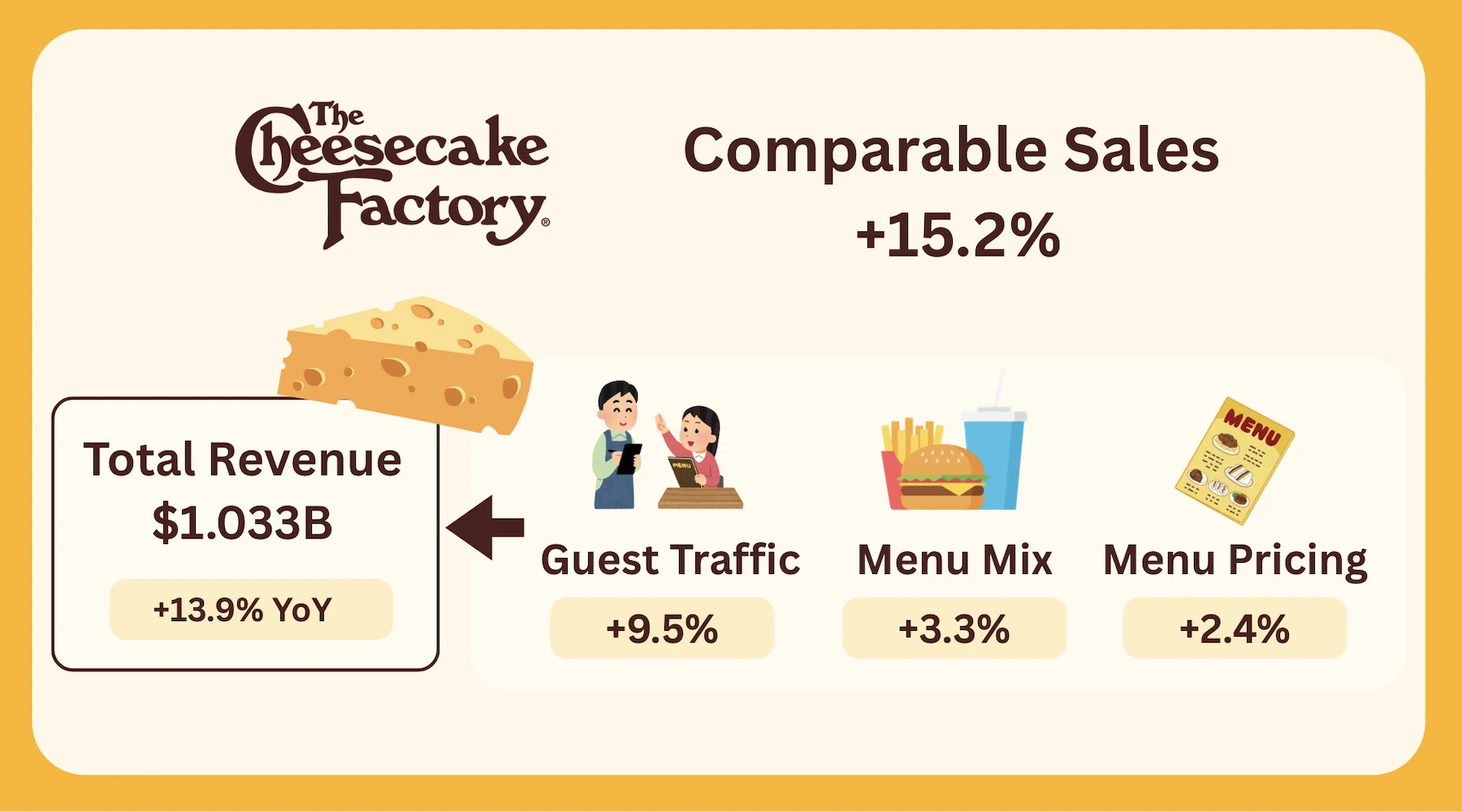
The most significant contributor was guest traffic.
Revenue growth in the restaurant industry can come from higher menu prices, increased transaction volume, or changes in customer purchasing behavior. In this case, The Cheesecake Factory benefited from all three, with traffic accounting for the largest share of comparable sales growth.
The company also reported a 5.7% increase in average check, consisting of 2.4% from menu pricing and a positive 3.3% contribution from menu mix.
That distinction matters. While price increases can lift sales without attracting additional guests, favorable menu mix indicates that customers are purchasing a different combination of products, potentially including higher-priced entrées or additional items.
For an established casual dining chain, the combination of stronger traffic and higher average checks provides a more meaningful indication of underlying demand than pricing alone.
The next question is how The Cheesecake Factory managed to attract that demand.
Compared with major quick-service chains such as McDonald's and Starbucks, The Cheesecake Factory operates a much smaller U.S. restaurant network. However, its locations generate substantial sales volumes.
According to company disclosures, annualized sales per restaurant have approached $14 million, reflecting the brand's relatively high unit-level revenue.
An analysis of MenuSifu's U.S. restaurant database shows that The Cheesecake Factory has a notable concentration of locations in California, Florida, and Texas.
These three states account for 81 matched restaurant records, or approximately 37% of the brand's locations identified in the dataset.
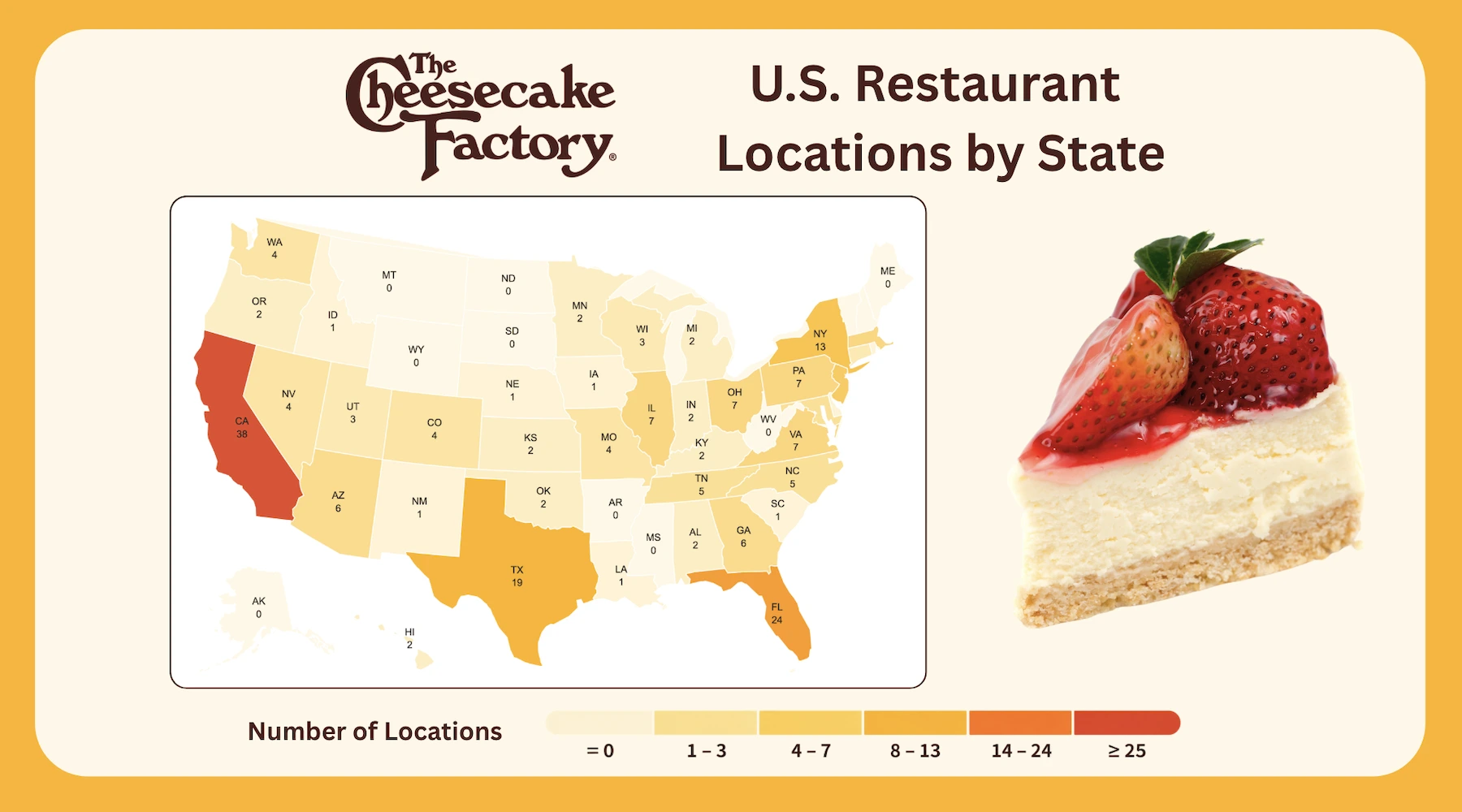
The Cheesecake Factory's site-selection approach considers factors such as population density, household income, and proximity to major retail destinations.
These locations provide access to consumers visiting shopping centers and surrounding commercial districts for dining, entertainment, and social activities.
The brand's extensive menu and large dining rooms also accommodate a broad range of occasions, from family meals and group gatherings to casual dining with friends.
This positioning is particularly relevant as the company attracts a younger customer base.
During its third-quarter earnings discussion, management indicated that a substantial proportion of recently acquired guests were younger consumers. While the company is still evaluating their long-term visit frequency, the shift suggests that The Cheesecake Factory continues to find ways to remain relevant across generations.
Social media has become an increasingly important part of that process.
One of the more notable developments behind The Cheesecake Factory's recent performance involved Cajun Salmon, a dish that had already been on the menu for years.
Rather than being introduced through a new product launch or a major promotional campaign, the entrée gained visibility through organic social media content.
A guest might visit specifically to try the dish after seeing it on social media, but accompanying diners may order other entrées, beverages, appetizers, or desserts.
As a result, interest in a single product can create opportunities for additional sales across the broader menu.
This is particularly relevant to the company's 3.3% positive menu mix contribution during the quarter.
Management indicated that Cajun Salmon, which sits toward the higher end of the entrée price range, experienced disproportionate demand following its increased social media exposure.
Executives also noted that overall marketing spending had not changed materially, even as marketing effectiveness improved.
For restaurant operators, the implication is straightforward: increasing marketing effectiveness does not always require a larger advertising budget. Identifying products that already resonate with consumers can be equally valuable.
The Cheesecake Factory's performance reflects several factors working together, rather than the success of a single viral menu item.
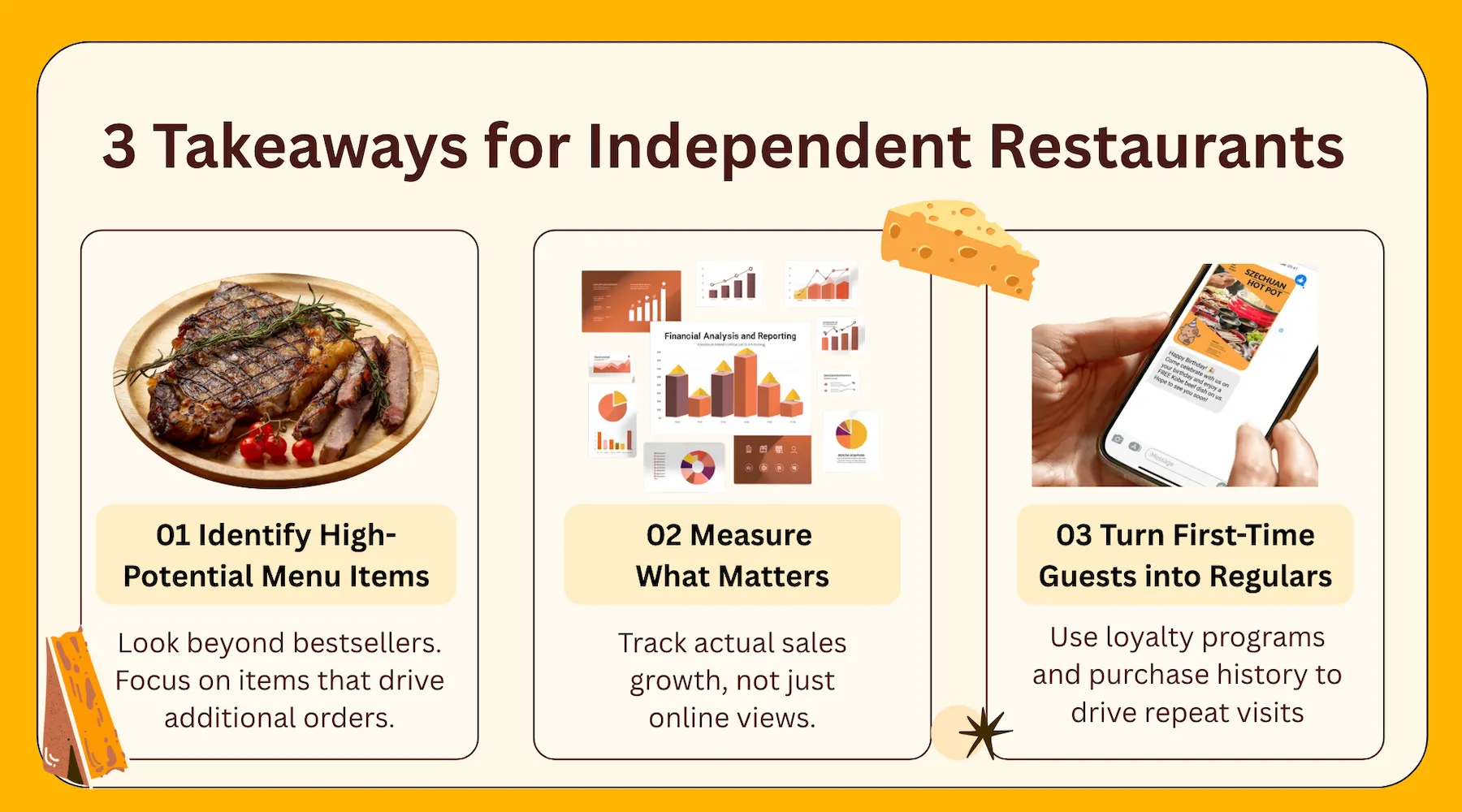
Nevertheless, its experience highlights three practical opportunities for independent restaurants seeking to improve marketing effectiveness and long-term sales performance.
A restaurant's highest-selling dish is not necessarily the product with the greatest marketing potential.
Cajun Salmon demonstrates how an established menu item can attract new attention when it reaches the right audience.
A menu item with strong customer feedback, favorable margins, and the potential to generate additional purchases may be a stronger promotional candidate than a low-priced bestseller.
Analyzing item-level sales, profitability, and purchasing patterns can help operators identify products worth featuring in future marketing campaigns.
Social media reach can increase brand awareness, but views and engagement alone do not establish whether a campaign has generated additional revenue.
A restaurant may receive thousands of views on a promotional video without seeing a corresponding increase in orders.
To evaluate performance, operators should examine what happens after the campaign.
These metrics help distinguish online attention from measurable business results.
An increase in order volume may indicate stronger customer demand, while higher average checks with relatively stable transaction counts may suggest a shift toward premium menu items or additional purchases.
Comparing sales performance before and after a campaign provides a more useful starting point for evaluating marketing effectiveness, although operators should also account for seasonality, other promotions, and changes in customer traffic.
Organic social media exposure can encourage customers to visit a restaurant for the first time. Sustaining that demand requires a different approach.
A featured dish may create initial interest, but food quality, service consistency, and the overall dining experience influence whether guests return.
Loyalty programs and purchase history provide opportunities to identify returning guests, understand ordering preferences, and develop more relevant follow-up offers.
Tracking repeat visits also helps operators assess whether promotional campaigns are attracting one-time visitors or contributing to a more sustainable customer base.
For independent restaurants, this type of analysis doesn't necessarily require a complicated system.
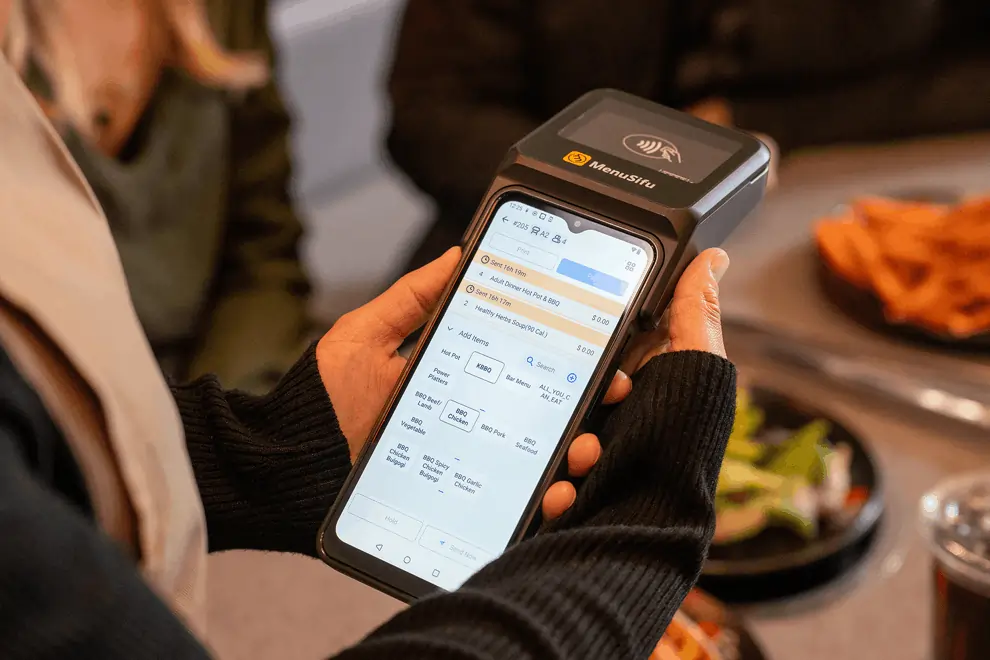
With MenuSifu's sales reporting tools, operators can track menu item sales, order values, and sales trends to identify products worth promoting and compare business performance before and after marketing campaigns. Combined with MenuSifu Marketing, restaurants can run customer marketing and follow-up campaigns that give first-time guests more reasons to return.
Looking back at The Cheesecake Factory's 15.2% growth in comparable restaurant sales, the sudden popularity of a longtime menu item is certainly an interesting part of the story.
After all, making a menu item go viral may take a little luck. Turning that attention into lasting business requires understanding what customers enjoy, what they're willing to pay for, and what will bring them back next time.