September 11, 2026
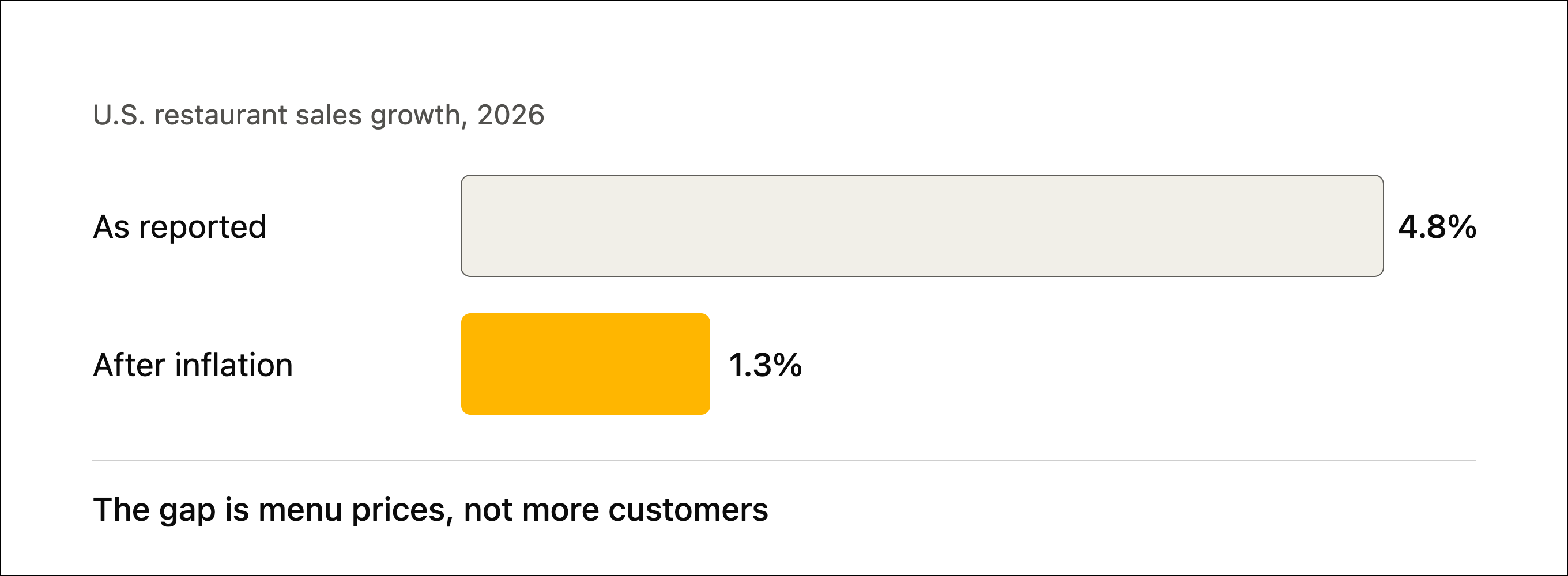
U.S. restaurant sales are up 4.8% in 2026, but real growth is only 1.3%. Here's how to tell price increases from actual customer growth.
If your restaurant's sales look healthy this year, it's worth asking a harder question before you celebrate: are more people actually walking through the door, or are you just charging them more?
For a lot of operators in 2026, it's the second one.
U.S. restaurant and foodservice sales are projected to reach approximately $1.55 trillion in 2026, up 4.8% from last year. That's a solid-looking headline. But after adjusting for menu-price increases and inflation, real sales growth comes out to only about 1.3%.
The gap between those two numbers is the story. Most of this year's sales growth is coming from higher prices, not more visits.
The traffic data makes that gap concrete. In a 2026 survey of operators:
Meanwhile, limited-service menu prices were up 3.3% year over year, and full-service prices were up 3.4% both roughly in line with food-away-from-home inflation overall.
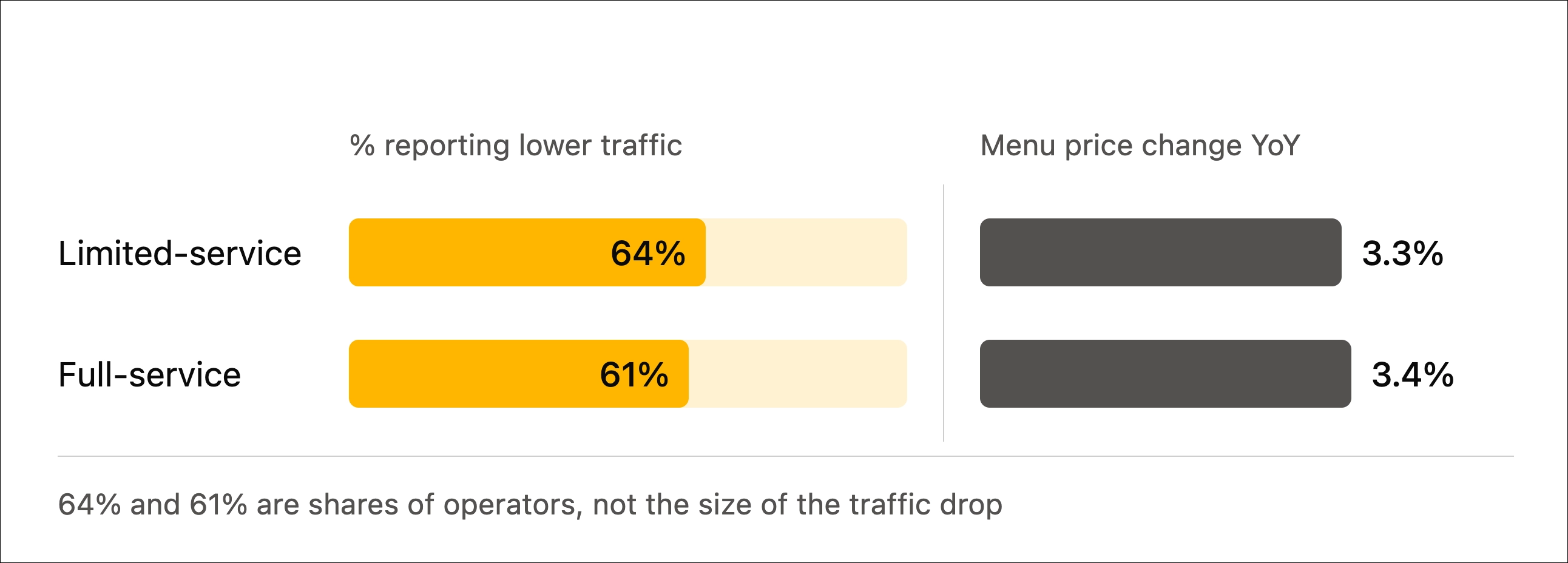
Put plainly: a lot of restaurants are selling fewer meals to fewer customers, at higher prices, and still posting a "growth" number.
It sounds strange for demand and traffic to move in opposite directions, but the underlying consumer behavior is consistent. Real disposable income growth has slowed to about 1.2% this year, and even consumers who say money is tight aren't abandoning restaurants 54% say they'd still order takeout or delivery, and 53% would still dine out, even when covering basic expenses is a stretch. More than seven in 10 say they'd eat out more if their finances allowed it.
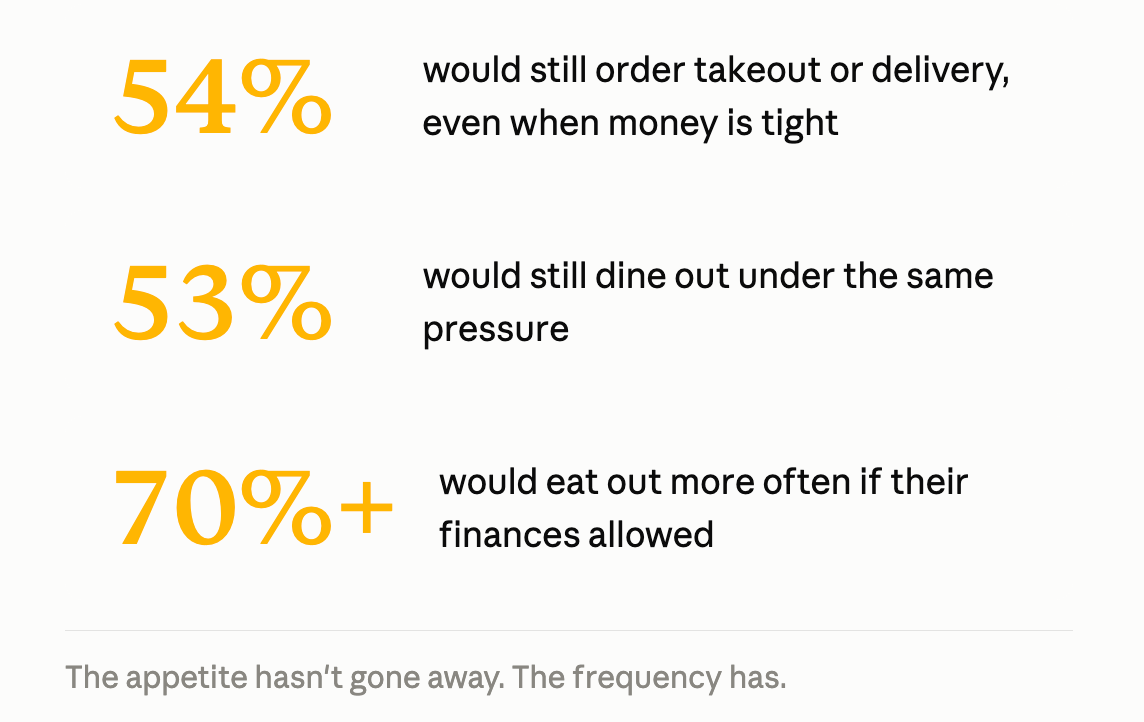
The appetite for restaurants hasn't gone away. The frequency has. Consumers are visiting less often, and being more deliberate about where they spend when they do.
That's a very different problem to solve than "demand is falling." It means the restaurants that keep growing won't be the ones chasing new customers; they'll be the ones that understand which existing customers are drifting away, and give them a clear reason to come back sooner.
Sales alone won't show you any of this. A restaurant can look stable, or even record a strong quarter, while quietly losing regulars, one skipped visit at a time.
Reading the market accurately in 2026 means watching several numbers together, not just one:
Sales + traffic + order volume + average check + visit frequency + same-store sales
Only that combination tells you whether growth is coming from more customers or from higher prices covering for fewer of them. And for most operators, that data isn't sitting in one place — it's split across a POS system, an online ordering platform, a loyalty app, and a handful of third-party delivery dashboards that don't talk to each other.
That's the real cost of disconnected systems right now: not just inefficiency, but a blind spot on the single question that matters most going into next year; is this restaurant actually growing, or just charging more for the same visits?
Source data: National Restaurant Association 2026 Report; U.S. Bureau of Labor Statistics — Consumer Price Index; U.S. Bureau of Economic Analysis — Personal Income and Outlays.