June 30, 2026
Need to know where to buy a kiosk for your restaurant? Compare options and buy restaurant kiosk solutions with POS and kitchen integration from one provider.

If you plan to buy restaurant kiosk solutions for your business, you need more than a screen and a payment device. You need a setup that fits your POS, routes orders to the kitchen, supports daily operations, and gives you flexible options to buy or lease. So where should you start?
This post covers where to buy a restaurant kiosk, how to compare your options, and what to check before you choose a provider.
If you are ready to invest in a self-ordering kiosk, start by choosing a purchase path that fits your rollout, support needs, and integration requirements. Most restaurant operators buy or lease through one of three channels.
For restaurants that want the kiosk, POS, and kitchen systems to work together from day one, this is usually the strongest option. A restaurant technology provider can offer hardware, ordering software, payment tools, and system integrations as a single package.
That often means:
If you want a kiosk solution bundled with POS and kitchen integration, start here.
A reseller can be a practical option if you want to compare several kiosk brands or deployment models before making a decision. Some resellers also bundle hardware, software, and payment tools.
Before moving forward, confirm who is responsible for installation, software setup, POS integration, kitchen routing, and post-launch support. Those details can vary.
This path usually focuses solely on hardware. You may get the screen, stand, and payment device, but you still need to source the ordering software, POS connection, and kitchen integration separately.
While this route can look cheaper upfront, it often creates more work during setup and more complexity after launch.
For most operators ready to move forward, the best place to buy a restaurant kiosk is from a provider that offers the kiosk, POS, and kitchen systems together. That gives you a simpler rollout and a more connected ordering experience from the start.

After you narrow down where to buy a restaurant kiosk, the next step is choosing the setup that fits your restaurant best. Some operators want hardware only. Others want one connected system that includes the kiosk, POS, and kitchen tools. The right choice depends on your current setup, internal resources, budget, and growth plans.
This option can work well if your restaurant has a solid software stack in place and an internal team that can handle setup. It can also fit operators who prefer to source each part separately and manage the connections on their own.
Still, this path can take more time and coordination. You may need to handle installation, compatibility checks, updates, and vendor communication across multiple systems.
For many restaurants, a bundled setup is the more practical choice. One provider can connect the kiosk, POS, and kitchen tools from the start, which helps reduce setup issues and keeps reporting and order flow more consistent.
It also gives you one team for onboarding, training, and ongoing support. That can help you launch faster and keep operations more organized day to day.
Buying can work well if you want long-term ownership and plan to keep the same setup for years. It can also fit restaurants with expansion plans that want a standard setup across locations.
Leasing can lower upfront costs and make it easier to roll out kiosks sooner. This option can work well for single stores that want to manage cash flow more carefully, as well as growing brands that want to expand with less capital tied up in hardware.
In many cases, a bundled kiosk, POS, and kitchen setup gives you the clearest path forward. Instead of piecing together separate systems, you get one connected solution built to support the full ordering flow.
If pricing is one of your top concerns, read our blog on restaurant kiosk costs.
Before you commit, focus on the features that affect every order from the first tap to the kitchen. If you plan to buy restaurant kiosk hardware and software from one provider, review these six areas first.
Your kiosk should connect directly to your POS. Menus, modifiers, pricing, discounts, and reports should stay in sync. This helps your team avoid manual updates and keeps ordering data in one place.
Orders should go straight to your kitchen printer or KDS. This keeps tickets clear, speeds up prep, and helps reduce missed modifiers or wrong items.
Check support for cards, tap-to-pay, mobile wallets, gift cards, and loyalty redemptions. Your checkout flow should feel simple for guests and easy for your team to manage.
Look at the full setup process, including hardware installation, menu build, staff training, and launch support. A good rollout process can save time and reduce unnecessary back-and-forth.
Review what happens after launch. Find out who handles software updates, hardware issues, replacements, and ongoing support. Strong coverage can help you avoid long downtime.
Pick hardware built for heavy daily use. Then check if the system can grow with your business by supporting more locations, more menu items, and more ordering volume.
When these six areas align, your kiosk can fit cleanly into your POS and kitchen workflows and support a better ordering process from start to finish.

Once you know what features you need, the next step is to compare vendors closely. A short conversation can tell you a lot about how the kiosk will fit into your POS, kitchen flow, budget, and rollout plan.
Start with the core connection. The kiosk should sync menu items, modifiers, pricing, taxes, and payments with your POS. It should also send orders straight to your kitchen printers or KDS, so your team can move from checkout to prep with fewer extra steps.
Ask for a clear cost breakdown. Look at hardware, software, installation, onboarding, monthly fees, payment processing, and post-launch support. If the vendor offers leasing, ask how the terms compare with buying over time.
Get a clear timeline for setup, menu build, testing, training, and launch. This helps you plan around store hours, staffing, and any upcoming expansion.
Ask who handles software updates, hardware issues, and troubleshooting. You want a team that can help quickly if a screen freezes, a printer stops working, or a payment issue arises during a busy shift.
A good kiosk should help you do more than take orders. Ask whether it can handle rewards, promo codes, combo offers, dietary labels, multi-language menus, and detailed item customization within a single screen flow.
Ask which reports come with the system. Look for sales by item, add-on performance, kiosk usage, peak ordering times, promo redemption, and loyalty sign-ups. These numbers can help you improve menus, offers, and daily operations after launch.
You can use this list to compare vendors side by side before moving to your final shortlist.
Use this checklist to compare self-ordering kiosk providers side-by-side. Focus on the areas that matter most before you buy or lease: POS integration, kitchen routing, payments, hardware, support, and rollout fit.
Use this checklist during demos and vendor calls to compare each provider on the same criteria and choose the solution that best fits your POS, kitchen workflow, and rollout plans.
The best place to buy a restaurant kiosk is usually a provider that can connect ordering, payments, POS, and kitchen production in one system.
A strong self-ordering kiosk can improve the ordering experience, support your brand on screen, and help grow repeat visits through loyalty and promotions. It can guide customers through detailed dish customization, support multiple languages, display dietary labels, and send every order directly to your POS and kitchen tools. It can also give you flexible hardware choices for counter or floor placement, plus the large displays and stable performance you need for daily operations.
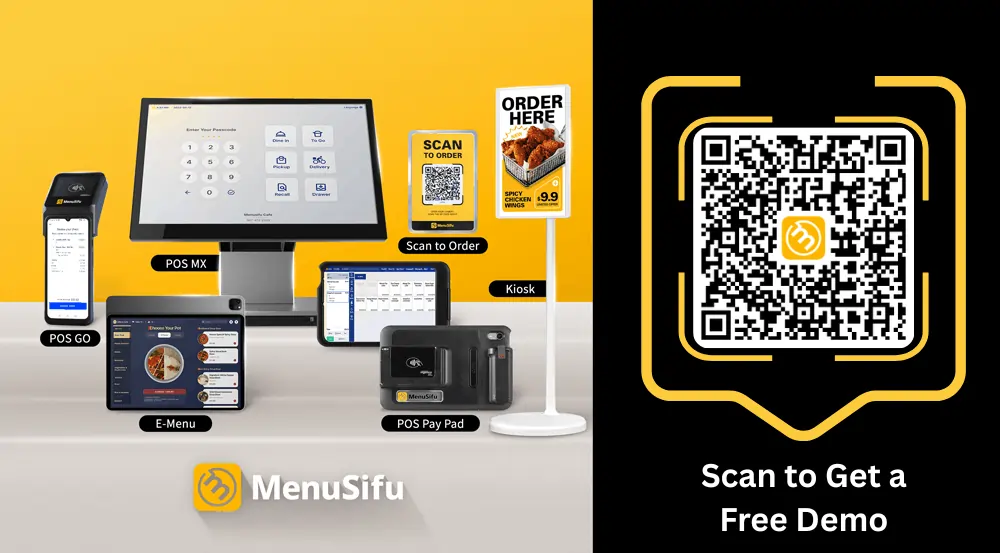
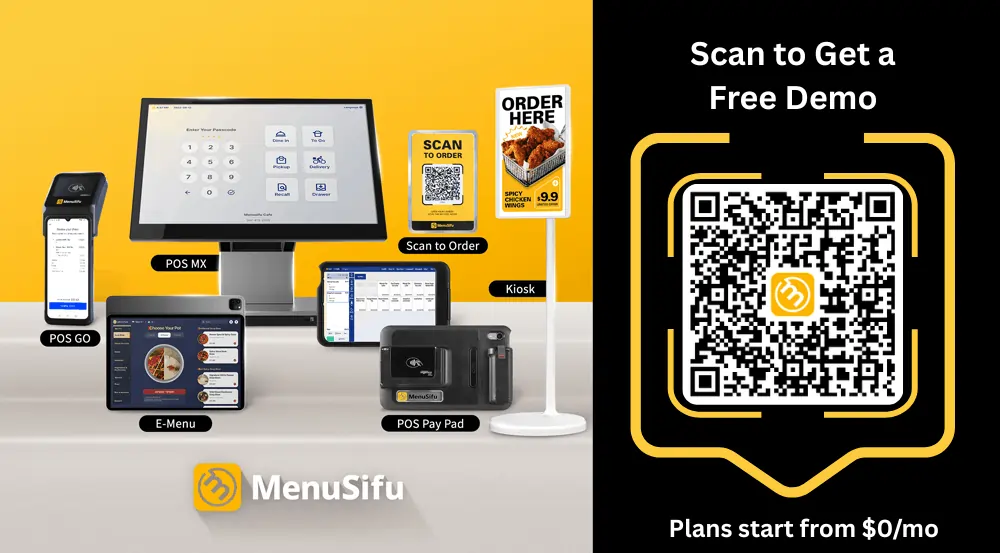
For that reason, many restaurants choose a provider that can support the full ordering flow in one system. MenuSifu offers restaurant POS solutions and self-ordering kiosks designed to work together from day one. Orders sync in real time to POS, inventory, kitchen printers, and KDS, which helps keep checkout, order routing, and fulfillment aligned. Customers can browse branded screens, redeem offers, join your membership program, and place detailed orders in one flow.
If you are comparing providers and want a connected setup built for restaurant operations, book a free demo with MenuSifu today.
Use these FAQs to compare your options and choose a restaurant kiosk that fits your setup. They cover where to buy, who to buy from, and whether to buy or lease.
You can buy a kiosk for your restaurant from a restaurant technology provider, a POS company, a reseller, or a general hardware seller. If you want a kiosk that works smoothly with your POS and kitchen system, a restaurant technology provider or POS company is often the better option because you can get hardware, software, setup, and support from one source.
If you want a kiosk that works smoothly with your POS and kitchen systems, a POS company is often the better choice. One provider can handle setup, menu sync, reporting, and support in one system. A standalone vendor may work if you only need hardware, but you may need to manage software connections and support across separate providers.
Buy if you want long-term ownership and plan to keep the kiosk setup in place for years. Lease if you want a lower upfront cost and more flexibility as you add locations or manage cash flow. Before you decide, compare the total cost, support terms, hardware coverage, and how well the kiosk integrates with your POS and kitchen systems.
Yes. Many restaurant technology providers offer both a self ordering kiosk and POS in one system. This setup can help keep menus, pricing, payments, and order flow connected across the front counter and kitchen. It can also simplify setup, reporting, and support since you work with one provider instead of managing separate systems.
You can also explore our blog for more insights and updates on kiosks, POS systems, kitchen tools, and restaurant growth.
Related Articles: