October 20, 2026
Explore the benefits of mPOS for restaurants, including lower labor costs per transaction, fewer order remakes, better reporting, and revenue opportunities.

Rising labor expenses, order mistakes, and time-consuming payment reconciliation can eat into your restaurant's profits. A mobile point of sale (mPOS) system can help address these challenges by improving transaction efficiency and providing better access to business data.
Beyond convenient ordering and payments, the benefits of mPOS include greater cost control, increased revenue opportunities, and more informed business decisions.
Explore six ways this technology can support your restaurant's financial performance.
The financial impact of mPOS depends on how you use the technology and measure its results. These six benefits highlight where mobile POS systems can create measurable business value.
Labor expenses account for a significant portion of restaurant operating costs. An mPOS system can help you use staff hours more efficiently by reducing time spent on routine transactions and allowing employees to handle more orders within their scheduled shifts.
This increased productivity can lower your labor cost per transaction, even when total payroll expenses remain unchanged. You can measure this by dividing total labor costs for a shift by the number of completed transactions.
For example, suppose you spend $600 on labor and complete 120 transactions, resulting in a labor cost of $5 per transaction. If your team completes 150 transactions with the same labor expense, the cost decreases to $4 per transaction.
By tracking this metric across comparable shifts, you can assess how effectively your mPOS system supports staff productivity and identify opportunities to improve scheduling. A lower labor cost per transaction indicates greater efficiency, while actual payroll savings depend on staffing levels, scheduling decisions, and customer demand.

Order mistakes affect more than customer satisfaction. Incorrect orders can lead to wasted ingredients, replacement meals, refunds, and additional preparation costs. When these expenses accumulate, they can reduce your restaurant's profit margins.
An mPOS system can help minimize these losses by recording order details, modifications, and special requests digitally. Clearer order information can reduce costly corrections and help your kitchen avoid preparing dishes that need to be replaced.
For example, if your restaurant spends $200 each month replacing incorrect orders, reducing those expenses by 25% could save approximately $600 annually. This hypothetical example shows how fewer order mistakes can contribute to lower operating costs.
By tracking remake expenses, refunds, and food waste costs over time, you can measure changes in error-related spending and identify opportunities to reduce recurring losses.
Busy dining periods offer opportunities to increase sales, but limited transaction capacity can prevent your restaurant from handling additional orders.
An mPOS system can help increase that capacity by allowing employees to take orders and process payments from multiple locations. This gives your restaurant more opportunities to accept orders and complete sales when customer demand is high.
You can evaluate the potential financial impact using key performance indicators such as:
Comparing these figures across similar periods can help you identify potential improvements in sales performance.
Actual revenue gains depend on customer demand, kitchen capacity, and staffing. To determine if higher transaction volume improves profitability, compare additional sales with associated food costs, payment processing fees, and other operating expenses.
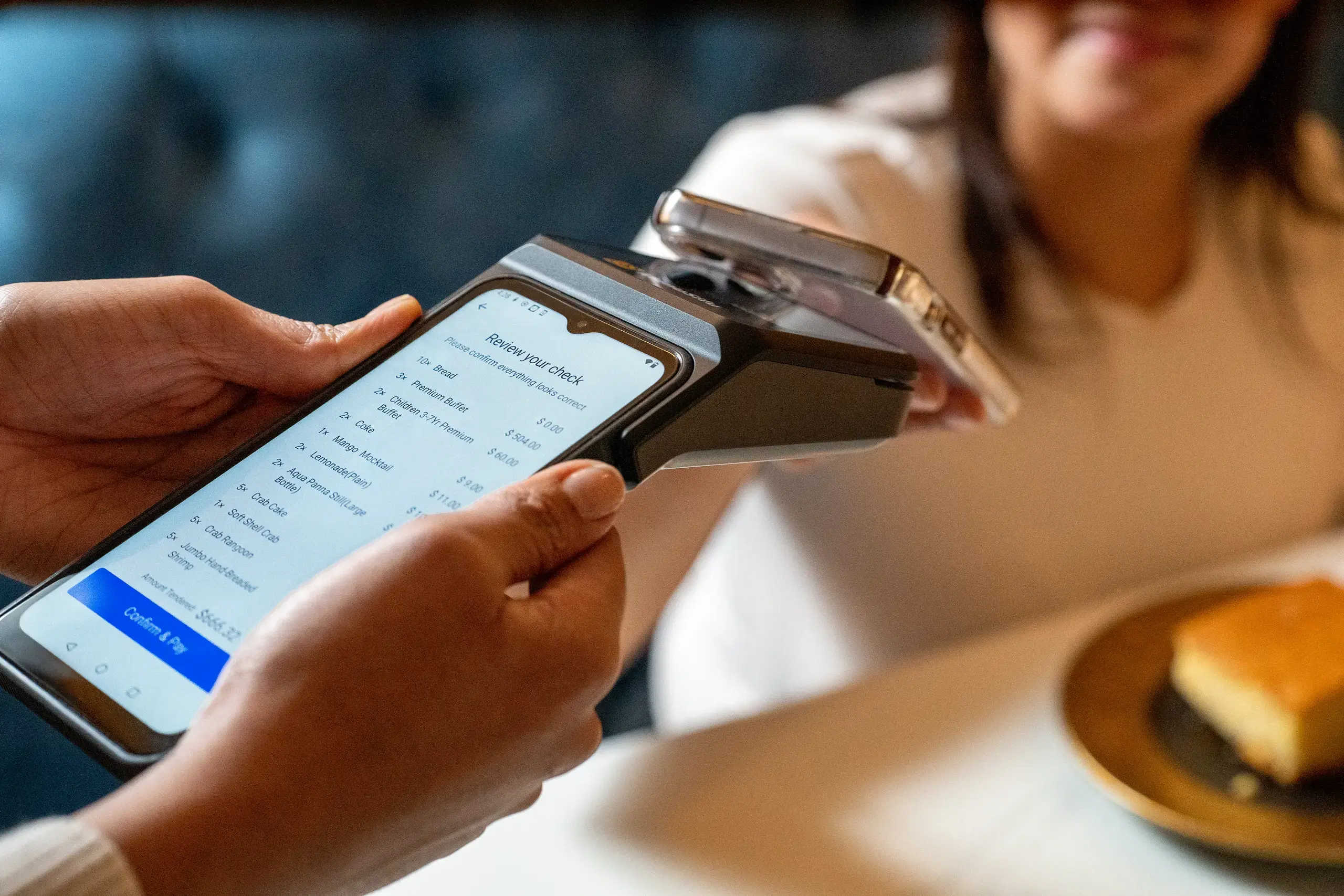
Reconciling payments and managing employee tips can take considerable time, especially when your restaurant handles cash, cards, digital payments, and multiple shifts.
An mPOS system integrated with your main POS platform can centralize transaction records, giving you easier access to payment totals, refunds, adjustments, and recorded tips. This can reduce the administrative work required to review transactions and prepare end-of-shift reports.
If your system supports digital tip management, you can also use recorded tip information to simplify tip verification, distribution calculations, and payroll preparation.
For example, instead of manually compiling tip amounts from individual receipts, you can review consolidated transaction records and verify the totals against payment reports.
Accurate digital records can help your team identify discrepancies earlier and reduce the time spent reviewing financial information. You should still reconcile cash balances and payment processor settlements to maintain accurate accounting records.
Your restaurant generates valuable business information with every transaction. When your mPOS system connects to a POS platform with reporting and analytics capabilities, you can use this information to evaluate performance and make informed operational decisions.
Sales reports can reveal purchasing patterns, popular menu items, and changes in customer demand. These insights can help you identify opportunities to improve revenue and manage expenses.
For example, you can use POS data to:
By reviewing these metrics regularly, you can make more informed decisions about menu pricing, inventory purchases, promotions, and staffing.
The financial value comes from using these insights to make changes and measuring their results over time.
Expanding your restaurant's transaction capacity often requires additional equipment and technology investments. Installing more fixed POS terminals may involve hardware purchases, dedicated counter space, network connections, and installation expenses.
Mobile POS devices can offer a potentially more economical alternative, particularly if your existing POS platform supports additional handheld terminals.
For example, adding transaction points to an outdoor dining area or another section of your restaurant may require less installation work with compatible mobile devices than with fixed terminals.
However, the total investment depends on your system's hardware requirements, software licensing, payment processing fees, and maintenance costs.
Before expanding, compare the cost of adding mobile devices with installing traditional terminals. Consider both the upfront investment and ongoing expenses, including connectivity, charging equipment, and technical support.
Evaluating the total cost per additional transaction point can help you select an expansion approach that supports your operating needs and budget.
The benefits of mPOS systems can contribute to stronger financial performance by helping you manage labor expenses, reduce order-related losses, and make informed decisions using sales data. Tracking these improvements alongside your operating costs can help you evaluate the long-term value of mobile POS technology.
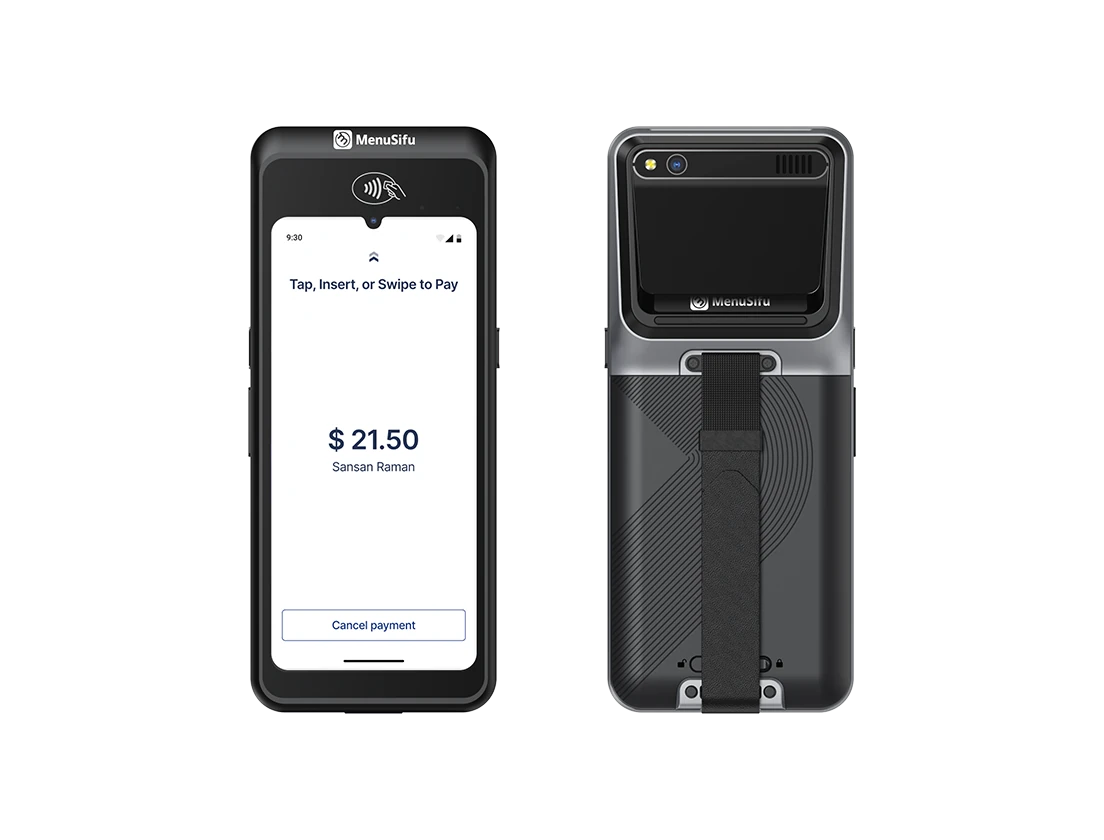
To support these goals, MenuSifu offers a Handheld POS System for tableside ordering, payments, and digital tip recording, along with an E-Menu that allows guests to browse menus and place orders through tablets. Both solutions are part of MenuSifu's integrated POS ecosystem, helping you streamline transactions and manage restaurant operations more efficiently.
Interested in exploring how mobile POS technology could benefit your restaurant? Book a Free Demo with MenuSifu to explore the available features and discuss your business needs.
Here are answers to common questions about the financial benefits, cost savings, and return on investment of mPOS systems for restaurants.
The biggest financial benefits of mPOS systems for restaurants include lower labor costs per transaction, reduced expenses from order mistakes, and increased revenue opportunities. Mobile POS systems can also simplify payment reconciliation, reduce administrative costs, and provide sales insights that help improve profitability.
Restaurants can measure the ROI of an mPOS system by comparing measurable financial gains with total system costs over the same period. Include actual labor savings, reduced expenses from order mistakes, lower administrative costs, and additional profit from increased sales. Then subtract hardware, software, and operating costs from these gains, divide the result by total costs, and multiply by 100 to calculate ROI as a percentage.
Mobile POS systems can help improve labor efficiency by allowing employees to process orders and payments more quickly and handle more transactions within their scheduled shifts. This can lower labor costs per transaction, even when total payroll expenses remain unchanged. Actual labor savings depend on staffing needs, transaction volume, and scheduling decisions.
Mobile POS systems can be cost-effective for small restaurants by reducing certain hardware expenses, improving staff productivity, and supporting more efficient operations. They may also allow you to expand ordering and payment capabilities with fewer fixed terminals. However, compare hardware costs, software fees, payment processing charges, and expected savings to determine if the investment makes financial sense.
For more restaurant technology insights, practical business tips, and industry updates, explore the MenuSifu Blog.
Related Articles: