August 27, 2026
Learn how to start a fast food restaurant with 17 practical steps covering concept, costs, funding, permits, equipment, staffing, technology, and launch prep.

Starting a fast food restaurant can be exciting, but turning an idea into a workable business takes careful planning around costs, location, menu, equipment, staffing, permits, and technology. Competition is also significant. Statista reports that the number of quick-service restaurant establishments in the U.S. was estimated to exceed 200,000 in 2025.
In a crowded market, a clearly defined concept and well-planned operation can help you enter with a stronger foundation and a clearer path to serving your target customers.
Knowing how to start a fast food restaurant can help you organize these decisions before opening day. This guide walks you through 17 practical steps, from defining your concept and securing funding to setting up operations, testing your restaurant, and preparing to serve your first customers.
Opening a fast-food restaurant requires a series of connected decisions, from validating your concept to preparing your team and systems for launch. Follow these steps in order so each stage supports the next and helps you build an efficient, financially sustainable operation.
Start with a clear concept that explains what you will serve, who you will serve, and the experience customers can expect. Define your cuisine, price range, brand positioning, and target customers based on their dining habits, preferences, and spending patterns.
Then decide how customers will place and receive orders, such as dine-in, takeaway, drive-thru, delivery, or a mix of channels. Identify a clear point of difference from nearby competitors, such as menu specialization, value, service speed, convenience, or ordering experience.
Validate local demand before committing to a lease or major purchases. Study customer demographics, traffic patterns, nearby offices, schools, residential areas, retail centers, and other sources of potential demand.
Review competing restaurants closely, including their menus, prices, operating hours, service formats, promotions, and customer reviews. Look for underserved needs you can address through a stronger menu offer, more convenient ordering, better value, or a service format that fits the area.
Turn your concept and market research into a business plan that explains how the restaurant will operate and generate revenue. Include your target market, positioning, menu strategy, sales projections, startup costs, recurring expenses, staffing model, marketing approach, and operational structure.
Use realistic assumptions when estimating transaction volume, average order value, labor, food costs, rent, and other expenses. A well-supported plan can guide major decisions and provide lenders or investors with a clear view of the business.
Build a detailed startup budget before signing contracts or purchasing equipment. Separate one-time opening costs from recurring expenses so you can see how much capital you need before launch and how much cash the restaurant will require each month.
Typical startup costs may include:
Set aside working capital for the first few months and include a contingency reserve for construction changes, equipment repairs, permitting delays, or other unplanned costs.
Once you know the expected startup cost, determine how much capital you can contribute and how much outside funding you need. Funding options may include personal savings, business loans, restaurant financing, equipment financing, investors, partners, or lines of credit.
Prepare the financial documents lenders or investors may review, including your business plan, startup budget, projected revenue, operating expenses, and cash-flow forecast. Keep borrowing within a level that projected restaurant cash flow can reasonably support after rent, payroll, food purchases, and other operating expenses.
Select a location based on customer access, visibility, demand, operating costs, and the needs of your service model. A high-traffic site can attract customers, but the rent still needs to align with realistic sales projections.
Assess factors such as:
Compare the full cost of each site, including rent, utilities, maintenance, fees, and renovation needs, before making a commitment.
If you're opening in the U.S., choose a suitable business structure, select and register your business name, and complete the required business registrations with the appropriate federal, state, and local authorities. Depending on your location and structure, you may also need an Employer Identification Number (EIN), state tax identification numbers, sales tax registration, and employee-related registrations.
Next, apply for the licenses, permits, and approvals required to operate a fast-food restaurant. These may include a business license, food-service permit, health department approval, building permits, fire inspections, signage approval, accessibility compliance, zoning approval, and a certificate of occupancy. Since requirements vary by location, confirm the applicable rules early and track application deadlines, inspections, renewal dates, and supporting documents.
Once the business is formally registered, open a dedicated business bank account to keep restaurant income and expenses separate from personal finances. At the same stage, review the insurance coverage required by applicable regulations, your lease, lender, and business needs, such as general liability, property, workers' compensation, and other applicable policies. Completing these administrative steps early can make it easier to manage finances, meet legal requirements, and prepare the restaurant for opening.

Design the kitchen around the path each order takes from preparation to cooking, assembly, and pickup. Position cooking equipment, prep stations, refrigeration, dry storage, washing areas, and packaging stations so employees can move efficiently between tasks.
Apply the same approach to customer-facing areas. Arrange ordering points, seating, kiosks, beverage stations, pickup counters, and delivery collection areas so dine-in guests, takeaway customers, and couriers can move through the restaurant with minimal disruption.
Build your equipment list from the finalized menu and expected order volume. Identify what each menu item requires for storage, preparation, cooking, holding, and service, then confirm that the kitchen has enough capacity for peak periods.
Depending on the concept, you may need fryers, griddles, ovens, refrigerators, freezers, prep tables, holding cabinets, beverage equipment, shelving, ventilation, and cleaning systems. Compare new, used, and leased equipment based on purchase cost, reliability, warranty coverage, maintenance needs, energy use, and available service support.
Keep the opening menu focused enough that the kitchen can prepare each item consistently and efficiently. A tighter menu can also simplify purchasing, inventory, training, prep work, and portion control.
Calculate the full ingredient and packaging cost of every item, then set pricing based on target margins and customer expectations. Standardize recipes, portions, cooking methods, and preparation procedures, and use bundles, beverages, sides, or add-ons where they can naturally increase average order value.
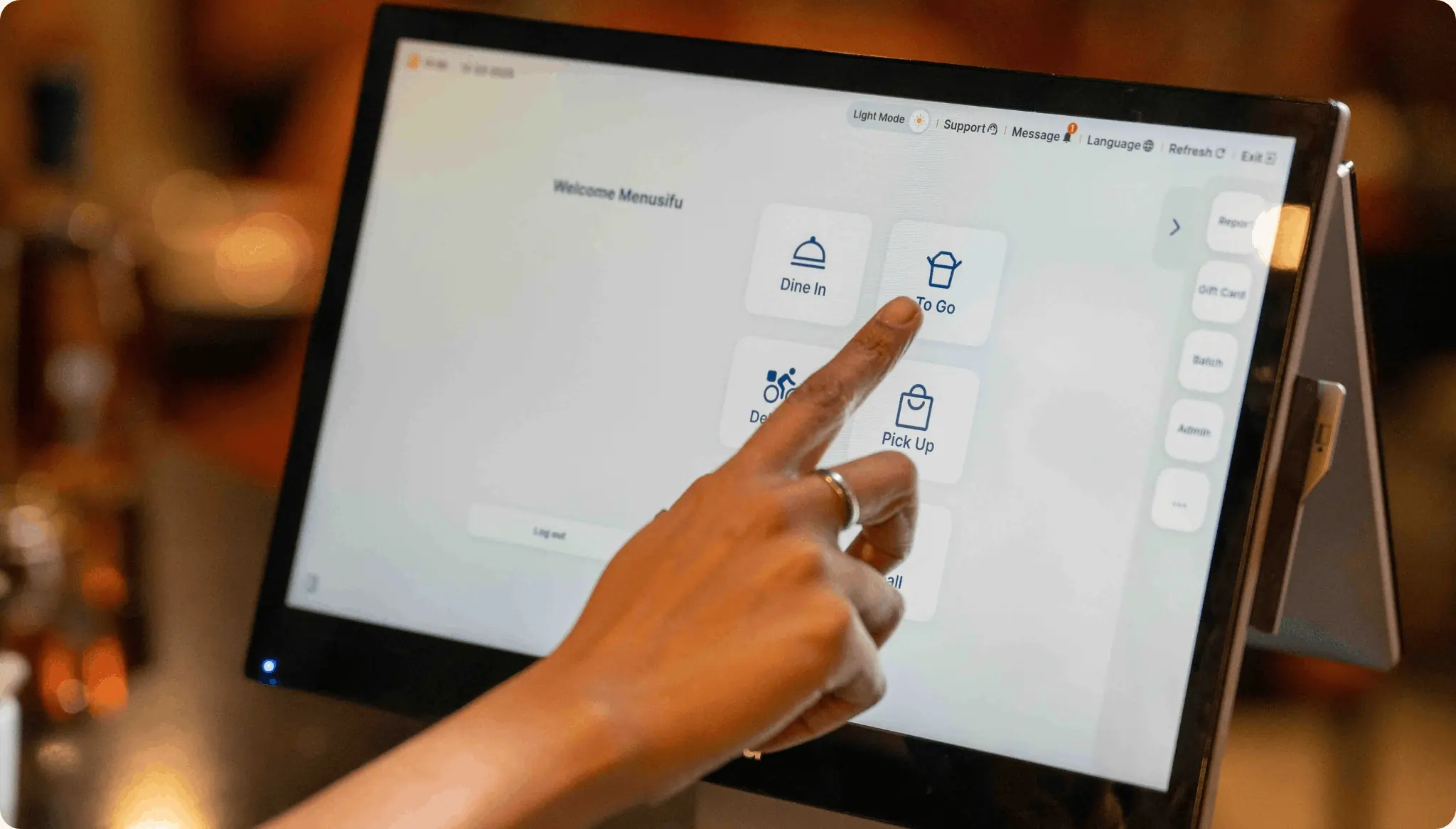
Choose restaurant technology early enough to configure, integrate, and test it before opening. Start with a POS platform that can support your planned ordering channels and give managers access to accurate sales and operational data.
Depending on your service model, your technology setup may include:
Prioritize systems that work well together and support the order flow you established during layout and operational planning.
When comparing POS platforms, look at how each system handles menu modifiers, combo meals, multiple ordering channels, kitchen routing, payment processing, employee permissions, and reporting. If you plan to use kiosks, online ordering, delivery, or drive-thru service, confirm how those channels connect with the POS before selecting separate tools.
Choose suppliers that can consistently provide the ingredients, beverages, packaging, cleaning products, and other supplies your restaurant needs. Compare pricing alongside product quality, delivery schedules, minimum orders, payment terms, availability, and substitute options.
Set par levels and reorder points based on projected sales, shelf life, and delivery frequency. Establish clear receiving, storage, rotation, waste-tracking, and inventory-count procedures so you can control food costs and reduce unnecessary stock.
Plan staffing around operating hours, expected transaction volume, kitchen structure, and service channels. Assign the right coverage across cooking, preparation, counter service, drive-thru, delivery coordination, shift supervision, and management.
Train employees on recipes, portion standards, food safety, sanitation, customer service, equipment use, POS procedures, cash handling, and order accuracy. Use written procedures and practice peak-service periods before opening so each employee knows their role during busy shifts.
Document daily procedures before the restaurant opens so employees can follow consistent standards across shifts. Cover food receiving, storage, preparation, cooking temperatures, sanitation, cleaning, waste disposal, opening duties, closing duties, cash handling, and shift handoffs.
Set clear quality standards for portions, preparation times, packaging, order accuracy, and customer service. Assign responsibility for routine checks so managers can spot deviations early and correct them before they affect more orders.
Begin building local awareness before the opening date. Establish consistent branding across your signage, menu, website, social channels, packaging, and online business listings, and make key information such as your address, hours, menu, and ordering options easy to find.
Choose promotional channels based on the customers you plan to reach. Local digital ads, social media content, community partnerships, opening offers, email sign-ups, loyalty enrollment, and nearby business partnerships can help generate early interest.
Use a soft opening to test the restaurant under controlled conditions before the full launch. Limit operating hours, menu availability, or customer volume while the team practices taking orders, preparing food, processing payments, coordinating pickups, and serving guests.
Track order accuracy, preparation times, food quality, POS performance, kitchen flow, staffing coverage, and customer feedback. Use what you learn to adjust station assignments, recipes, training, menu execution, technology settings, or staffing before increasing volume.
Once the restaurant opens, compare actual performance with the projections in your business plan. Monitor sales, transaction count, average order value, food cost, labor cost, order times, waste, refunds, menu performance, and sales by ordering channel.
Review patterns regularly and act on recurring issues. Adjust pricing, staffing schedules, inventory levels, menu items, preparation procedures, and kitchen workflows based on actual sales data and customer feedback rather than relying on pre-opening assumptions.
Opening a fast-food restaurant requires several decisions to work together. Your concept influences your menu and location, while your expected order volume affects equipment, staffing, kitchen design, inventory, and technology. Planning these areas before launch gives you a stronger foundation for consistent daily operations.
As you prepare to open, make sure your restaurant technology supports the service channels you plan to offer. A reliable POS system for fast food restaurants can help connect order taking, payments, kitchen communication, menu management, and sales reporting so your team has the tools needed to manage daily service.
MenuSifu offers POS solutions designed to support fast-food and quick-service operations across ordering, payments, and restaurant management. If you are evaluating technology as part of your opening plan, Book a Free Demo with MenuSifu to see how the platform could fit your restaurant setup.
Planning a fast-food restaurant involves several practical decisions beyond the main setup process. These FAQs provide quick answers to some of the most frequently searched topics.
Opening a fast food restaurant can cost roughly $100,000 to $1 million or more, depending on the concept, location, restaurant size, buildout, equipment, and business model. Independent concepts may fall toward the lower end of the investment spectrum, while larger builds and franchise locations can require considerably more capital. Your startup budget should account for lease and renovation costs, kitchen equipment, permits, technology, initial inventory, payroll, marketing, and working capital.
Start by defining your concept, validating local demand, and creating a business plan that covers startup costs, pricing, staffing, and revenue projections. Then secure funding, choose a location, complete registrations and permits, prepare the kitchen, set up suppliers and technology, hire your team, and test operations before opening.
Most fast-food restaurants take 6 to 12 months to open, depending on the location, permits, construction, equipment installation, staffing, and inspections. New builds or projects with major renovations may take longer, while existing restaurant spaces can shorten the timeline.
You may need a business license, food service permit, health department permit, food handler certifications, sales tax permit, fire inspection, signage permit, zoning approval, and a certificate of occupancy. Requirements vary by location, so check with local and state agencies before opening to confirm which licenses, inspections, and approvals apply.
A fast-food restaurant typically needs commercial cooking equipment, refrigeration and freezers, food prep tables, hot-holding units, sinks, dishwashing equipment, storage shelving, ventilation systems, POS terminals, and food safety supplies. Choose equipment based on the menu, kitchen layout, service volume, and local health and safety requirements.
Explore the MenuSifu blog for more guides on restaurant operations, technology, payments, ordering, and management.
DISCLAIMER: Costs, timelines, licensing, and other requirements are general estimates and may vary by location, concept, and circumstances. This article is for informational purposes only and does not constitute legal or financial advice.