September 17, 2026
Learn how to run a fine dining restaurant with practical guidance on staffing, menu planning, service standards, cost control, reservations, and technology.

Great food and polished service can still fall short when staffing, costs, reservations, and consistency pull in different directions. Learning how to run a fine dining restaurant means creating clear systems that help every department deliver the same high standard from opening prep to the final check.
Running a fine dining restaurant becomes more manageable when your concept, team, menu, guest experience, and technology support one another. This guide covers the key steps you can take to strengthen daily operations, protect margins, and give guests a reason to return.
A clear concept guides every decision you make. Define the cuisine, price range, service style, atmosphere, and guest profile before refining the menu or dining room.
Keep the concept consistent across your food, interior design, uniforms, tableware, website, and marketing. Guests should recognize the same identity at every touchpoint.
Study nearby competitors and identify what sets your restaurant apart. You may focus on regional ingredients, tasting menus, tableside service, rare wines, or intimate private dining. A distinct position gives guests a clear reason to choose your restaurant.
Experienced leaders help turn your vision into reliable daily operations. Hire managers, chefs, beverage directors, and department heads who understand premium hospitality and know how to guide employees.
Assign clear responsibilities across the kitchen, dining room, bar, purchasing, and administration. Each leader should know which decisions they can make and which results they need to deliver.
Set measurable standards for food quality, service, labor, guest recovery, and financial performance. Daily briefings, management meetings, and shift reports can keep every department informed.
Fine dining service requires skill, discretion, timing, and attention. Recruit people who communicate well, remain composed during busy periods, and treat guests with care.
Create a structured training program covering menu knowledge, allergens, etiquette, wine service, order-taking, table maintenance, and complaint handling. Let new employees shadow experienced staff before assigning them full sections.
Use pre-shift meetings to review reservations, special occasions, dietary needs, menu updates, and service goals. Regular evaluations and refresher sessions help maintain consistent performance.
Your menu should reflect the restaurant concept while supporting healthy margins. Develop dishes your kitchen can consistently prepare during every service period.
Review ingredient availability, preparation time, portion size, required skill, and food cost for each item. A creative dish still needs a reliable production process and a suitable selling price.
Track contribution margins and sales performance regularly. Adjust recipes, portions, pricing, or menu placement when an item underperforms.
Seasonal updates can improve ingredient quality and keep the experience fresh. Use sales data and guest feedback to guide changes while preserving your culinary identity.
Guests expect the same level of quality each time they visit. Document recipes, cooking methods, portion sizes, plating instructions, table settings, service steps, and course timing.
Conduct inspections before opening. Check ingredients, preparation stations, dining areas, uniforms, glassware, and table presentation.
During service, managers should monitor pacing, ticket times, plate quality, beverage service, and guest reactions. Clear communication between the dining room and kitchen helps each course arrive at the right time.
Correct inconsistencies as soon as they appear. Explain the expected standard and review the improvement during later shifts.
Reservation pacing affects your kitchen, servers, and guests. Use a system that stores dining history, seating preferences, dietary requirements, and special occasions.
Set booking intervals based on kitchen capacity, staffing, table sizes, and average meal duration. Seating several parties at the same time can create delays between courses and place unnecessary pressure on employees.
Review the reservation book before every service. Assign sections, identify high-touch tables, and share timing concerns with the kitchen.
Track cancellations, no-shows, late arrivals, table use, and dining times. These patterns can help you improve booking policies and seating plans.
Personal attention can turn a first visit into a lasting relationship. Record useful details such as preferred tables, favorite wines, dietary needs, pacing requests, and special dates.
Train staff to read guest cues. Some diners enjoy detailed explanations while others prefer privacy and minimal interruption.
Handle complaints discreetly and respond quickly. Listen to the concern, acknowledge the experience, and offer a suitable resolution.
A brief follow-up after a celebration, private event, or service recovery can strengthen loyalty and show genuine care.
Fine dining often carries high ingredient, labor, linen, utility, and maintenance expenses. Monitor food cost, labor ratios, waste, purchasing, discounts, and complimentary items on a regular schedule.
Conduct inventory counts and compare actual usage with recorded sales. Review unusual variances, spoilage, overportioning, receiving errors, and unrecorded transfers.
Build staff schedules around reservations, private events, seasonal demand, and historical sales. Match coverage to expected volume while protecting service quality.
Reduce expenses through accurate purchasing, portion control, preventive maintenance, and energy management. Focus on improvements that preserve the guest experience.
Your suppliers affect food quality, availability, and cost control. Choose vendors that meet your standards for freshness, sourcing, packaging, delivery times, and order accuracy.
Create written specifications for proteins, seafood, produce, beverages, linens, flowers, and tableware. Clear requirements help employees inspect deliveries and compare products consistently.
Maintain backup suppliers for signature ingredients and high-use items. Secondary options can protect service during shortages or delivery issues.
Review vendor pricing, substitutions, credits, fill rates, and response times regularly. Strong relationships depend on clear expectations and consistent communication.
Your beverage program should complement the menu and suit guest spending patterns. Offer a useful range of styles, regions, price points, and pairing options.
Train servers and sommeliers to explain selections in clear language. They should know producers, grapes, vintages, serving temperatures, glassware, and suitable pairings.
Monitor bottle inventory, open wine, storage temperatures, transfers, breakage, and pouring costs. Set clear procedures for receiving products, accessing storage, and recording complimentary drinks.
Review sales reports to identify popular categories and slow-moving bottles. Use those insights to refine the wine list and by-the-glass selection.

The right technology can improve order accuracy, reporting, communication, and payment processing. Connect your point-of-sale system with reservations, inventory, payroll, scheduling, and customer records where possible.
Use operational reports to review sales patterns, labor performance, menu results, discounts, voids, and payment activity. Accurate data helps you respond to issues before they affect profitability.
Protect customer information with secure passwords, controlled access, staff training, and regular system updates. Store guest details that support service and follow applicable privacy requirements.
Choose tools that fit your workflows and can support future locations or service formats. Reliable hardware, clear reports, responsive support, and easy staff training should guide your decision.
Your marketing should reflect the experience guests receive in the dining room. Use professional photography, polished copy, and consistent branding across your website, social channels, search listings, and reservation platforms.
Keep your menu, hours, dress guidelines, contact details, reservation policies, and location information accurate. Clear information helps guests plan their visit and reduces avoidable questions.
Promote seasonal menus, wine dinners, chef collaborations, holiday events, and private dining with clear booking details. Give each campaign a specific audience and purpose.
Build relationships with hotels, concierges, event planners, local businesses, cultural groups, and selected media contacts. These partnerships can introduce your restaurant to guests seeking premium dining experiences.
Regular performance reviews help you identify weak areas and new opportunities. Track revenue, covers, average check size, table utilization, menu mix, food cost, beverage cost, labor cost, cancellations, and repeat visits.
Compare results across days, shifts, service periods, and seasons. Trends offer a clearer picture than isolated numbers.
Review comments from direct conversations, surveys, reservation notes, and online reviews. Group feedback by themes such as food, pacing, hospitality, atmosphere, and value.
Meet with department leaders to discuss results and assign clear actions. Set measurable goals, name the person responsible, and schedule a date to review progress.
A successful fine dining restaurant relies on a clear concept, capable leadership, disciplined cost control, and dependable execution. When employees follow established processes and managers have access to accurate data, you can maintain quality, strengthen margins, and encourage repeat visits.
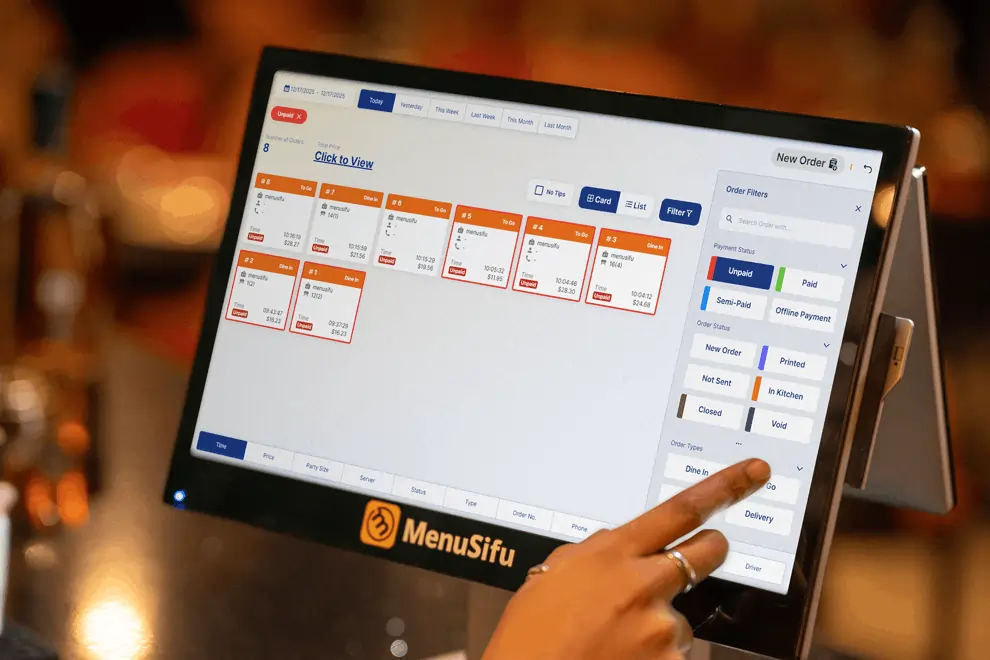
MenuSifu brings ordering, payments, kitchen communication, reservations, and reporting into one full-service restaurant POS system. Tableside handhelds help servers send orders and process payments efficiently, while real-time kitchen updates keep front-of-house and back-of-house employees aligned. Book a Free Demo with MenuSifu today to see how connected restaurant technology can improve daily management and decision-making.
A fine dining restaurant should review its menu each season and make larger updates two to four times a year. Adjust dishes sooner when ingredient availability, food costs, sales data, or guest feedback support a change. Keep strong signature items and test new dishes before adding them permanently.
Fine dining staff training should cover menu knowledge, allergens, service etiquette, wine presentation, table maintenance, course timing, guest communication, complaint handling, and POS procedures. Use shadow shifts, role-playing, and regular refresher sessions to reinforce consistent service.
A fine dining restaurant needs an integrated POS system that supports reservations and table management, tableside ordering, kitchen coordination, secure payment processing, guest profiles, and performance reporting. Connected inventory and staff management tools can also help control costs and improve daily operations. Together, these technologies help your team coordinate service, monitor performance, and provide a consistent guest experience.
Visit the MenuSifu blog for more restaurant management insights, practical guides, and industry updates.