September 4, 2026

How to Increase Sales in Fast Food: 10 Ways to Grow Revenue

Learn how to increase sales in fast food with 10 practical strategies to attract more customers, raise order value, drive repeat visits, and improve profits.

If you want to know how to increase sales in fast food, start by looking at the areas that directly affect revenue. Low customer traffic, low average ticket size, weak repeat visits, and rising costs can all limit profitability. Because these challenges often overlap, improving sales usually requires several focused changes across your restaurant operation.

The 10 strategies below focus on practical ways to attract more customers, increase order value, encourage repeat visits, and generate more revenue from your existing location.

How to Increase Sales in a Fast Food Restaurant

Start by identifying which sales levers offer the clearest opportunity for improvement. Prioritize the areas you can measure, test, and adjust based on actual performance.

1. Increase Customer Traffic With Local Marketing

Local marketing works best when it reaches people who could realistically visit your restaurant soon. Instead of promoting to a wide area, target nearby customers with a timely offer, such as a weekday lunch special or an after-school deal.

Keep your Google Business Profile current with accurate hours, menu links, photos, contact details, and ordering options. Customers searching for nearby food should have enough information to decide where to eat.

Build local partnerships as another traffic source. A lunch promotion with nearby offices, a school fundraiser, or a community event partnership can introduce your restaurant to customers who spend time close to the location.

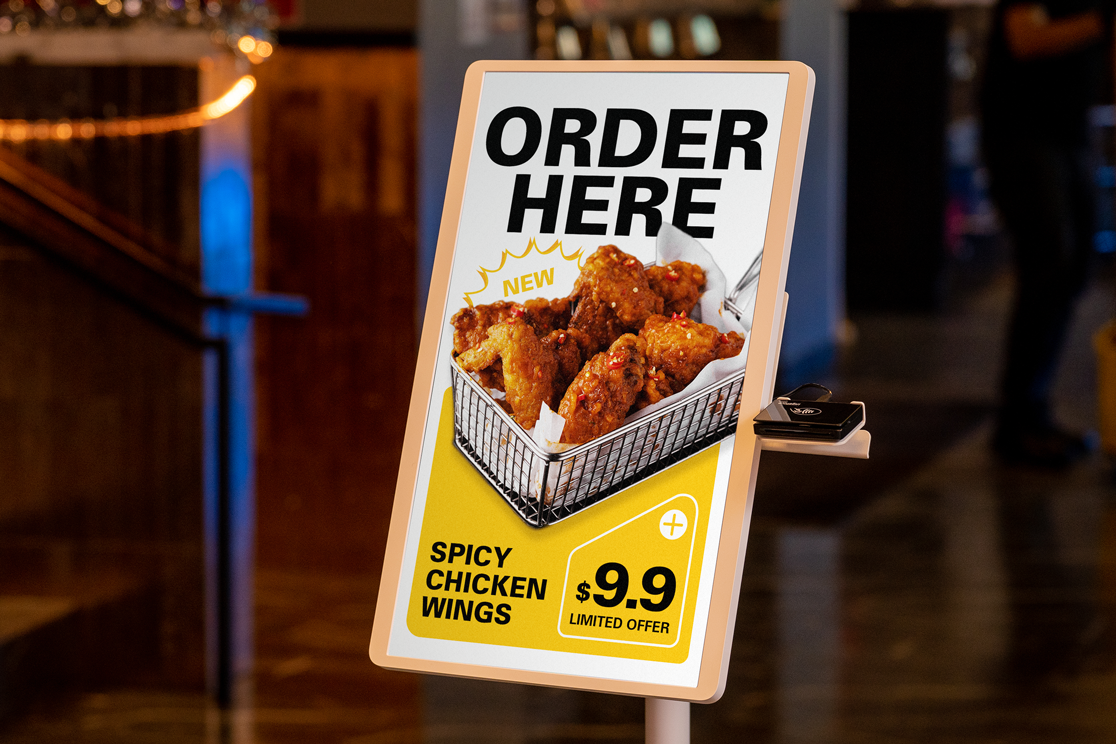
Digital kiosk displaying spicy chicken wings promo with “Order Here” and $9.9 offer in a fast food restaurant.

2. Increase Average Order Value With Strategic Upselling

Upselling raises revenue from traffic you already have. Keep each suggestion relevant to the order instead of presenting several extras at once.

If a customer orders a burger, suggest a combo. If they already selected a meal, offer a larger drink, an extra side, or dessert. Apply the same approach at the counter, drive-thru, kiosk, and digital checkout so customers see the offer while deciding what to buy.

Train staff to make recommendations naturally and track which add-ons customers purchase most often. Give stronger performers more visibility and reduce prompts that rarely lead to a sale.

3. Optimize Your Menu for Higher Sales

A crowded menu often buries profitable items and gives customers more choices to sort through. Review item sales alongside margin so you know which products deserve stronger placement.

Use a simple menu review:

  • High sales, high margin: Give these items prominent placement.
  • High sales, lower margin: Review pricing, portions, or add-on opportunities.
  • Low sales, healthy margin: Test a better position or clearer description.
  • Low sales, low margin: Consider reworking or removing them.

Make one change at a time. Move a profitable combo higher on the menu board, adjust a portion, or test a price change, then compare sales before making another adjustment.

4. Create Promotions That Drive Profitable Purchases

A useful promotion should encourage a specific purchase behavior. Instead of discounting an item that already sells well, use the offer to increase order value, generate demand during a slower period, or promote a specific menu item.

For example, set a minimum order value before customers receive a free side. If Tuesday afternoons consistently produce fewer transactions, test an offer during that period instead of discounting meals throughout the week.

Limited-time offers can also help generate interest in new, seasonal, or under-promoted menu items while giving customers a clear reason to order during a defined period.

After each promotion, review revenue, average order value, redemption rate, and margin. Higher transaction volume has limited value if the discount significantly reduces profit.

5. Build a Loyalty Program That Encourages Repeat Visits

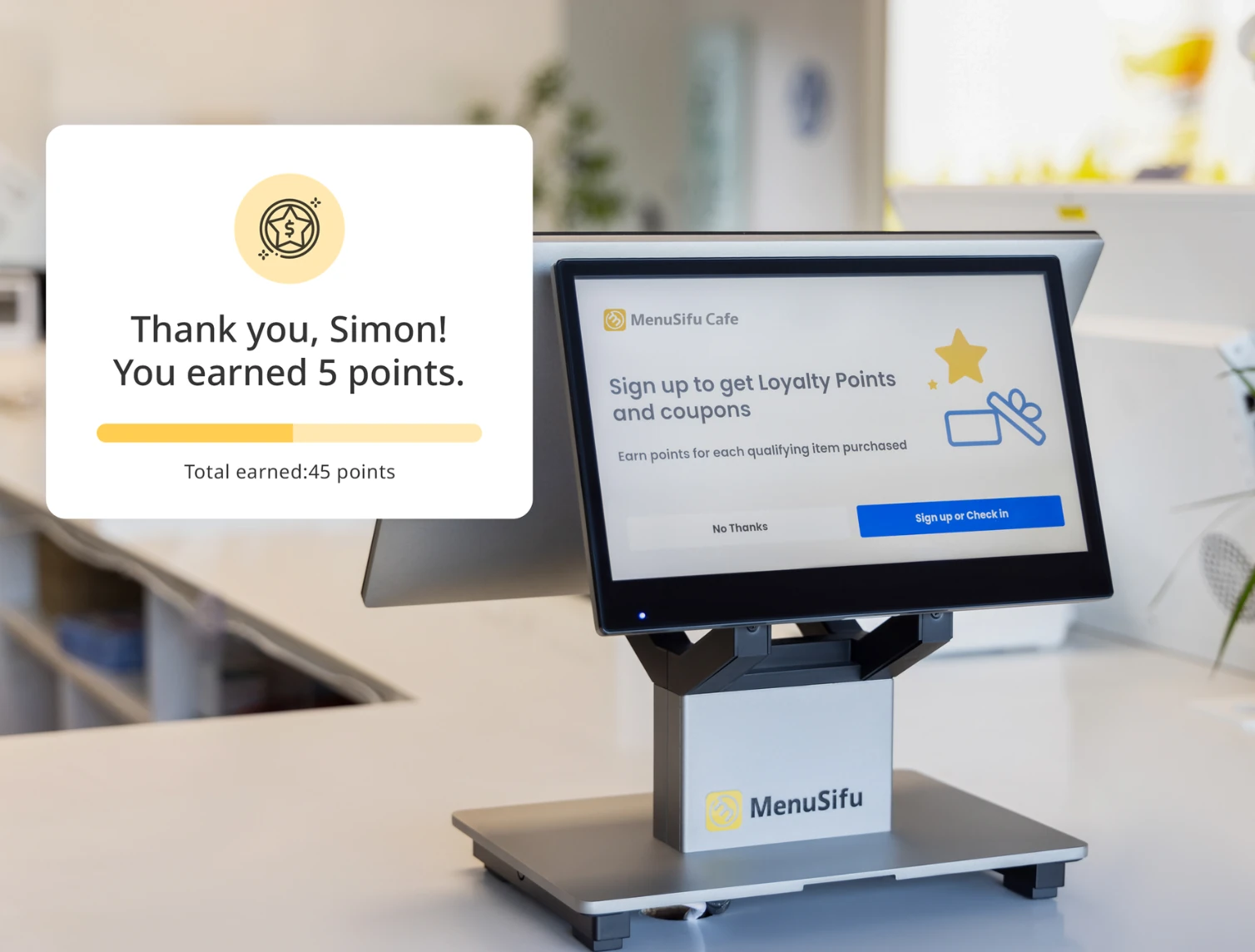
A loyalty program works best when customers quickly see what they need to earn and what they receive in return.

Reward behaviors you want to increase. A visit-based program may suit customers who purchase smaller meals frequently, while spending milestones may work better with larger family orders. Keep the reward valuable enough to encourage another purchase while protecting margin.

Purchase history also helps improve offers. Send a breakfast reward to someone who regularly visits in the morning instead of sending the same promotion to every customer.

Post-purchase rewards can shorten the time between visits by giving customers an incentive to return within a set period.

6. Improve Speed of Service During Peak Hours

Your busiest periods give you a limited window to complete as many accurate orders as possible. A backed-up drive-thru or crowded pickup counter reduces the number of transactions staff can process during those hours.

Watch the order flow during the busiest 30 to 60 minutes. Identify where tickets sit too long, where employees cross paths, and where completed orders wait before handoff. Then assign clearer station responsibilities and pickup points, and prepare high-demand ingredients according to recent sales patterns and expected volume.

Track service time alongside order accuracy. Faster handoffs lose their value if missing items and incorrect orders lead to refunds or remakes.

7. Grow Sales Through Online Ordering and Delivery

Online ordering should help customers move from menu browsing to payment with as few unnecessary steps as possible. Keep categories clear, place popular products where customers see them quickly, and update prices and availability promptly.

Pay close attention to the economics of each channel:

  • Direct online ordering: Review average ticket size, payment costs, repeat purchase activity, and margin.
  • Third-party delivery: Review order volume, commissions, promotional fees, refunds, packaging costs, and margin after fees.

Then adjust the menu by channel. A bundle that performs well for direct pickup may generate much less profit through a delivery platform once commissions and packaging costs are included.

8. Improve the Customer Experience to Increase Repeat Business

Consistent food quality, accurate orders, and reliable service give customers a reason to return. Pickup organization, cleanliness, and staff communication can also influence their decision to order again.

Keep ordering and pickup areas organized so customers know where to go. Train employees to address delays clearly and resolve order problems quickly.

Pay close attention to recurring complaints. If several reviews mention missing sauces, incorrect customizations, or long pickup waits, look at the process causing the issue instead of treating each complaint separately.

Fixing recurring service problems can protect future sales and strengthen customer retention.

9. Use Sales Data to Find Revenue Opportunities

Sales data becomes useful when it points to a specific action. Focus on numbers that help you decide what to promote, change, or stop doing.

Track:

  • Average order value: See if upsells, bundles, and pricing changes raise ticket size.
  • Transaction volume: Identify busy and weak sales periods.
  • Repeat purchase rate: Measure how often customers return.
  • Item-level sales: Find strong sellers and weak performers.
  • Sales by daypart: Compare breakfast, lunch, afternoon, and dinner demand.
  • Sales by channel: Compare in-store, drive-thru, direct online, and delivery results.

Review these figures after each meaningful change. If a new lunch bundle raises ticket size but reduces margin, revise the offer before extending it.

10. Re-Engage Customers Who Have Stopped Ordering

Past customers already know your menu, so a focused win-back campaign gives them a reason to consider another order.

Start by defining when a customer becomes inactive based on normal purchase frequency. Someone who previously ordered twice a month but has placed no order in 60 days, for example, may belong in a reactivation campaign.

Use past behavior to shape the message. Promote a new item related to a previous purchase, send a limited-time return offer, or remind the customer about an unused reward.

Measure how many inactive customers return and how many place another order afterward. A successful campaign should lead to renewed purchase activity, not a single discounted transaction.

Turn Better Sales Strategies Into Consistent Results

Consistent sales improvement comes from testing the right changes and measuring their impact. Focus on the opportunities with the strongest revenue potential, track performance after each adjustment, and build on the strategies that produce profitable results.

A POS system for fast food restaurants can support that process by connecting ordering, menu management, loyalty, kitchen workflows, and sales reporting in one system. MenuSifu also offers kiosk and QR ordering, online pickup, KDS workflows, and targeted customer offers that support several of the strategies covered above.

If you are looking for a more connected approach to sales and operations, Book a Free Demo with MenuSifu to see how the platform can support your restaurant.

Frequently Asked Questions About How to Increase Sales in Fast Food

Here are answers to frequently asked questions about increasing traffic, average order value, sales performance, and overall fast food sales.

What Is the Fastest Way to Increase Sales in a Fast Food Restaurant?

One of the fastest ways to increase sales in a fast food restaurant is to increase the value of existing transactions. Train staff to suggest relevant add-ons and meal upgrades, feature profitable bundles, and give high-margin items stronger menu visibility. Track average order value to see which changes produce the strongest results.

How Can a Fast Food Restaurant Attract More Customers?

A fast food restaurant can attract more customers by increasing visibility among nearby diners. Keep your Google Business Profile current, use location-based advertising, promote targeted local offers, and build partnerships with nearby businesses or organizations. Positive reviews and accurate business information can also help customers choose your restaurant when searching for nearby food.

How Can I Increase Average Order Value in a Fast Food Restaurant?

Increase average order value by training staff to suggest relevant add-ons, meal upgrades, larger sizes, and complementary items. Use menu boards, kiosks, and digital checkout prompts to highlight profitable bundles, then track which offers raise ticket size while protecting margins.

Which Fast Food Sales Metrics Should I Track?

Track average order value, transaction volume, repeat purchase rate, item-level sales, sales by daypart, and sales by ordering channel. These metrics show which menu items, time periods, promotions, and sales channels generate the strongest revenue and where performance needs improvement.

Can a POS System Help Increase Fast Food Restaurant Sales?

Yes. A POS system can help increase fast food restaurant sales by speeding up order processing, supporting upselling prompts, managing menu updates, and tracking sales performance. It can also show which items, promotions, and ordering channels generate the most revenue, helping you make better sales decisions.

Visit the MenuSifu blog for more insights and updates on restaurant sales, operations, technology, customer retention, and industry trends.

Related Articles:

想把餐厅越开越好?
免费订阅,持续获取行业报告、经营洞察与实用工具。