September 18, 2026
Get a clear look at fine dining restaurant profit margins, average benchmarks, key cost drivers, formulas, and practical ways to improve profit each month.

Fine dining can bring strong check averages, but high revenue does not always mean strong profit. Premium ingredients, skilled labor, elevated service, rent, and wine inventory can quickly reduce what your restaurant keeps after each service.
That is why fine dining restaurant profit margins need close review. The right numbers show where costs rise, which menu items perform well, and where small changes can protect earnings while keeping the guest experience refined.

Fine dining restaurant profit margins show how much of your revenue stays as profit after costs. High check averages can look strong on paper, but the real measure is how much revenue remains after food, beverage, labor, rent, and other operating expenses.
You need to track two types of profit margin.
Gross profit margin shows how much revenue remains after direct food and beverage costs. It helps you see how well your menu pricing, purchasing, portioning, and supplier costs support profit.
Net profit margin shows what remains after all operating expenses. This includes labor, rent, utilities, insurance, marketing, technology, repairs, taxes, and other business costs.
Gross margin helps you evaluate menu performance. Net margin gives you a clearer view of the full business. Tracking both helps you see if revenue is turning into real earnings or getting absorbed by operating costs.
The average profit margin for fine dining restaurants often ranges from 5% to 10%, according to DoorDash. While this benchmark refers to overall profit margin, it gives you a useful starting point when reviewing your own net profit margin against broader restaurant performance.
Net profit margin shows how much money remains after every major expense, including food, beverages, labor, rent, utilities, insurance, marketing, technology, and other operating costs. If your restaurant earns $100,000 in sales and keeps $7,000 after expenses, your net profit margin is 7%.
Your actual margin can shift based on location, concept, pricing, seating capacity, service model, and cost control. A fine dining restaurant in a high-rent city may face tighter margins than one with lower fixed costs. A chef-driven tasting menu may perform differently from an à la carte concept with a strong bar program.
Use the 5% to 10% range as a benchmark, then compare it with your own numbers. If your margin sits below that range, review food cost, labor, pricing, waste, reservations, and beverage sales. If your margin sits above it, study what drives that performance so you can protect it as costs change.
Fine dining restaurant profit margins depend on more than sales volume. Your costs, pricing, service model, and reservation flow all shape the profit you keep after each service. The key is to know which parts of the operation raise revenue and which ones quietly reduce it.
Food and beverage costs can rise quickly in fine dining. Premium seafood, dry-aged meat, specialty produce, imported cheese, caviar, truffles, pastry ingredients, and craft beverages all need careful pricing.
Seasonal sourcing can help your menu feel fresh, but it also changes costs often. A dish that worked well last month may lose margin when supplier prices shift. Tasting menus need the same review. Each course should support the total menu margin, especially when ingredients require extra prep or skilled plating.
Wine and beverage programs can lift profit when you manage them closely. Track bottle costs, pour sizes, pairings, cellar inventory, and supplier terms so your beverage sales support stronger margins.
Fine dining relies on skilled people. Chefs, sous chefs, pastry teams, sommeliers, servers, bartenders, hosts, bussers, runners, and dish teams all help deliver the guest experience.
That level of service raises labor costs. Tableside service, wine guidance, polished pacing, pre-shift training, and detailed coordination take time. You need enough staff to protect service quality, but payroll can shrink profit when staffing runs ahead of reservations and sales.
Use sales patterns, covers, private dining bookings, and reservation data to plan schedules more accurately.
Your menu prices need to cover more than ingredient cost. They should reflect prep time, skill, plating, service level, guest demand, and perceived value.
A dish may look profitable based on food cost, then lose strength once you factor in labor, waste, garnish cost, and station workload. Review each item by sales volume and contribution margin. Then adjust prices, portions, ingredients, or placement as needed.
Strong menu pricing also looks at the full guest check. Appetizers, tasting menus, wine pairings, cocktails, desserts, and private dining packages can help raise average spend while keeping the experience polished.
A strong location can bring visibility, foot traffic, affluent guests, and steady demand. It can also raise fixed costs.
Rent, utilities, property fees, maintenance, insurance, and buildout expenses all affect profit. Fine dining spaces often require quality furniture, lighting, tableware, sound design, climate control, and regular upkeep. Those investments shape the guest experience, but they require sufficient revenue to remain healthy.
Review occupancy costs as a percentage of sales. If fixed costs take too large a share, even busy nights may leave thin profit.
Fine dining needs enough covers to support labor, food, rent, and service costs. At the same time, guests expect a relaxed pace and attentive service.
You can improve table performance through smarter reservation spacing, clear seating times, waitlist use, bar seating, and private dining. A tasting menu may rely on fewer turns and higher check averages. An à la carte concept may need stronger pacing across peak hours.
Track covers, average check size, table turns, and revenue per available seat. These numbers show how well each service period supports profitability.
Calculate gross profit margin first, then net profit margin. Gross margin shows how well your menu turns sales into profit after direct food and beverage costs. Net margin shows how much profit remains after all operating expenses.
Use the same time frame each time you calculate margins, such as weekly, monthly, or quarterly. This makes results easier to compare.
Gross profit margin = [(Total revenue - Food and beverage costs) / Total revenue] x 100
Example:
In this example, 68 cents from each sales dollar remains after direct food and beverage costs. That amount still needs to cover payroll, rent, utilities, marketing, technology, insurance, and other operating expenses.
Net profit margin = (Net profit / Total revenue) x 100
To find net profit, subtract every operating cost from total revenue. Include food and beverage costs, labor, rent, utilities, marketing, technology, insurance, maintenance, and other recurring expenses.
Example:
In this example, your restaurant keeps 6 cents from every dollar of sales after expenses. If the margin looks lower than expected, review the largest cost categories first. Menu pricing, portioning, labor schedules, supplier costs, waste, and beverage sales often show where profit can improve.
Fine dining restaurants often earn higher average checks, but their cost structure can erode profits quickly. Guests expect premium ingredients, polished presentation, detailed service, and a consistent experience every visit.
Those expectations require more labor than many casual concepts. You may need skilled chefs, pastry staff, sommeliers, experienced servers, bartenders, hosts, bussers, and support staff working together during each service.
The space also carries a higher cost. Dining room design, lighting, furniture, linens, glassware, tableware, kitchen equipment, and maintenance all affect profit. A premium atmosphere helps support higher prices, but it also raises fixed expenses.
Reputation adds pressure. Reviews, repeat visits, referrals, and private dining inquiries depend on consistency. A slow night, a late cancellation, a seasonal dip, or a weather shift can reduce sales while payroll, rent, and prep costs remain in place.
Improving your margins starts with knowing where profit slips away. Small changes in pricing, purchasing, scheduling, and reporting can make a clear difference over time.
Review each menu item based on sales volume and contribution margin. Some dishes may sell often but leave little profit after ingredient cost, prep time, and plating labor. Others may sell less often but support stronger margins.
Highlight high-margin dishes in menu placement, server recommendations, tasting menus, and pairings. If a dish costs too much to produce, adjust the portion, ingredient mix, preparation method, or price. Menu engineering helps you keep the guest experience strong while protecting profit.
Food waste can quietly reduce profit every week. Track what gets trimmed, spoiled, returned, over-prepped, or left unused after service.
Use portion control, prep sheets, par levels, and sales history to guide purchasing and production. Seasonal menu updates also help you manage ingredient costs when prices shift. The goal is simple. Buy with purpose, prep with accuracy, and use ingredients across the menu where quality allows.
Beverage sales can lift profitability when you manage them closely. Review wine pours, bottle pricing, cocktail costs, premium spirits, tasting pairings, and nonalcoholic options.
Train staff to recommend pairings that match the meal and support margin goals. A strong wine program or cocktail list can raise average check size while improving the dining experience.
Labor is one of the largest costs in fine dining. Align staffing with reservations, private events, seasonal demand, and historical sales patterns.
Use sales and reservation data to plan each shift. A fully booked Saturday night needs a different labor plan than a quiet weekday. Track labor cost percentage, sales per labor hour, and covers per labor hour so you can staff with accuracy while keeping service standards high.
Missed reservations can hurt revenue, especially when the kitchen has prepared premium ingredients and the floor has staffed for a full room.
Use deposits, prepaid menus, cancellation windows, waitlists, and automated reminders to protect revenue. Clear policies also help guests plan ahead and help your staff prepare each service with better accuracy.
Total sales can hide weak margins. Item-level reporting shows which dishes bring in the most profit and which ones need attention.
Review food cost, selling price, prep time, waste, and sales volume for each item. Use that data to adjust pricing, remove underperforming dishes, build better pairings, and guide staff recommendations. The more clearly you see item performance, the easier it becomes to improve profitability.
Your margins become easier to manage when you review the right numbers often. These metrics show where profit improves, where costs rise, and where small changes can create better results.
Net profit margin shows how much revenue remains after all expenses. Track it monthly so you can see the true financial health of the restaurant.
Gross profit margin shows how much revenue remains after food and beverage costs. Use it to review menu pricing, purchasing, portioning, and supplier costs.
Food cost percentage shows how much food revenue goes toward ingredients. Watch this closely when supplier prices change, seasonal items shift, or new dishes enter the menu.
Beverage cost percentage helps you review wine, cocktails, spirits, and pairings. Strong beverage margins can support overall profitability when you manage pours, pricing, and inventory well.
Labor cost percentage shows how much revenue goes toward wages, salaries, benefits, and payroll taxes. Fine dining needs skilled staff, so schedule based on reservations, service style, and demand patterns.
Prime cost combines food, beverage, and labor costs. Since these expenses take up a large share of revenue, this number gives you a quick view of cost control.
Average check size shows how much each guest spends. Track it by daypart, server, menu type, and event so you can improve pairings, premium add-ons, and menu placement.
Revenue per available seat shows how much each seat generates during a set period. Use it to review seating strategy, reservation pacing, private dining, and service times.
Table turnover rate shows how often tables reset during service. Compare this with guest spend and service quality so you can protect the dining experience while improving revenue.
Waste percentage shows how much product you lose through spoilage, overproduction, returns, and prep errors. Track waste by ingredient and station so your team can adjust ordering, prep, and portions.
Review these metrics together. A strong average check size may still leave weak profit if labor, waste, or food costs run too high.
Numbers become more useful when you review them as a full operating picture. Here is a simple monthly example.
In this scenario, the restaurant keeps $18,000 after generating $300,000 in monthly sales. The dining room may stay booked, and the average check may look strong, but the final profit still depends on food cost, payroll, rent, beverage sales, and daily operating expenses.
A 6% net profit margin means every $100 in sales leaves $6 in profit. That result gives you a starting point for deeper review. If food and beverage costs rise, review supplier pricing, portioning, prep waste, and menu pricing. If labor costs take a larger share of revenue, compare schedules with reservations, covers, private dining, and service demand. If revenue per seat drops, look at table pacing, average check size, pairings, and event opportunities.
Use this type of breakdown each month. Compare it with the previous month, the same month last year, and key service periods. Small changes in ingredient costs, staffing, cancellations, or supplier pricing can shift profit quickly, so regular review helps you act early.
Profitability improves when you track the numbers behind each service and act on them early. Food costs, labor, reservations, beverage sales, and menu performance all affect how much revenue stays with your restaurant. When you review these areas often, you can protect earnings while keeping the service, quality, and experience your guests expect.
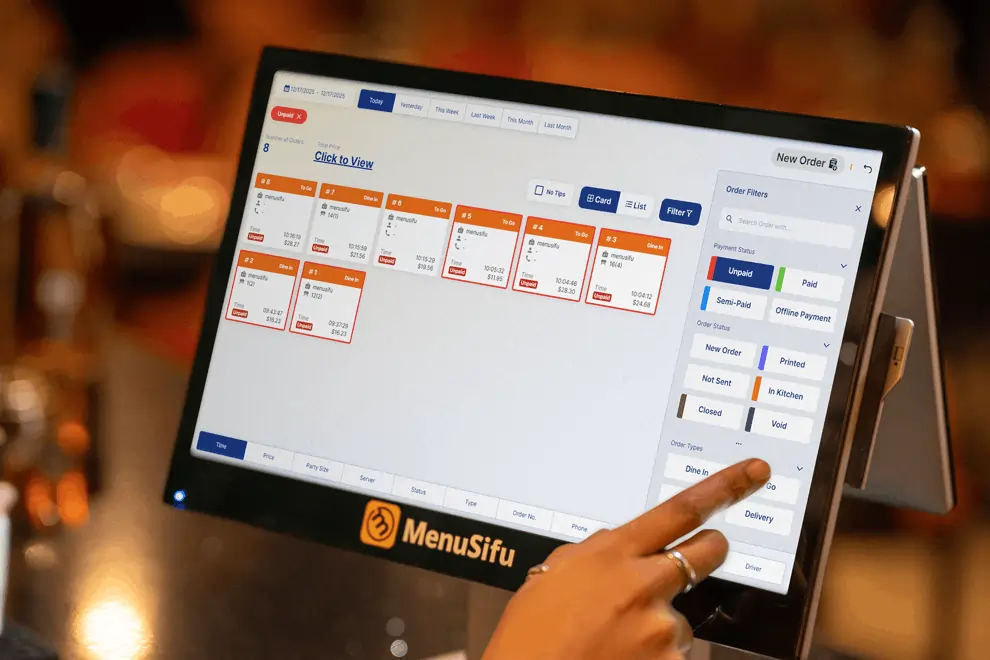
MenuSifu helps you manage those decisions with a full-service restaurant POS system that supports clearer reporting, tableside ordering and payments, kitchen display tools, reservation support, and menu performance insights. With better visibility across front-of-house and back-of-house operations, you can spot profit opportunities faster and keep each shift more organized.
Book a Free Demo with MenuSifu today to see how the right POS solution can support stronger margins and smoother daily operations.
These FAQs cover common profit margin questions that can help you review performance, control costs, and make better financial decisions.
A good profit margin for a fine dining restaurant often falls around 5% to 10%, although results vary by location, menu pricing, labor costs, rent, and beverage sales. Strong cost control, accurate menu pricing, and steady reservation volume can help your restaurant reach the higher end of that range.
Review restaurant profit margins every month, and check key costs weekly. Food costs, beverage costs, labor, and sales trends can shift quickly in fine dining, so frequent reviews help you adjust pricing, staffing, purchasing, and menu performance before small issues reduce profit.
A fine dining POS system helps track profit margins by showing sales, menu item performance, labor data, payment activity, and revenue trends in one place. You can see which dishes drive profit, which items carry high costs, and which service periods produce the strongest returns. This data helps you adjust pricing, control costs, and make smarter decisions that protect fine dining restaurant profit margins.
For more insights and updates on restaurant operations, POS technology, and profitability, visit our blog section.
Related Articles:
DISCLAIMER: Profit margin benchmarks can vary by market, concept, and operating model. Use the figures in this article as general guidance, and review your own financial data with your accountant or advisor when making business decisions.